DbcultAccessing Vault...
Cult Review
Senior Film Conservator
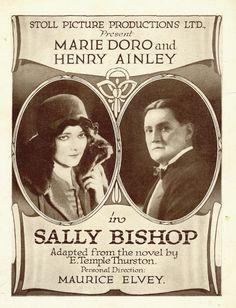
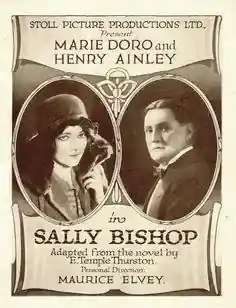
Sally Bishop, a 1920s British film that has weathered the decades with aching poignancy, is a narrative tightrope walk between moral decay and emotional catharsis. Directed with a surgeon’s precision by an unseen hand (at least in the surviving archives), the film’s core conflict is deceptively simple: a typist (Mary Dibley) holds a knife to the throat of a man (Henry Ainley) who intends to destroy another woman’s life to secure his own happiness. Yet, this is no mere potboiler of infidelity and blackmail. The film’s true genius lies in its ability to transmute these familiar tropes into a study of human fragility, where the lines between victim and perpetrator blur like smoke in a poorly lit room.
What sets Sally Bishop apart from contemporaries like Dark Secrets or The Broken Butterfly is its refusal to moralize. The typist’s threat is not a moral victory but a survival tactic, a desperate gambit to reclaim agency from a man who has already weaponized his position as a prosecutor. Dibley’s performance is a masterclass in subtext; her eyes, wide and trembling, convey a lifetime of quiet oppression. When she finally speaks, her words are laced with a venom that suggests years of festering resentment. This is not a woman seeking justice, but a woman seeking to prevent further injustice—a distinction as subtle as it is devastating.
Ainley’s portrayal of the suitor is equally nuanced. He is not the cartoonish villain of a melodrama but a man whose ambition has calcified into a ruthless pragmatism. His interactions with the typist are charged with a paternalistic condescension that slowly curdles into something more sinister. The film’s dialogue, sparse yet loaded, mirrors the typist’s typewriter: each syllable a calculated strike. When he declares his intent to proceed with the divorce, the camera lingers on his hands, steady but cold, as if to underscore the mechanical detachment of his cruelty.
The film’s visual language is as telling as its narrative. The sets—dimly lit offices, cramped apartments—are claustrophobic, their shadows and angles reflecting the characters’ internal entrapments. A standout sequence involves the typist in her workspace, the rhythmic clatter of her machine a metronome of impending doom. The camera, fixed in place, denies her the escape of movement, mirroring her literal and metaphorical immobility. This visual motif is echoed in The Shop Girl, where the workplace becomes a prison of societal expectation, but here, the stakes are far more lethal.
Thematically, Sally Bishop dances on the knife’s edge between tragedy and farce. The film’s climax—a confrontation that could have spiraled into overwrought melodrama—is instead rendered with aching restraint. The resolution is ambiguous, leaving the audience to grapple with the moral implications of the typist’s actions. This ambiguity is its greatest strength, inviting comparisons to Why Worry? in its refusal to offer easy answers. The film’s final shot—a close-up of the typist’s face as she watches the suitor leave—is a masterstroke of silent cinema. Her expression is not one of triumph or relief, but of quiet resignation, as if she understands that this is not the end but the beginning of a new, more insidious entrapment.
Technically, the film is a marvel of its era. The editing, though rudimentary by modern standards, is precise, with cross-cutting used to great effect during the typist’s threat and the suitor’s preparations for the divorce. The score, a haunting blend of piano and strings, adds a layer of melancholy that permeates the film’s texture. Even the supporting cast—Humberston Wright’s gruff, world-weary attorney and Marie Doro’s sympathetic widow—lends the film a sense of authenticity that grounds its more operatic moments.

In the grand lineage of British cinema of the 1920s, Sally Bishop occupies a unique niche. It is neither the grand historical epic of Darwin nor the slapstick of Mutt and Jeff in Paris, but something far more intimate. It shares DNA with Should a Woman Tell? in its exploration of gendered power structures, yet its tone is darker, more unsparing. The film’s enduring relevance lies in its unflinching portrayal of the emotional toll of complicity—a theme that resonates with the same urgency in our modern age of toxic relationships and moral ambiguity.
For those seeking a cinematic experience that lingers like a half-remembered dream, Sally Bishop is an essential viewing. It is a film that demands patience, rewarding the viewer with layers of subtext and a narrative that refuses to be pinned down. The typist’s final glance, the suitor’s calculated smile, the silent clatter of keys—each element is a thread in a tapestry of human complexity. In an era where films often prioritize spectacle over substance, Sally Bishop stands as a testament to the power of simplicity, a reminder that the most profound stories are often those told in the quietest moments.
Ultimately, the film’s greatest achievement is its ability to make the audience complicit in its characters’ moral failures. We are not asked to root for the typist or the suitor, but to understand the systems that allow their actions to unfold. This is not a film about villains or heroes, but about the corrosive nature of unchecked desire and the fragile lines we draw between right and wrong. In this, Sally Bishop remains a haunting, if underappreciated, gem of early 20th-century cinema—a film that whispers its truths to those willing to listen.
IMDb 5.4
1912
Community
Log in to comment.