DbcultAccessing Vault...
Cult Review
Senior Film Conservator
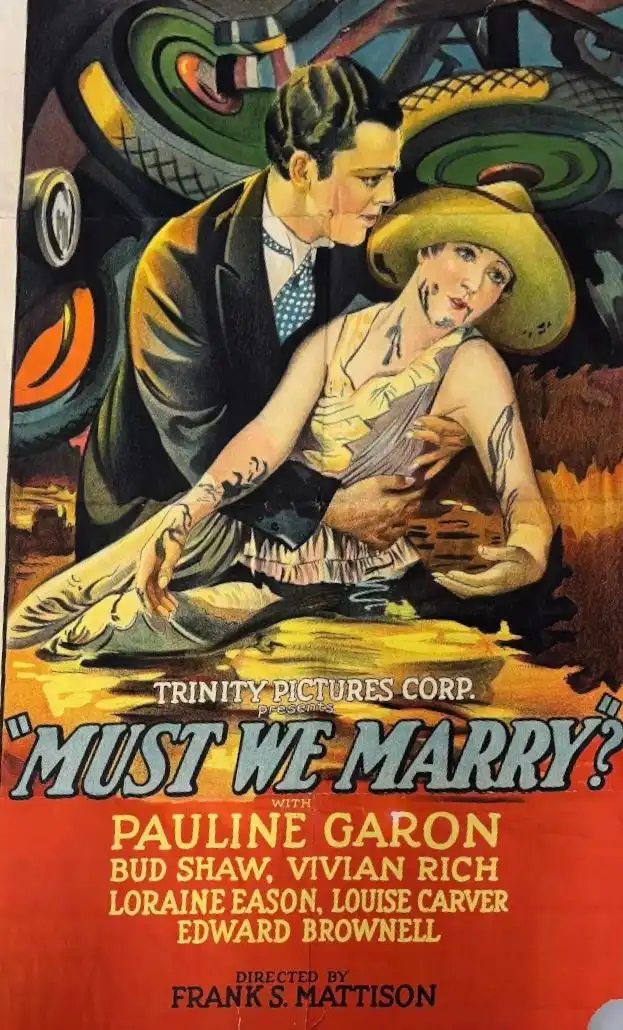
If you have an hour to kill and a high tolerance for the kind of frantic, wide-eyed acting that defined the mid-20s, Must We Marry? is worth a look. It’s not a masterpiece, and honestly, if you aren't already into silent films, this one will probably just make you annoyed at how easily 1920s men were tricked into marriage proposals. But for the rest of us, it’s a decent enough relic of the 'gold digger' subgenre that was everywhere back then.
The whole thing hinges on Kenneth (Robert 'Buddy' Shaw), who has a fortune and apparently zero survival instincts. He’s the kind of hero who looks like he’d get lost in a revolving door. Thelma Duncan plays the 'scheming gal,' and she really leans into the role. There’s a moment early on where she looks at Kenneth’s bank account—or at least the idea of it—and her eyes do this weird little shimmer that feels less like acting and more like she’s actually hungry. It’s a bit much, but in a movie this thin, you take what you can get.
The centerpiece is the cabin. It’s always a cabin in these movies. Why was the 'lonely cabin' the universal setting for moral compromise in 1924? The set design is strangely sparse. There’s a shot where Kenneth is sitting on a wooden chair that looks like it was nailed together five minutes before the cameras rolled. He looks genuinely uncomfortable, and I don't think it's because of the plot. He just looks like he’s afraid the furniture is going to collapse under him.
The 'compromising situation' is pretty funny by modern standards. In 1924, apparently, if a woman gets you into a cabin and maybe your tie is slightly crooked, your social life is over unless you produce a ring. Thelma’s character traps him there, and the way the scene is edited is just... off. There’s a jump cut when she’s closing the door that makes it look like she teleported across the room. It breaks the tension completely, turning what should be a high-stakes trap into a weird piece of accidental avant-garde filmmaking.
I found myself watching the background extras more than the leads during the party scenes. There’s a guy in the back of one shot who seems to be having a very intense conversation with a potted plant. It’s those little moments of 1920s chaos that make these films better than the actual scripts. If you’ve seen Faint Hearts or Call a Cab, you know the vibe—it’s that specific brand of low-budget silent comedy where everyone is moving about 10% faster than they should be.
Betty Jefferson, playing the 'sweetie' who has to save Kenneth from his own stupidity, is actually the best part of the movie. She has this way of looking at the camera that says, 'I can't believe I'm dating this idiot.' When she pulls her own trick at the end to win him back, it’s supposed to be romantic, but it mostly feels like she’s just better at the game than Thelma is. It’s a cynical ending disguised as a happy one.
The pacing drags in the middle when they’re just talking. Silent films that rely too heavily on title cards always struggle here. You get a card, then a shot of Kenneth looking confused, then another card, then a shot of Thelma looking mean. It goes on for about three minutes longer than it needs to. You can almost feel the director, Bertis Hill, trying to stretch the runtime to hit that feature-length mark. It’s similar to the padding you see in Hot Heels, though that one had a bit more visual flair.
Louise Carver shows up, and as usual, she’s a force of nature. She has this face that looks like it was carved out of granite. Every time she’s on screen, the movie gets about 20% more interesting just because you’re waiting for her to hit someone. She doesn't, unfortunately, but the threat is always there.
Is it a great film? No. The logic is paper-thin and the 'trick' Betty pulls at the end is so convoluted it requires about four title cards to explain. But there’s something charming about how earnest it is. It’s a movie about people who are obsessed with marriage and money, filmed in a way that makes both seem like a frantic game of musical chairs. If you’re a fan of Pauline Garon or just want to see how they handled 'scandal' a century ago, it’s a fun enough diversion. Just don’t expect it to make much sense.
IMDb 6.6
1935
Community
Log in to comment.