DbcultAccessing Vault...
Cult Review
Senior Film Conservator
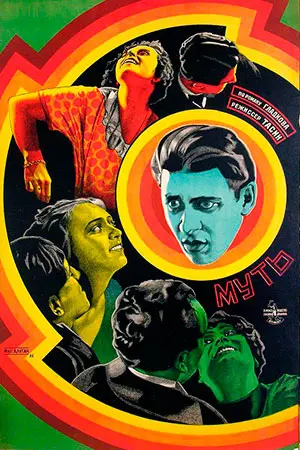
Is Mut worth watching today? Short answer: yes, but with significant caveats that demand a specific kind of viewer. This is a film for those who crave introspective, slow-burn character studies and appreciate raw, unvarnished performances, but it will undoubtedly alienate audiences seeking conventional plots or clear narrative resolutions.
Nikolay Lyadov’s Mut is less a story told and more an experience endured. It’s a film that asks its audience to lean in, to observe, and to feel the weight of its characters’ internal struggles rather than simply follow a series of events. It works. But it’s flawed.
From its opening frames, Mut establishes a tone of stark realism and quiet desperation. Lyadov’s direction is a masterclass in controlled minimalism, eschewing grand gestures for intimate observations. The camera often lingers, allowing moments of silence to breathe, forcing the audience to confront the raw emotion etched on the faces of Oleg Olegov and Nina Tairova.
This film works because of its unwavering commitment to its thematic core, brilliantly articulated through the performances of Oleg Olegov and Nina Tairova. It delves into the messy, often uncomfortable aspects of human resilience with a conviction rarely seen.
This film fails because its deliberate pacing and ambiguous narrative choices can border on frustrating, often sacrificing clarity for mood. While atmospheric, some viewers will find themselves adrift in its lack of explicit direction.
You should watch it if you are prepared for an emotionally taxing, yet ultimately rewarding, deep dive into the human condition, valuing atmosphere and character over plot mechanics. It’s a film that demands patience but offers profound insights in return.
The performances in Mut are its undeniable anchor. Oleg Olegov delivers a haunting portrayal of a man teetering on the brink, his eyes conveying a universe of unspoken pain and quiet determination. There’s a particular scene, a long take in a dimly lit room where his character simply stares out of a window, the light catching the weariness in his face – it’s a masterclass in non-verbal communication, speaking volumes without a single line of dialogue.
Nina Tairova, as his counterpart, is equally compelling. Her character’s struggle is conveyed through a series of subtle gestures and controlled outbursts that feel deeply authentic. Her ability to project a history of hardship and a flicker of hope through a single glance is remarkable, particularly in a quiet confrontation near a rain-soaked riverbank, a moment of profound emotional resonance that feels utterly earned.
Nikolay Lyadov’s direction supports these performances by creating an environment where they can truly shine. He trusts his actors implicitly, allowing scenes to unfold with an organic rhythm that feels less like a directed performance and more like a captured reality. His choices, though often stark, amplify the emotional weight of every interaction.
The use of close-ups is particularly effective, drawing the audience into the characters’ inner worlds. This isn’t manipulative filmmaking; it’s an invitation to empathize, to feel the tremor in a hand or the flicker of doubt in an eye. It’s a bold approach that pays off handsomely for those willing to engage on that level.
The cinematography in Mut is a character in itself. The palette is muted, dominated by grays, blues, and browns, reflecting the often-bleak internal landscapes of its characters. This isn’t to say it’s without beauty; rather, its beauty lies in its honesty, in capturing the stark reality of its settings.
There’s a striking sequence involving an abandoned factory, its skeletal structure silhouetted against a bruised sky. This isn’t just a backdrop; it’s a visual metaphor for the decay and resilience that permeate the film’s themes. The camera work here is precise, creating a sense of isolation and scale that underscores the characters’ individual struggles against larger, often oppressive, forces.
The film’s tone is consistently somber, yet it avoids tipping into pure despair. There’s always a thread of human tenacity, a quiet strength that resonates beneath the surface. This balance is difficult to strike, and Lyadov manages it with remarkable dexterity, preventing the film from becoming an exercise in misery porn.
Pacing is another critical element. Mut is undeniably slow. Very slow, at times. This isn't a film designed for instant gratification. Its deliberate rhythm is intended to immerse the viewer in the characters’ experiences, allowing moments of reflection and internal processing. For some, this will be meditative; for others, it will be a test of patience. The long stretches of silence, punctuated by environmental sounds or a sparse, melancholic score, contribute significantly to this immersive, almost hypnotic, quality.
Yes, Mut is absolutely worth watching today, especially if you appreciate a challenging, character-driven drama. It offers a unique perspective on human perseverance. However, it is not a film for everyone. If you prefer fast-paced narratives or clear-cut resolutions, you might struggle with its deliberate ambiguity. It demands active engagement and a willingness to sit with discomfort, but the rewards are substantial.
The title Mut, which can mean 'courage' or 'mood' in different contexts, perfectly encapsulates the film’s dual focus. It explores the raw courage required to simply exist and endure in challenging circumstances, while simultaneously delving into the shifting, often heavy, moods that define the human experience of struggle. It’s a powerful, if understated, meditation on the nature of internal fortitude.
One surprising observation is how the film uses the desolate landscapes not just as backdrops, but as mirrors to the characters' internal states. The harsh, unforgiving environment seems to strip away pretenses, leaving only the raw essence of their being. This is particularly evident in a scene where Ksana Zapadnaya's character walks alone across a vast, empty field, her small figure dwarfed by the expanse, a poignant visual representation of her isolation.
The film’s exploration of resilience feels particularly relevant in an age saturated with instant gratification and clear answers. Mut reminds us that true strength often lies in quiet endurance, in the refusal to break even when hope seems a distant memory. This is a film that encourages introspection, prompting viewers to consider their own definitions of courage and vulnerability.
Comparing it to other films of its ilk, Mut shares a spiritual kinship with the stark realism of a film like The Tail of a Cat in its dedication to character observation, but perhaps with the existential weight of Die weisse Wüste, albeit with a more intimate focus. It’s a unique voice in the landscape of contemplative cinema.
Mut is not an easy film. It demands your attention, your patience, and your willingness to sit with discomfort. But for those who answer its call, it offers a profoundly rewarding experience. It’s a testament to the power of human endurance, captured with an unflinching honesty that is both rare and vital.
Nikolay Lyadov has crafted a film that will linger in your mind long after the credits roll, not for its plot twists, but for the raw, human truth it lays bare. It’s a film that asks big questions and offers no easy answers, trusting its audience to find their own meaning in its quiet depths. A strong recommendation for cinephiles seeking something truly substantial and challenging.

IMDb —
1920
Community
Log in to comment.