DbcultAccessing Vault...
Cult Review
Senior Film Conservator
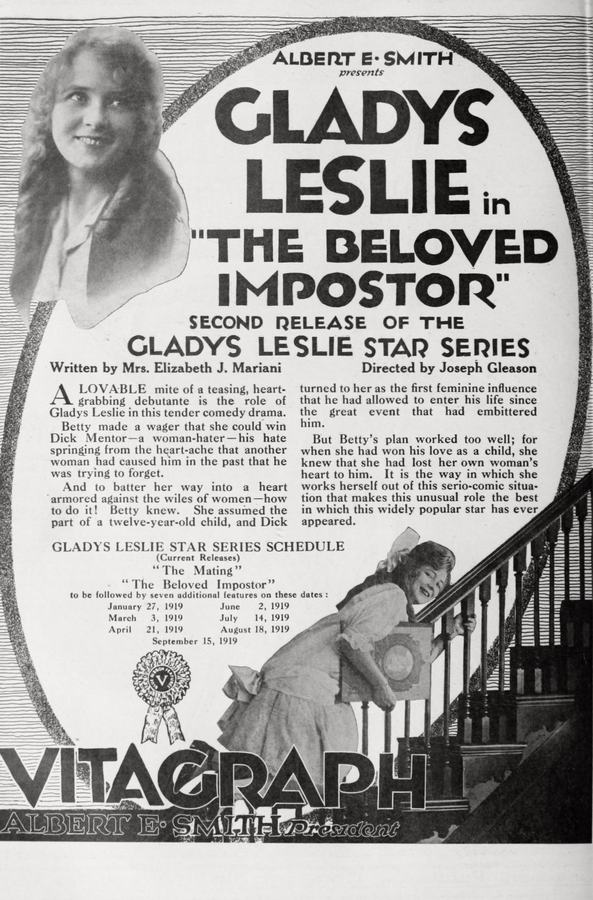
The silent era of motion pictures often served as a crucible for narratives that would, by modern standards, be considered psychologically harrowing or narratively surreal. The Beloved Impostor, released in 1918, stands as a quintessential example of this period's fascination with the transformative power of deception and the fragility of the male ego. Directed with a certain rhythmic grace that belies its melodramatic foundations, the film explores the dark corridors of a man’s psyche after it has been scorched by double betrayal and profound loss. Unlike the sweeping historical epics like The Birth of a Nation, this film turns its lens inward, focusing on the claustrophobic domesticity of grief.
The film opens with a sequence of tragedies so unrelenting they border on the operatic. Dick Mentor, portrayed with a brooding intensity by Neil Hamilton, is not merely a cuckold; he is a man whose entire universe collapses in a singular, violent instant. The irony of his wife dying while deserting him is a narrative masterstroke that ensures Dick’s hatred is not just directed at her, but at the very concept of feminine fidelity. When his child dies shortly thereafter, the film enters a tonal space similar to the somber reflections found in Once to Every Man. Dick becomes a 'confirmed woman hater,' a term the film uses with the weight of a medical diagnosis.
This misanthropy is not presented as a quirk, but as a calcified defense mechanism. The screenplay by A. Van Buren Powell and Elizabeth J. Mariani delves into the isolation of the male experience in the early 20th century. Dick’s retreat from society is a rejection of the performative nature of courtship, making him the perfect, albeit unwilling, target for a social predator like Betty. The contrast between Dick’s genuine suffering and the frivolous world of Betty is where the film finds its friction.
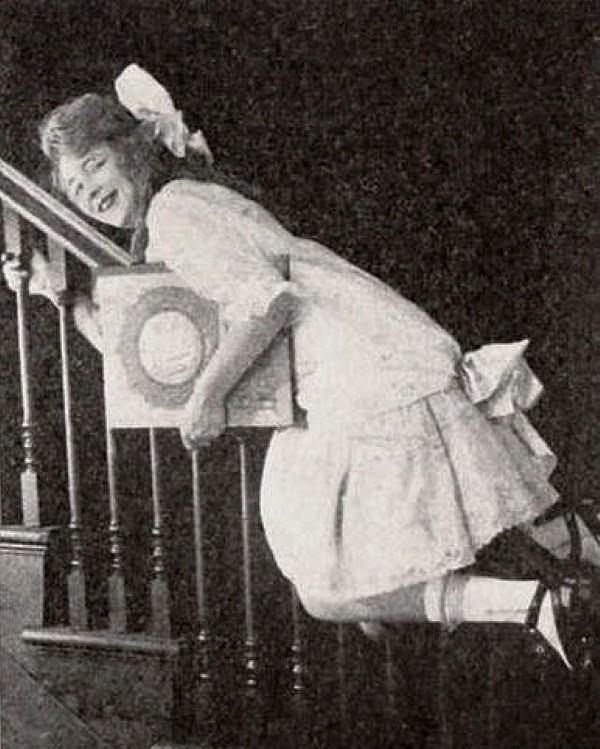
Betty, played with a sparkling yet slightly unnerving energy by Gladys Leslie, is the engine of the plot. Her character represents a specific type of silent-film protagonist: the flirt whose boredom leads her to treat human emotions as poker chips. The bet she makes with Hugh—a kiss against a horse—is a cynical transaction that sets the stage for the film’s most controversial element: her masquerade as a twelve-year-old child. This trope, while common in the era (seen in various forms in Young Mother Hubbard), carries a different weight here because it is a calculated psychological strike against a man in mourning.
By adopting the persona of an innocent girl, Betty bypasses Dick’s defenses. He cannot hate a child; his grief for his own lost offspring makes him vulnerable to the very image of innocence. The film navigates this 'Lolita-esque' territory with a 1918 sensibility that prioritizes the 'charm' of the deception over its potential creepiness. Yet, for a modern viewer, the tension is palpable. We watch as Betty 'captivates' Dick, her every giggle and pigtail-toss a calculated move in a game she is beginning to lose herself to. The psychological shift from hunter to hunted is portrayed with a subtle nuance that suggests the writers were aware of the ethical quagmire they had constructed.
Visually, The Beloved Impostor utilizes the limited technology of its time to create a stark contrast between environments. The scenes involving Dick’s mourning are characterized by deep shadows and static framing, reminiscent of the heavy atmosphere in Darkest Russia. In contrast, the scenes featuring Betty’s social circle are brightly lit, filled with movement and a sense of superficiality. This visual dichotomy reinforces the emotional distance between the two leads.
The use of intertitles in this film is particularly effective. They don't just provide dialogue; they offer a window into Dick’s internal monologue, revealing a man struggling to reconcile his newfound affection for the 'child' with his deep-seated resentment of women. The acting style of Huntley Gordon and Miriam Miles provides a solid supporting foundation, ensuring that the world around the central duo feels inhabited and real. The film shares a certain thematic DNA with The Marriage of Kitty in its exploration of arranged or deceptive unions, but it lacks that film's comedic lightness, opting instead for a more dramatic, almost gothic, sensibility.
When placed alongside contemporaries like Comin' Thro' the Rye, The Beloved Impostor feels more daring in its character arcs. While many films of the era relied on external conflicts—villains, poverty, or societal upheaval—this film’s primary antagonist is the lie itself. It shares the emotional intensity of Martin Eden, particularly in how the protagonist’s worldview is radically altered by a singular obsession. However, where Martin Eden finds tragedy in his realization, Dick Mentor finds a strange, twisted form of redemption.
The film also touches upon the themes of social class and the 'idle rich' that were prevalent in The Lure and The Unwelcome Wife. Betty’s ability to treat a man’s heart as a wager for a horse speaks volumes about the disconnect between the upper class and the realities of human suffering. It is only when she 'falls' for her victim that the film allows her to reclaim her humanity. This trope of the 'reformed flirt' is a staple of the era, yet here it feels more earned because of the gravity of Dick’s initial state.
The resolution of the film is a masterclass in silent-era tension. The arrival of the horse—the physical manifestation of Betty’s deceit—serves as the ticking clock. The scene where Hugh presents the prize in front of Dick is staged with a precision that highlights the shifting power dynamics. Dick’s anger, when the truth is revealed, is not the explosive rage of a villain, but the heartbreaking realization of a man who has been tricked into feeling again. It mirrors the emotional stakes found in The Tempting of Justice, where the law of the heart clashes with the reality of the situation.
Betty’s declaration of love is the only thing that can melt this anger. The film posits that the authenticity of the emotion justifies the duplicity of the method. It’s a morally complex conclusion that might not fly in modern cinema without significant irony, but in 1918, it served as a powerful testament to the 'all-conquering' nature of love. The final shots of the film, echoing the pastoral beauty of Old Heidelberg or the romantic yearning of Eva, leave the audience with a sense of peace, however hard-won.
Ultimately, The Beloved Impostor is more than a mere curiosity. It is a film that grapples with the idea of 'Her Right to Live' (as explored in Her Right to Live) and her right to love, even through flawed means. It lacks the exoticism of The Princess of India or the grit of The Undertow, but it possesses a psychological depth that was rare for its time. Neil Hamilton’s performance, in particular, anchors the film, providing a bridge between the exaggerated gestures of the early silent era and the more naturalistic approach that would follow in the 1920s.
For the modern cinephile, this film offers a fascinating look at how our ancestors viewed trauma and recovery. It suggests that while the truth may set you free, a well-placed lie might be what saves you from the abyss in the first place. It is a cinematic paradox, wrapped in a pigtail and a bet, that continues to resonate as a testament to the strange, often deceptive ways we find our way back to the light.
IMDb 6.8
1935
Community
Log in to comment.