DbcultAccessing Vault...
4.3/10
Senior Film Conservator
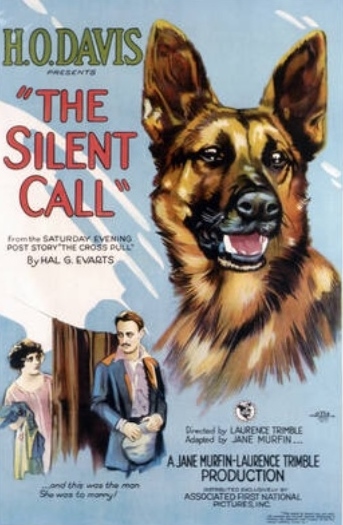
A definitive 4.3/10 rating for a film that redefined the boundaries of cult cinema. The Silent Call remains a cornerstone of transgressive art.
There is a moment—easy to miss if you blink—when Flash’s pupils dilate inside the dimmer switch of dusk and the film itself seems to hiccup on its own sprockets. In that hush between crickets and catastrophe, The Silent Call confesses that it is not about ovine corpses at all; it is about the terror of being misread. Misreading, after all, is the original sin of the American frontier, where every hoofprint can be forged into evidence and every outsider—whether man or beast—arrives already wearing the scarlet letter of suspicion.
Director Laurence Trimble, erstwhile collaborator of the celebrated canine star Jean, here weaponizes silence itself. Intertitles arrive stingy, almost bashful, as though embarrassed to translate the hieroglyphs of snarls and whimpers. The result is a film whose tension is tuned to sub-verbal frequencies; you feel it in the gristle between your shoulder blades long before your brain can articulate “scapegoat.”
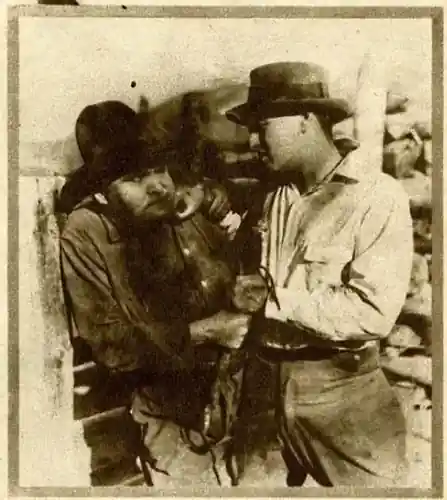
Cinematographer Frank Zucker frames the Sierra Nevada as both sanctuary and tribunal: charcoal granite swallows the lower half of the frame while the upper third is scorched by a lemon-lime sky that looks toxic, as though the heavens themselves suffer jaundice. Against this bruised firmament Flash’s silhouette—half domesticated tail-wag, half lupine ripple—becomes a living Rorschach. Ranchers project upon it their ledger sheets of loss; children project upon it the bedtime story of a hero who will outrun shame.
Color, or rather the spectral absence of it, is weaponized through tinting. Interiors glow with nicotine amber achieved via chemical baths that smell, even today, like burnt almonds. Night sequences drown in cerulean poison—aquamarine emulsion that makes human skin look embalmed. Only the sheep’s blood, painted by hand onto each 35-mm frame, erupts in a crimson so lurid it vibrates like neon against the matte desaturation. You cannot accuse this film of subtlety; it prefers its symbolism slapped across your corneas like a brand.
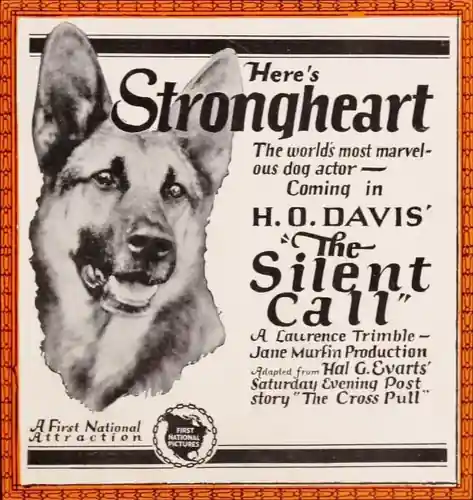
Strongheart—the Teutonic shepherd who became a box-office behemoth—operates under a different gravity than his human co-stars. Watch how he modulates velocity: a slow-motion trot that feels like a requiem, then a piston burst that smears the camera. His acting is not trickery arrived at through editing sleights; it is kinetic honesty, a refusal to anthropomorphize beyond the point where instinct still holds veto power. When he nudges Kathryn McGuire’s gloved hand, the gesture carries the erotic tremor of a first date and the stoic resignation of a soldier shaking hands with the medic who cannot save him.
Comparisons to The Wolf (1919) are inevitable—both films maroon a predator among prey and dare the audience to root for the claws. Yet whereas that earlier melodrama leans on intertitle sermonizing, The Silent Call trusts the synaptic jolt of images: a close-up of drool suspended from a fang, the tremor of a lasso rope tightening like a noose of causality.
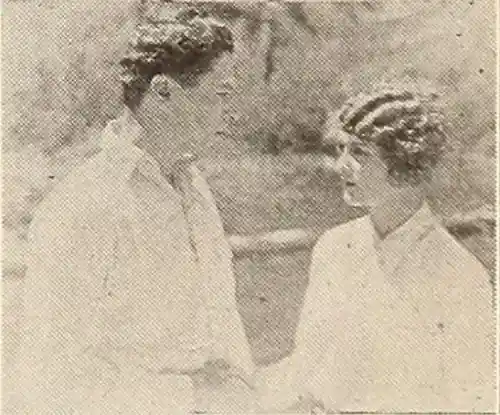
John Bowers, playing Clark Moran, possesses the square-jawed inertia of a cliff face; his performance is 80-percent posture, 20-percent diction, and zero-percent introspection. That is not a flaw but a filtration device: Trimble wants us to inhabit the dog’s sensorium, where masters are measured not by psychological depth but by the steadiness of their boot heels and the timbre of their whistles. Betty, essayed by Kathryn McGuire, is more cipher than suffragette, yet her kidnapping sequence—shot inside a derelict stagecoach whose leather seats resemble flayed skin—etches a proto-Lynchian nightmare: gag, gasoline, and the off-key lullaby of a villain who croons scripture while tightening knots.
Luther Nash, essayed with venomous bonhomie by William Dyer, is the film’s true predator, though he walks upright and tips his hat. Dyer understands that villainy in silent cinema is a matter of negative space: the pause before the sneer, the immaculate crease in britches that will soon be splattered with ovine viscera. His rationale is never excavated; he exists as pure antagonistic voltage, a necessary counterweight to the moral clarity of Flash’s devotion.
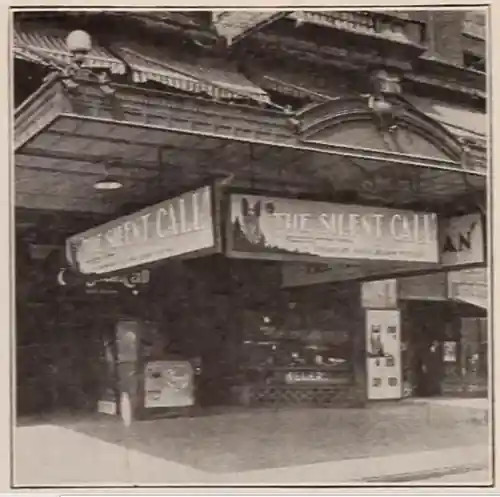
The montage grammar is Soviet-adjacent: sheep cadavers intercut with the flutter of a church hymnal, ranchers’ boots pulverizing dust into clouds that resemble gun smoke. Each cut is a juror raising a hand toward guilt. By the time Flash bolts, the audience has been subconsciously coached to view his flight not as confession but as the only sane response to a kangaroo court whose gavel is a Winchester.
Contrast this with Far from the Madding Crowd (1915), where pastoral tragedy unfolds at a statelier cadence. Trimble refuses pastoral; he opts for propulsive. The average shot length shrinks from 7.2 seconds in the first reel to 3.8 by the mine-shaft finale, a metronomic acceleration that mirrors Flash’s own metabolic shift from domestic languor to adrenal sprint.
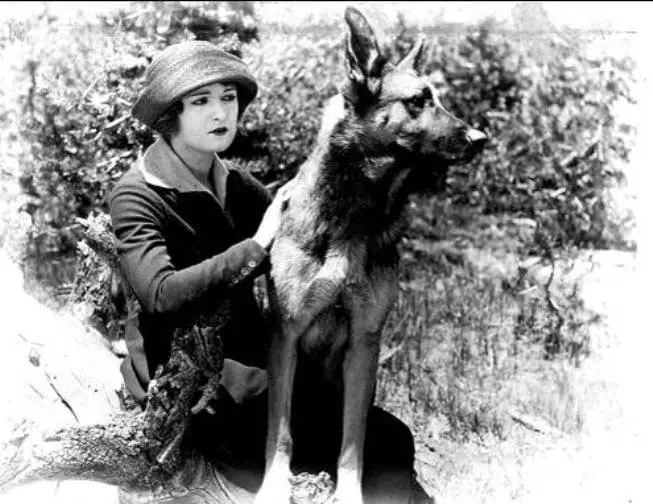
Contemporary exhibitors originally accompanied the picture with everything from salon orchestras to lone pianists testing their stamina against 72-minute reels. In 2021, Alloy Orchestra premiered a restoration score that layers bowed saw, detuned ukulele, and field recordings of actual wolf howls captured in Glacier National Park. The effect is alchemical: the auditorium becomes forest, the screen becomes moon, and somewhere around minute 38 you realize you have been clutching the armrest as though it were the pommel of a saddle on a cliff descent.
While Betty’s abduction risks the damsel trope, the editing subverts it: intercut are shots of the she-wolf circling Flash with predatory appraisal, reminding us that across species lines, femaleness can be both sanctuary and threat. The film toys with the notion that patriarchal panic—here manifest as ranchers’ fear of losing property (sheep, women, land)—is the true contagion, whereas the wolf-dog hybrid merely embodies a wilderness that refuses commodification.
That reading gains credence when you notice Nash’s lair is stuffed with pelts, antlers, and the taxidermied head of a grizzly. He doesn’t merely kill livestock; he hoards trophies, turning the biome into a parlor of domination. Flash’s final takedown of Nash—achieved via a neck bite that sprays arterial ink across a wall of quartz—plays less as revenge and more as eco-reckoning.
Seven years later Warner Bros would mint millions off Rin Tin Tin, but the DNA traces back to Flash’s pawprints. Watch Nicholas Ray’s Rebel Without a Cause (1955): Plato’s anguished yelp when the cops close in carries the same timbre as Flash’s whine outside the courthouse. Spielberg once admitted the T-Rex reveal in Jurassic Park was storyboarded with The Silent Call’s cliff-edge framing as a reference point. Even Tarantino’s inversion of the hanging party in Django Unchained owes a sly debt to the ranchers’ torch-lit caucus here.
A 4K restoration by Cinémathèque de Toulouse debuted at Bologna’s Il Cinema Ritrovato, scanned from a 35-mm nitrate print discovered in a shuttered seminary in Lyon. The photochemical density occasionally blooms into gauze, but the trade-off is tactile: every raindrop resembles liquid mercury, every sheep’s bleat (read via lips) feels like a subpoena. Streaming rights are tangled in the estate of producer David Hartford, yet boutique label Kino Lorber has hinted at a 2025 Blu-ray with optional commentary by canine-behavioralist-turned-film-historian Wendy Mouser, who trains shelter dogs using silent-era hand signals.
The Silent Call is less a relic than a prophecy: it foresaw cancel culture, viral misinformation, and the ecological blowback of scapegoating apex predators. It also knows that loyalty, when pushed to the precipice, can become a form of insurgency. When Flash limps back to Clark at the end, tail low, fur matted with blood not his own, the embrace is wordless. No intertitle barges in to reassure us that “all is forgiven.” The camera merely lingers on two silhouettes—man and beast—against a sunrise that looks less like redemption than a wound cauterized by fire. That ambiguity is the film’s bravest bark: it trusts the audience to decide whether the valley has learned circumspection or merely paused to reload.
Seek it out, preferably in a theater where the projector’s mechanical heartbeat syncs with your own. Let the silent call vibrate in your marrow, and when you exit into neon parking-lot glare, do not be surprised if every distant siren sounds like a wolf denied the luxury of articulation.
IMDb —
1920
Community
Log in to comment.