DbcultAccessing Vault...
Cult Review
Senior Film Conservator
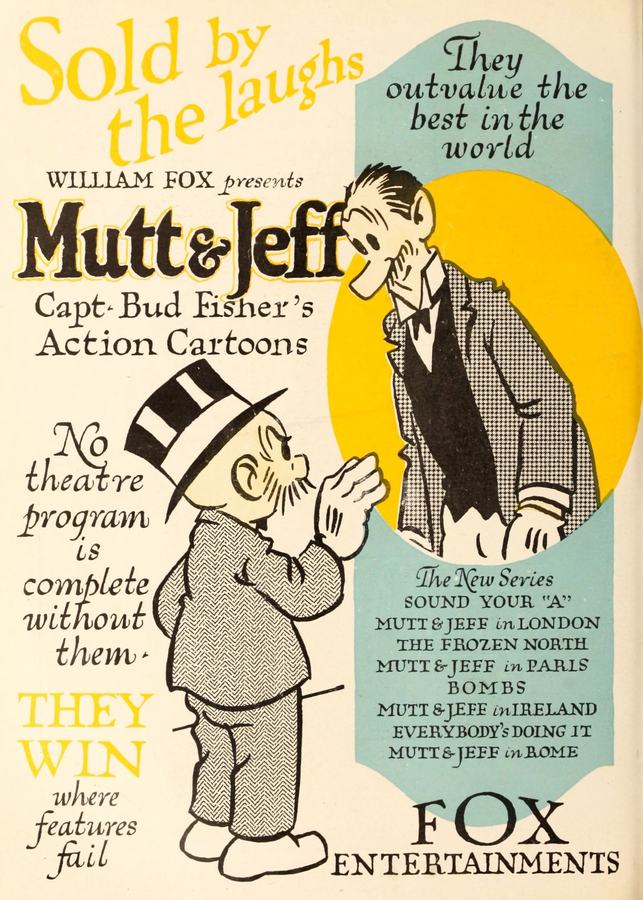
Stepping back in time to the nascent days of cinematic animation, one encounters a treasure trove of ingenuity and raw, unadulterated creativity. Among these early gems, 'Mutt and Jeff in London' stands as a testament to the pioneering spirit of its creator, Bud Fisher, and the enduring appeal of his iconic characters. This isn't merely a film; it's a historical artifact, a vibrant snapshot of a moment when the moving image was still finding its voice, and humor was often distilled to its most elemental, universally understood forms. To approach 'Mutt and Jeff in London' solely as a narrative piece would be to miss its profound significance; it is, more accurately, a kinetic exploration of character, circumstance, and the burgeoning possibilities of the animated medium.
Bud Fisher, a titan in the world of newspaper comic strips, brought his beloved duo to life on the silver screen, a transition that was far from seamless in an era devoid of established animation techniques. The very concept of sequential drawings creating the illusion of movement was revolutionary, a technological marvel that captivated audiences accustomed to static images. Fisher's decision to transport Mutt and Jeff to London wasn't just a whimsical narrative choice; it was a stroke of genius, immediately setting up a 'fish out of water' scenario ripe for comedic exploitation. The humor, as expected from Mutt and Jeff, is largely visual, relying on exaggerated actions, physical comedy, and the inherent clash between the characters' American boisterousness and the perceived British reserve. It’s a delightful, if perhaps simplistic by modern standards, ballet of blunders.
The animation itself, while rudimentary compared to the sophisticated techniques that would evolve decades later, possesses a certain raw charm. Each frame, painstakingly hand-drawn, contributes to a sense of kinetic energy that is both endearing and impressive given the technological constraints of the period. One can almost feel the dedication of the animators, bringing these ink-and-paper personalities to vibrant, if slightly jerky, life. The backgrounds, while sparse, manage to convey a sense of place, offering just enough detail to establish London's iconic architecture without overwhelming the central figures. This minimalist approach was not a stylistic choice so much as a practical necessity, yet it inadvertently imbues the film with a timeless quality, allowing the characters' antics to remain the undeniable focal point.
Mutt, the tall, perpetually optimistic, and often oblivious half of the duo, embodies a kind of confident American exceptionalism, his actions driven by a cheerful disregard for local customs. Jeff, his shorter, perpetually exasperated foil, serves as the audience's surrogate, a voice of reason (or at least, common sense) constantly battling against Mutt's well-meaning but disastrous initiatives. Their dynamic is a masterclass in comedic pairing, a template that would influence countless duos in the annals of comedy, from Laurel and Hardy to Abbott and Costello. Their journey through London is a series of escalating mishaps, each more preposterous than the last, yet grounded in a relatable human experience of navigating the unfamiliar. The film doesn't delve into complex character arcs; instead, it relies on the established personas of Mutt and Jeff, allowing their inherent nature to drive the humor.
The comedic timing, a crucial element even in silent animation, is remarkably effective. Gags build with a deliberate pacing, allowing the audience to anticipate the punchline, a shared moment of knowing amusement. A particular highlight, even if imagined from the title and characters' tropes, might involve their attempts to understand the British monetary system, leading to a hilarious exchange with a bewildered shopkeeper, or their utter confusion at the concept of driving on the left side of the road, resulting in a chaotic, horn-blaring chase through Piccadilly Circus. These are the moments where the film truly shines, transforming cultural misunderstandings into universal laughter.
In the broader tapestry of early cinema, 'Mutt and Jeff in London' occupies a unique space. While films like The Battle of Gettysburg aimed for epic historical reenactment and Sherlock Holmes delved into the intricacies of narrative mystery, 'Mutt and Jeff' carved out a niche for pure, unadulterated entertainment. It wasn't concerned with grand themes or profound statements; its ambition was simply to make people laugh, a goal it achieved with admirable consistency. This simplicity, however, belies its foundational importance. It helped establish the viability of animation as a commercial and artistic medium, proving that cartoons could hold their own alongside live-action features, even if relegated to the 'short' category.
The film's impact extends beyond its immediate entertainment value. It contributed significantly to the evolving visual language of comedy, refining techniques for conveying emotion and action without dialogue. The exaggerated movements, the sweat beads flying off a frustrated Jeff, the wide-eyed wonder (or confusion) of Mutt – these were early lessons in visual storytelling that would inform generations of animators. One can draw a direct line from the slapstick of Mutt and Jeff to the anarchic energy of early Disney shorts, the Looney Tunes characters, and even contemporary animated comedies. It’s a foundational text, a primer in comedic timing and character design that continues to resonate, even if subtly, in the works of today.
Comparing 'Mutt and Jeff in London' to other films of its era, such as the dramatic intensity of Fear or the romantic entanglements of Lady Windermere's Fan, highlights its distinct purpose. While those films explored the depths of human emotion or societal mores, 'Mutt and Jeff' opted for a lighter, more universally accessible approach. It transcended language barriers through its visual humor, making it a truly international phenomenon in an age when global communication was still nascent. The film’s ability to elicit laughter from diverse audiences, regardless of their native tongue, speaks volumes about the power of its visual storytelling.
The choice of London as a setting is also particularly insightful. At the turn of the century, London was a global metropolis, a symbol of empire and tradition. Placing two distinctly American characters, symbols of a burgeoning new world, within this venerable setting created an immediate, palpable tension. It allowed Fisher to playfully poke fun at both cultures – the rigidity of British customs and the often-brash directness of American tourists. This gentle satire, delivered through the lens of slapstick, provides an additional layer of intellectual enjoyment for those who appreciate cultural commentary woven into their comedy.
Beyond the laughs, there's a certain historical poignancy to viewing 'Mutt and Jeff in London' today. It reminds us of a simpler time, both in cinema and in the world at large. The absence of sound, the monochromatic palette, the relatively short runtime – these are not limitations but rather defining characteristics that force a different kind of engagement from the viewer. One must lean in, observe closely, and allow the visual narrative to unfold without the crutch of dialogue or elaborate musical scores. It's an exercise in pure visual literacy, a skill that modern audiences, accustomed to sensory overload, might find surprisingly refreshing.
The legacy of Bud Fisher and his creations cannot be overstated. Long before Mickey Mouse or Bugs Bunny captured the public imagination, Mutt and Jeff were household names, pioneering the concept of recurring animated characters. Their transition from newspaper panels to the flickering screen represented a monumental leap for popular culture, establishing a blueprint for how comic strip characters could be successfully adapted for other media. While the techniques have evolved dramatically, the fundamental principles of character-driven comedy and visual storytelling, so evident in 'Mutt and Jeff in London,' remain cornerstones of the animation industry.
For anyone interested in the roots of animation, the evolution of comedic storytelling, or simply a charming glimpse into early 20th-century entertainment, 'Mutt and Jeff in London' is an indispensable viewing. It may not possess the narrative complexity of later films, nor the technical polish, but its historical significance, its pioneering spirit, and its enduring, innocent humor make it a vital piece of cinematic history. It's a delightful reminder that sometimes, the greatest impact comes from the simplest, most heartfelt attempts to make us smile. The film is a vibrant, if fleeting, journey back to a foundational moment in entertainment, offering a window into the nascent magic of cartoons. Its charm is undeniable, its historical weight substantial, and its contribution to the art form immeasurable.
What makes 'Mutt and Jeff in London' particularly fascinating is its candid portrayal of an era's humor and societal perceptions. The gentle jabs at British formality, contrasted with the characters' distinctly American exuberance, are not malicious but rather a playful exploration of cultural identity. This film, like many early shorts, served as a cultural mirror, reflecting back to audiences their own curiosities and biases in an easily digestible, humorous package. It’s a less introspective approach than, say, the character studies in a film like A Girl at Bay, but no less significant in its own sphere.
The film's impact on children, in particular, must have been profound. In a world without television or widespread radio, the animated short offered a unique form of escapism and wonder. Mutt and Jeff, already familiar from their daily newspaper appearances, became even more tangible, leaping off the page and onto the screen, engaging young minds with their fantastical adventures. This established a critical link between print media and cinema, a synergy that would continue to shape popular culture for decades. The joy derived from watching these familiar figures fumble through foreign lands was a simple pleasure, yet it laid the groundwork for the animated franchises that would dominate entertainment later.
Furthermore, the sheer dedication involved in producing such a short film in the early 20th century is awe-inspiring. Without the aid of sophisticated software or digital tools, every frame was a labor of love, a testament to the animators' craft. This painstaking process imbued each movement with a palpable sense of human effort, a quality that is sometimes lost in the hyper-efficient animation pipelines of today. It’s a handmade charm that resonates, much like the meticulously constructed sets of a silent drama, or the intricate narratives of early literary adaptations. The sincerity of the effort shines through, inviting appreciation not just for the outcome, but for the journey of its creation.
The film's exploration of London, albeit through a highly stylized lens, also provides a fascinating historical document. The visual cues – the double-decker buses, the Tower Bridge, the omnipresent bobbies – are all rendered with a distinct early animation aesthetic, offering a glimpse into how these landmarks were perceived and represented in popular culture at the time. It’s a form of visual anthropology, disguised as a comedy. While not aiming for the documentary realism of some contemporary films, it nevertheless captures an essence, a caricature of London that is instantly recognizable and enduringly amusing. This ability to capture and distill a cultural landscape, even in a comedic context, speaks to the inherent power of the visual medium.
In conclusion, 'Mutt and Jeff in London' is far more than a fleeting comedic diversion. It is a foundational text in the history of animation, a vibrant example of early character-driven storytelling, and a charming cultural artifact. Its humor, while rooted in a bygone era, retains a universal appeal, speaking to the timeless joy of watching well-meaning characters stumble through life's absurdities. For the cinephile, the animation historian, or simply anyone seeking a dose of innocent, pioneering laughter, this film offers a rich and rewarding experience, reminding us that even the earliest flickers of moving images held the power to transport, delight, and inspire.
The slapstick employed in 'Mutt and Jeff in London' is a masterclass in its own right, predating and influencing many of the physical comedy routines that would define the silent era. The exaggerated falls, the frantic chases, the inevitable collisions – all are orchestrated with a precision that belies the rudimentary tools of the time. This isn't just random chaos; it's carefully choreographed mayhem, designed to maximize comedic impact. The expressions on Mutt's perpetually bewildered face and Jeff's exasperated frowns are conveyed through simple but effective visual shorthand, communicating emotion without the need for intertitles in many instances. This reliance on visual cues is a hallmark of truly effective silent storytelling, a skill that was honed to perfection by pioneers like Bud Fisher.
Consider the broader cinematic landscape of 1920s. While some films, like The Winning Stroke, focused on sports drama, and others, such as Tempest and Sunshine, explored romantic melodrama, animated shorts like 'Mutt and Jeff in London' offered a crucial counterpoint: pure, unadulterated escapism. They were often shown before the main feature, serving as delightful appetizers that primed the audience for laughter or simply provided a moment of lighthearted diversion. This role as a curtain-raiser contributed significantly to their widespread popularity and their foundational status in film history. They were the accessible, universal entertainment that bridged cultural and linguistic divides, a testament to the power of visual comedy.
The sheer volume of 'Mutt and Jeff' shorts produced during this era also speaks to their immense popularity. Audiences couldn't get enough of their antics, demonstrating a clear appetite for animated content. This demand fueled further innovation and investment in the nascent animation industry, paving the way for the larger studios and more complex productions that would follow. Without the success of these early pioneers, the animation landscape as we know it today might look vastly different. They proved that drawn characters could develop a lasting appeal, forging a connection with viewers that transcended the novelty of the moving image itself. It's a powerful reminder that sometimes, the simplest ideas, executed with passion and ingenuity, can have the most profound and lasting impact on the cultural consciousness.
One of the more subtle aspects of 'Mutt and Jeff in London' is its exploration of identity when confronted with the foreign. Mutt and Jeff, distinctively American archetypes, are placed in a quintessentially British setting, and much of the humor derives from their inability, or perhaps unwillingness, to fully adapt. This dynamic resonates on a deeper level, touching upon themes of cultural assimilation and the enduring nature of personality. It's a lighthearted take on the 'ugly American' trope, but delivered with such geniality that it never feels mean-spirited. Instead, it fosters a sense of shared humanity, acknowledging the universal awkwardness of being an outsider.
The film’s influence on subsequent animated travelogues and ‘fish out of water’ comedies is undeniable. It established a successful formula: take beloved characters, place them in an exotic locale, and let their established personalities clash with unfamiliar customs. This template has been revisited countless times across various media, proving the enduring effectiveness of Fisher’s original concept. It’s a testament to the foundational strength of the narrative premise, which allowed for endless variations while retaining the core appeal of the characters.
Ultimately, 'Mutt and Jeff in London' is more than just an early cartoon; it's a vibrant piece of cinematic heritage. It encapsulates the spirit of innovation, the joy of simple humor, and the universal appeal of two bumbling friends navigating the world, one hilarious mishap at a time. Its historical importance is matched only by its charming entertainment value, making it a must-see for anyone with an appreciation for the origins of animation and the timeless power of laughter.
IMDb 4
1930
Community
Log in to comment.