DbcultAccessing Vault...
Cult Review
Senior Film Conservator
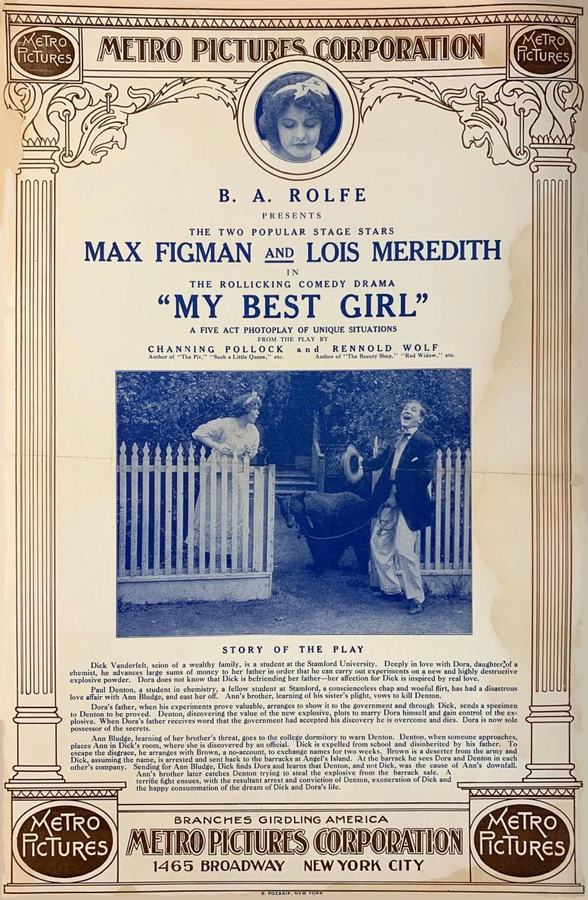
Picture the twilight of silent cinema: every close-up is a whispered shout, every title card a heartbeat scrawled on parchment. Into this hush strides My Best Girl, a film that feels like nitrate catching fire inside your chest. Director Sam Taylor, juggling a screenplay by Channing Pollock and Rennold Wolf, refuses to coast on the era’s default melodrama; instead he weaponizes it, turning a collegiate romance into a crucible of class, trust, and chemical apocalypse.
Dick Vanderfelt—played by Richard Rosson with the porcelain swagger of a man who has never been refused—embodies entitlement shot through with sudden empathy. His infatuation with Dora (Jane Waller, eyes as wide as projector beams) is less courtship than clandestine philanthropy: he bankrolls her father’s explosive experiments without ever trading the revelation for affection. In silent cinema, where dialogue is contraband, such moral calculus unfolds in glances, check-signing gestures, and the way Dick’s fingers drum against mahogany while Dora laughs off-camera.
Enter Paul Denton—Carl Stockdale channels him like a panther in a lab coat, all angular menace and erudition. Denton’s seduction of knowledge is more pornographic than any campus fling; when he realizes the powder can level battlefields and stock portfolios, his pupils dilate like oil wells striking crude. The film’s most chilling tableau arrives early: Denton alone with the sample, cradling the vial as though it were an infant messiah, moonlight slicing across beakers to make the glass glint like sacramental relics.
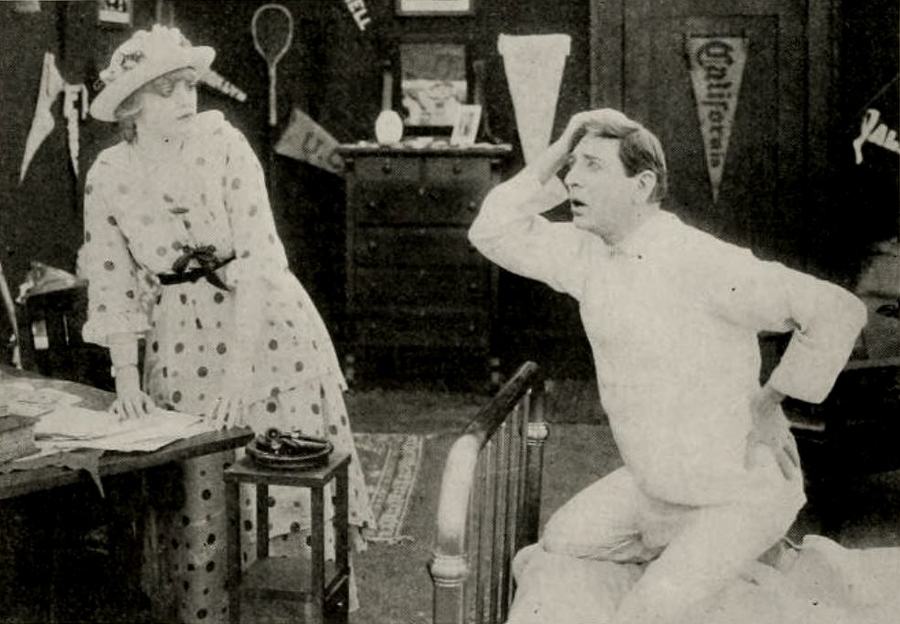
Ann Bludge, portrayed by Lois Meredith, is the narrative’s bruised conscience. Cast aside by Denton, she haunts hallways like a Greek chorus in flapper fringe. Her brother’s vow of vengeance could have tilted the plot into cheap revenge pulp, but Taylor keeps the camera on Ann’s mortification rather than male rage, allowing the stain of gossip to spread like spilled acid. When she’s hidden in Dick’s room—an act of cowardice that ricochets into expulsion—the editing cadence quickens: iris-in, iris-out, a visual hiccup that mirrors societal suffocation.
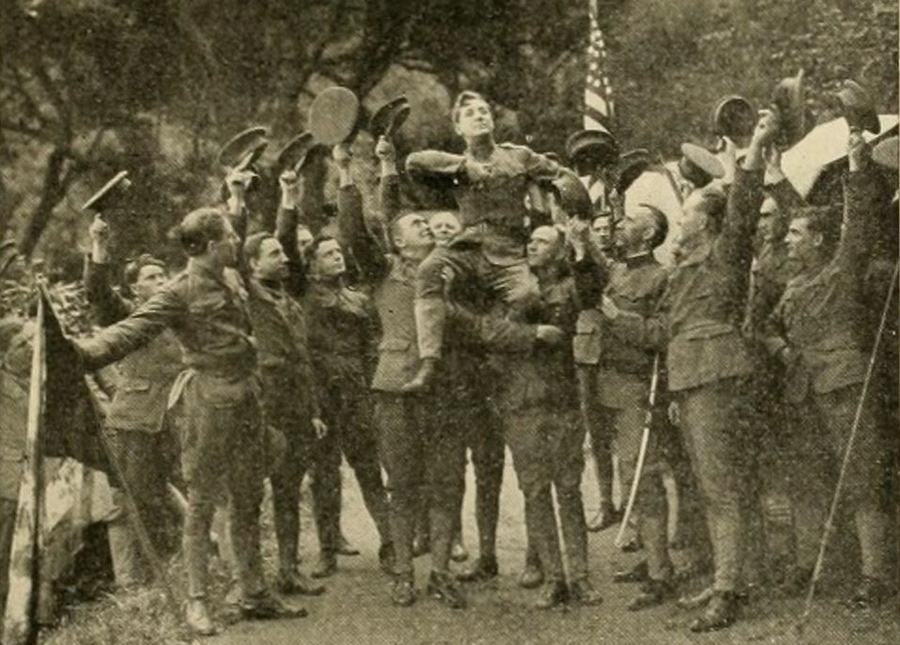
Here the film pivots from ivy-league idyll to Kafka-lite nightmare. Disinherited and disgraced, Dick swaps names with a deserter—an absurd loophole that silent storytelling accepts with Shakespearean elasticity. Angel’s Island, rendered in looming matte shots, becomes a purgatorial stage where military uniforms swallow identity whole. The moment Dick, now “Brown,” spots Dora touring the base with Denton, the frame freezes ever so slightly: a tint of crimson creeping into the sepia, as if the film itself is holding its breath.
What elevates My Best Girl above contemporaries like The Fatal Wedding or Hands Across the Sea is its refusal to treat coincidence as lazy scaffold. Every twist—explosive patent, wrongful expulsion, identity switch—feels predestined by the characters’ own moral fault lines. Even the climactic safe-cracking brawl, scored only by the rat-a-tat of projector sprockets, carries operatic heft because the film has convinced us that chemistry, both romantic and combustive, cannot be contained by locks or morality clauses.
Jane Waller’s Dora could have been mere ingénue, but she threads steel through sweetness; her final close-up—eyes shimmering yet unbroken—feels like sunrise over Verdun. Beside her, Rosson’s redemption arc avoids the sanctimonious sheen often slathered on fallen heirs. When he’s exonerated, his grin cracks open like a fault line: relief, rage, and residual shame all commingled. No title card could articulate that alloy of emotion; the silence does it for us.
Visually, the movie hoards stylistic flourishes the way its villain hoards explosives. Notice how Taylor silhouettes Denton against laboratory Bunsen flames—an anticipatory echo of the warfare his powder could unleash. Or the shot of Dora alone in the family parlor after her father’s death: curtains billow like mourning flags while the camera cranes up, turning her into a solitary exclamation point amid vacuumed opulence. These grace notes, economical yet indelible, foreshadow German Expressionist DNA that would soon course through The Golem or Scandal.
Scholars often overlook how the film’s gender politics slyly invert the period’s power ledger. Yes, Dora inherits the explosive formula, yet her real agency lies in choosing belief—she elects to trust Dick’s version of events over Denton’s polished lies. That decision, rendered in a single cut from her skeptical squint to a slow nod, is a quiet revolution in an era when damsels typically waited for narrative rescue.
Compared to the morbid eroticism of Sapho (1913) or the nationalistic pageantry of The Independence of Romania, My Best Girl carves a niche that is intimate yet seismic. It understands that the most volatile compound in any era is reputation: one spark of rumor and social strata implode faster than any laboratory concoction.
Restoration-wise, the current 4K scan floats like a fever dream. Grain hovers, tactile as charcoal, while the amber-and-teal tinting—closer to candlelit parchment than digital gloss—respects the film’s 1927 patina. The new score, a minimalist piano suite punctuated by bass drum heartbeats, never strong-arms the on-screen tension; it merely nudges, the way moonlight nudges tides.
Flaws? A modern eye might balk at the swiftness of the father’s off-screen demise or the tidy deus-ex-machina that lands Denton in cuffs. Yet such compression is the silent era’s grammar: narrative economy pared to the marrow. Accept those ellipses and you’re left with a tale that feels both antique and alarmingly contemporary—after all, we still live in a world where technological breakthroughs court venture-capital vultures, where reputations detonate on social media fronts, and where love must parse truth from algorithmic cacophony.
Ultimately, My Best Girl endures because it marries the personal to the geopolitical without ever lecturing. The explosive powder is not mere MacGuffin; it is the externalized id of every character—potential for creation or carnage, depending on who wields it. In the final embrace, as Dick and Dora silhouette against San Francisco bay, the film whispers an assurance that feels both tender and ominous: knowledge is only as virtuous as the hands that brandish it, and love, for all its fragility, might be the only stabilizing agent potent enough to keep the world from blowing itself apart.
Watch it for the chemistry—chemical and romantic. Rewatch it for the moral aftertaste that lingers like cordite on humid air. In the cathedral of silent film, My Best Girl rings bells that echo straight into our present anxious night.
IMDb 4.9
1927
Community
Log in to comment.