DbcultAccessing Vault...
5.7/10
Senior Film Conservator
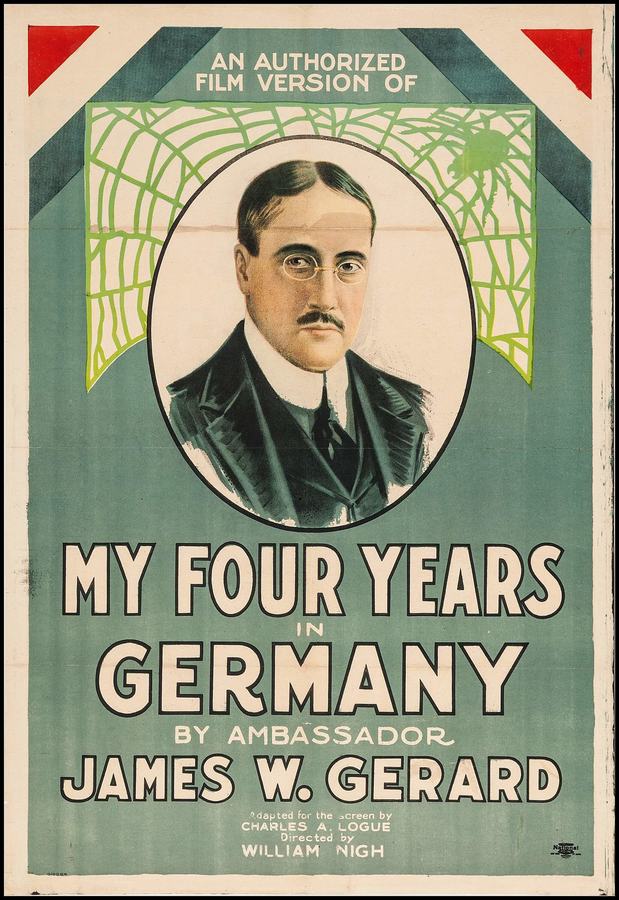
A definitive 5.7/10 rating for a film that redefined the boundaries of cult cinema. My Four Years in Germany remains a cornerstone of transgressive art.
Stepping back into the cinematic landscape of 1918, one encounters a peculiar and profoundly significant artifact: My Four Years in Germany. This isn't merely a silent film; it's a direct, urgent dispatch from the very precipice of global conflict, a semi-documentary born from the vivid, firsthand accounts of James W. Gerard, the American Ambassador to Germany during the tumultuous years leading up to and into the First World War. To approach this film is to engage with history not as a distant echo, but as a living, breathing narrative, shaped by the immediate experiences of a key figure entangled in the intricate web of international diplomacy.
At its core, the film endeavors to translate Gerard's bestselling memoir into a visual medium, aiming to illuminate the German psyche and the escalating tensions through the unique vantage point of an American diplomat striving to maintain neutrality amidst a continent ablaze. It’s a remarkable hybrid, blending dramatic reenactments with what were then novel documentary techniques, all designed to convey the gravity of the situation and, perhaps, to galvanize American public opinion at a crucial juncture. This wasn't abstract history; it was a contemporary revelation, offering audiences a window into the inner workings of a nation on the brink, as perceived by an outsider with unprecedented access.
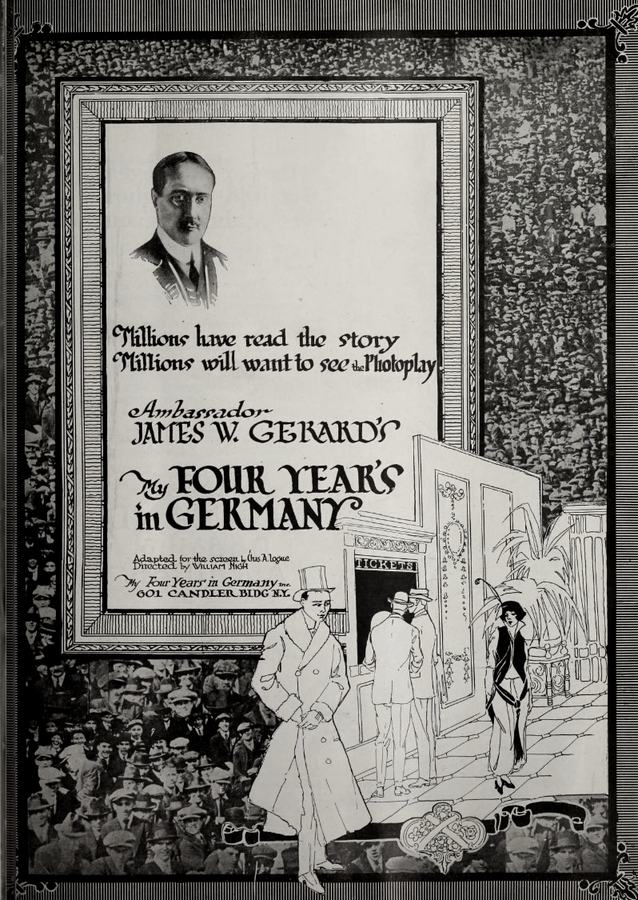
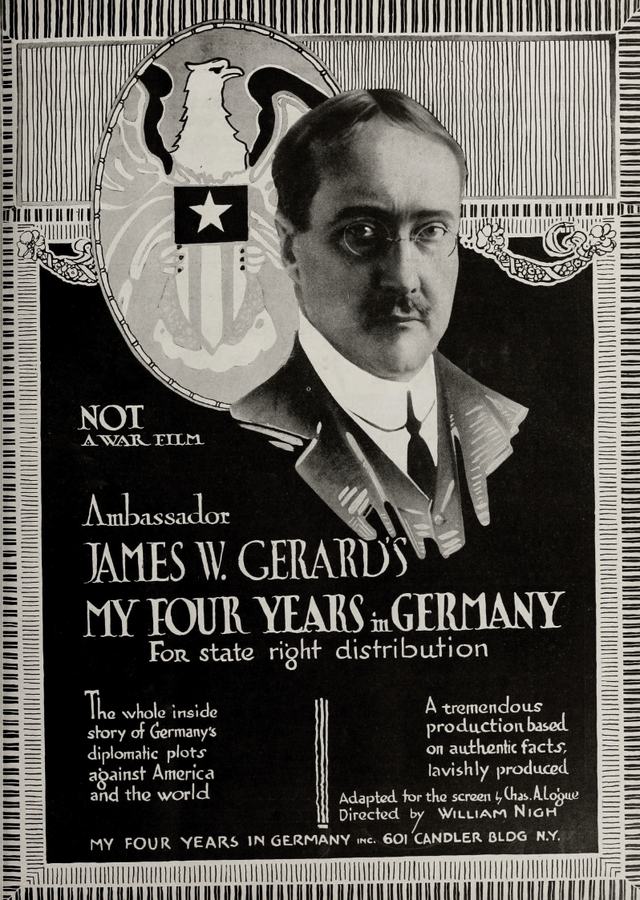
Ambassador James W. Gerard's book, upon which this film is largely based and which he co-wrote for the screen with Charles Logue and director William Nigh, was a sensation. It offered an unfiltered, if undeniably American-centric, look at Imperial Germany during a period of immense geopolitical flux. Gerard arrived in Berlin in 1913, witnessing firsthand the opulent grandeur of the Wilhelmine court, but also the simmering militarism beneath the surface. His narrative, and by extension the film's, meticulously traces the slow, agonizing descent from peace to war, and then America's fraught journey from neutrality to eventual belligerence.
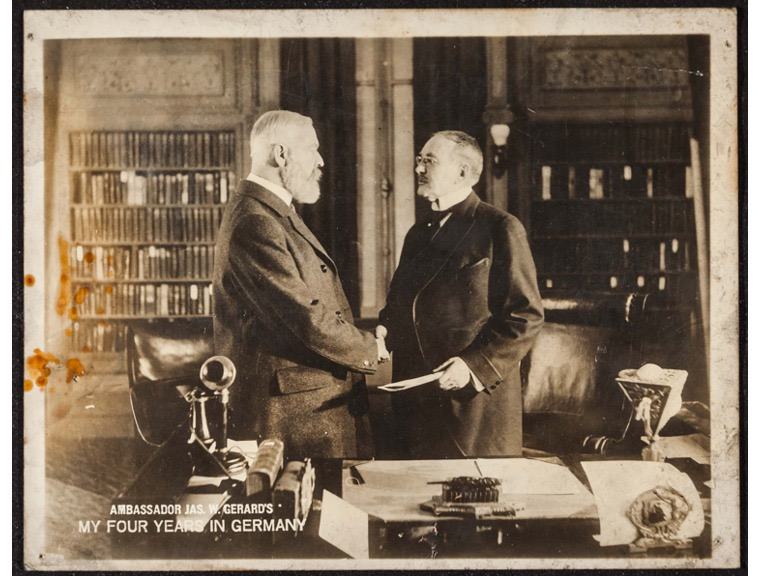
The film captures this trajectory with a compelling blend of dramatic vignettes and a sense of unfolding reportage. We see Gerard (portrayed with earnest gravity by Earl Schenck) interacting with German officials, observing the Kaiser, and grappling with the increasingly dire circumstances faced by Allied prisoners of war, whose welfare became a significant concern for the neutral American embassy. The authenticity, or at least the perceived authenticity, of these portrayals was paramount, given the film's semi-documentary ambition. It strives to be more than just entertainment; it positions itself as an educational, almost journalistic, endeavor.
One of the most fascinating aspects of My Four Years in Germany is its pioneering approach to the 'semi-documentary' form. In an era when cinema was still largely finding its voice, especially in conveying complex political narratives, this film attempts a daring synthesis. It employs actors like Anne Dearing, Frank Stone, and Arthur C. Duvel to embody the historical figures and human drama, yet it intersperses these dramatized scenes with what were likely archival clips or staged sequences designed to look authentic. This blurring of lines between fact and fiction, while common in modern docudramas, was quite innovative for its time.
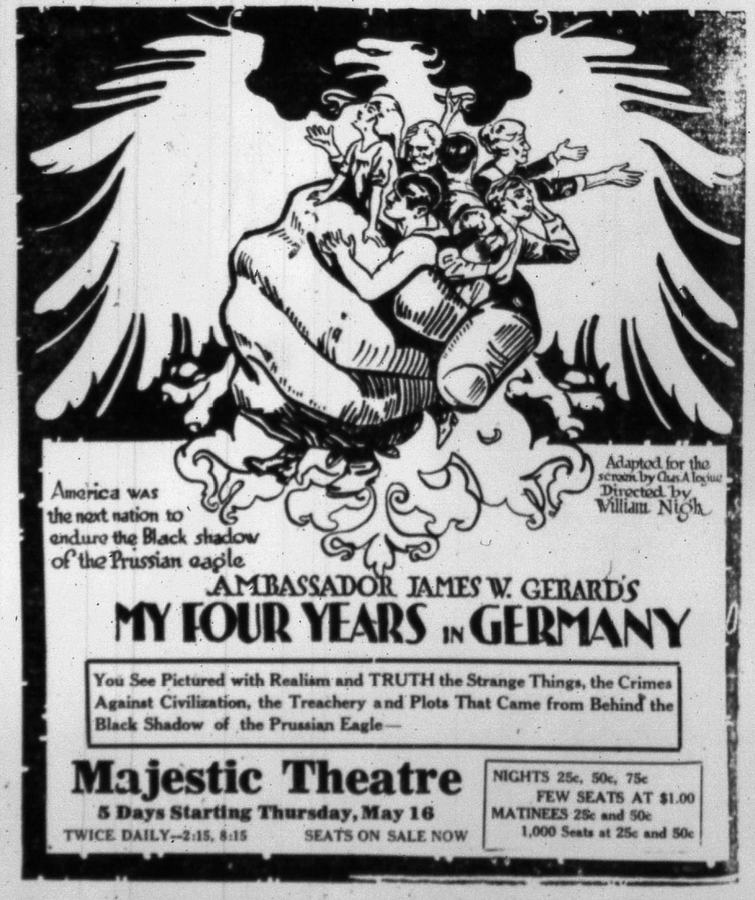
It would be naive to view My Four Years in Germany purely as an objective historical document. Released in 1918, as America was fully engaged in the war, the film undeniably served a powerful propagandistic purpose. Gerard's book itself was a tool to shape public opinion, and the film amplifies this intent. It paints a picture of German aggression, militarism, and a disregard for international norms, effectively justifying America's entry into the conflict.
The film's depiction of German leadership, particularly the Kaiser, and the plight of non-combatants, is crafted to evoke a strong emotional response. While rooted in Gerard's observations, these portrayals are filtered through the lens of wartime necessity and national interest. This isn't a flaw, but rather an essential characteristic of cinema produced during periods of intense national struggle. It reflects the anxieties, the justifications, and the moral framework that a nation constructs to understand and prosecute a war. Its very existence, and its popularity, speak volumes about the public's hunger for explanations and narratives that reinforced their national resolve.
In a silent film, the burden of conveying emotion, character, and narrative falls heavily upon the actors' physical expressions and gestures. Earl Schenck, as Ambassador Gerard, delivers a performance that balances the diplomatic gravitas of the historical figure with the heightened theatricality typical of the era. His portrayal is earnest, conveying a sense of genuine concern and moral rectitude as he navigates the increasingly hostile environment.
The supporting cast, including Anne Dearing, Frank Stone, and Arthur C. Duvel, along with figures like A.B. Conkwright, Eugene Acker, and Fred Hearn, contribute to the tapestry of characters. Their performances, while often broad by modern standards, were essential in establishing the emotional beats and character dynamics. The film relies on visual cues, intertitles, and the sheer expressive power of its performers to communicate the complexities of diplomatic maneuvering and the human cost of war. The challenge for silent actors portraying real historical figures was immense, requiring them to capture an essence without the aid of spoken dialogue, relying instead on a carefully calibrated physicality.
William Nigh, a prolific director of the silent era, faced a unique challenge with My Four Years in Germany. His task was not merely to tell a story, but to re-enact and contextualize a pivotal historical period, guided by the very man who lived through it. Nigh's direction skillfully weaves together the personal narrative of Gerard with broader historical events, maintaining a pace that keeps the audience engaged despite the often-dense political subject matter. His choices in staging, camera angles, and editing contribute to the film's overall tone of urgency and authenticity.
The collaborative writing effort between Gerard, Charles Logue, and Nigh himself is crucial. Gerard's direct involvement ensured that the film adhered closely to his perspective and the details of his experiences. This level of authorial control from the subject of the film itself is rare and lends a unique authoritative voice to the cinematic adaptation. Nigh's directorial hand then shaped this narrative into a visually compelling form, leveraging the nascent techniques of cinematic storytelling to bring Gerard's observations to life. It's a testament to the early industry's capacity for ambitious, meaningful projects, far beyond simple melodrama.
For a film from 1918, My Four Years in Germany showcases the evolving visual language of silent cinema. The cinematography, while perhaps lacking the elaborate tracking shots or complex compositions of later eras, is effective in conveying mood and setting. Exterior shots of Berlin, likely a mix of actual footage and cleverly constructed sets, transport the viewer to the heart of Imperial Germany. The use of intertitles is, of course, fundamental, not just for dialogue but for providing critical exposition, historical context, and Gerard's own reflections, directly echoing the memoir's prose.
The film's visual style, while constrained by the technological limitations of its time, effectively uses close-ups to emphasize emotional states and wider shots to establish the grandeur or grimness of a scene. The lighting, often stark, contributes to the dramatic atmosphere, particularly in scenes depicting the escalating tensions or the suffering of war. It's a fascinating study in how early filmmakers used the tools at their disposal to create a persuasive and immersive experience, proving that even without synchronized sound, a powerful narrative could be meticulously constructed through visual storytelling and evocative imagery.
Beyond its historical recounting and propagandistic undertones, My Four Years in Germany grapples with profound themes. At its heart is the struggle of diplomacy in the face of overwhelming nationalistic fervor and impending conflict. Gerard's character embodies the often-futile effort to maintain peace and protect humanitarian principles when the machinery of war has been set in motion. The film highlights the immense pressure on diplomats during such times, caught between their national interests and the universal imperative of human decency.
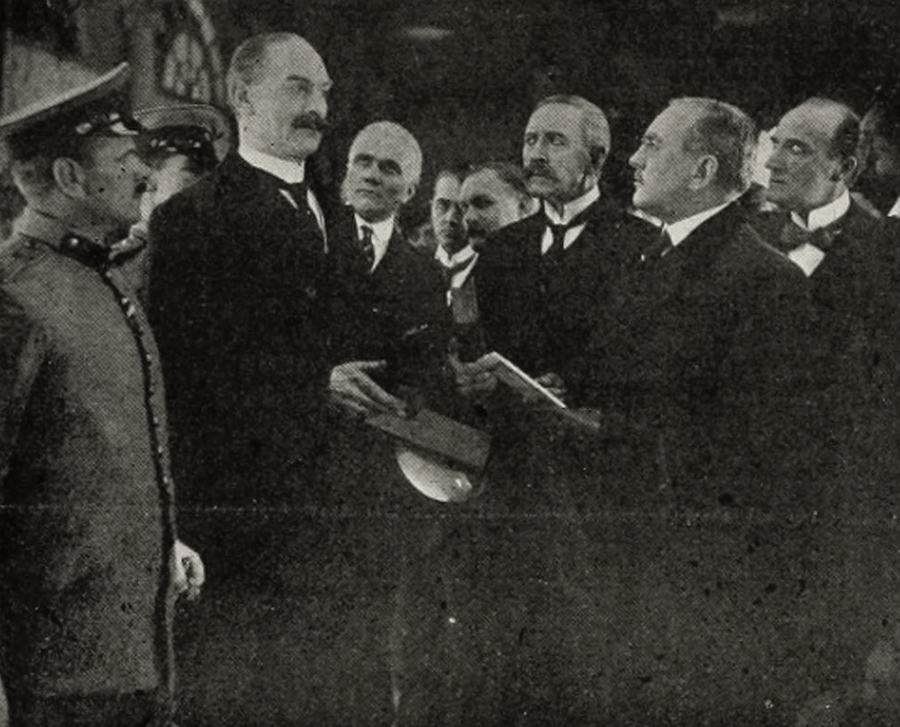
The suffering of the common people, particularly the prisoners of war, is another recurring motif. Through Gerard's efforts on their behalf, the film subtly underscores the human cost of grand political decisions, reminding viewers that behind the geopolitical chess game are countless individual lives irrevocably altered. This element of humanism, even within a film with clear nationalistic aims, provides a poignant counterpoint to the broader narrative of escalating conflict. It forces the audience to consider the personal impact of war, not just its strategic implications.
The legacy of My Four Years in Germany extends far beyond its initial wartime impact. It stands as a crucial document for understanding early 20th-century American foreign policy, the burgeoning power of cinematic propaganda, and the nascent forms of docudrama. For film historians, it offers a fascinating case study in how contemporary events were translated onto the screen, blending authenticity with dramatic license.
Today, watching the film requires an appreciation for its historical context and its specific purpose. It's not a neutral observer's account, nor does it claim to be. Instead, it offers a powerful, subjective testimony from a moment of immense global upheaval. Its value lies in its ability to transport us back to that specific time and place, allowing us to experience, however vicariously, the anxieties and convictions that shaped a nation's understanding of a world at war. It reminds us of the enduring power of personal narratives, even when filtered through the lens of national interest, to illuminate the complex tapestry of history.
In an era where information can be instantly disseminated, examining a film like this highlights the profound role early cinema played in shaping public discourse and national identity. It’s a testament to the ambition of its creators and the urgency of its message, cementing its place not just as a historical curiosity, but as a vital piece of cinematic and political history. It invites us to consider how narratives, both factual and dramatized, continue to influence our understanding of the world.
IMDb —
1924
Community
Log in to comment.