DbcultAccessing Vault...
Cult Review
Senior Film Conservator
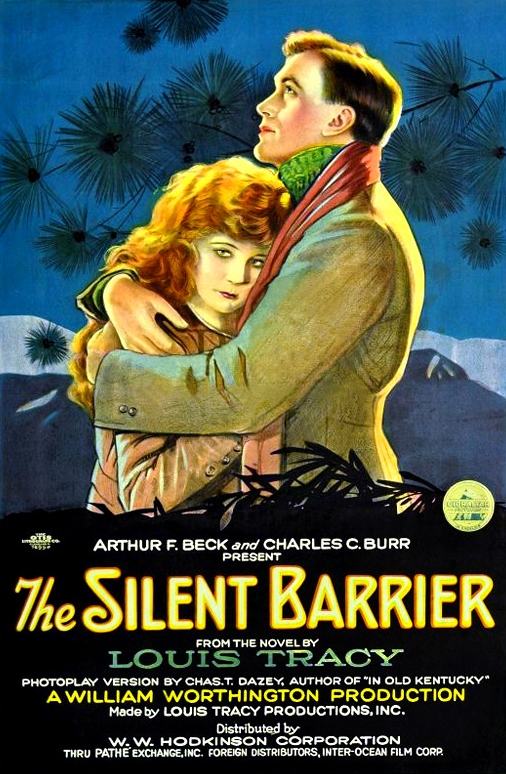
Picture a monochrome canvas where London’s sooty brickwork dissolves into Alpine alabaster: that visual jolt is the first gift The Silent Barrier bestows. Yet beneath the touristic postcard lurks a scalpel-sharp dissection of money as ventriloquist, pulling the strings of desire without ever showing its hand. Director Edgar Lewis—never a household name like Griffith or DeMille—nevertheless choreographs a waltz of glances, gloves and forged telegrams that prefigures Das Grand Hotel Babylon in everything but lobby décor.
Joseph Burke’s millionaire traveler, John Armitage, overhears Mary Herries (Gladys Hulette) sigh for “just one sniff of edelweiss” in a Fleet Street pub so cramped the camera itself seems to inhale pipe smoke. Instead of flirtation, Burke registers a micro-tremor of empathy—eyebrows ascend maybe four millimeters, yet the gesture telegraphs an entire paradigm shift. From that moment on, the film’s true protagonist becomes capital: invisible, odorless, yet capable of hurling a working-class woman into the chandeliered splendor of a Swiss palace-hotel where soup is served with silver tongs and malice is ladled just as liberally.
What makes the setup delicious is its cynicism about charity. Armitage’s largesse is framed as reportorial necessity: the paper must have Alpine coverage; Mary is conveniently available. The lie is so exquisitely tailored it flatters both parties—she believes her talent has been rewarded, he maintains the illusion that wealth is merely a neutral facilitator. The audience, meanwhile, watches the moral equivalent of skiing off a cliff while adjusting your goggles.
Hulette, often dismissed as just another wide-eyed ingénue, modulates from newsroom curiosity to vertiginous self-doubt once the altitude rises. Notice how she grips her parasol like a journalist’s pencil when first stepping onto the hotel terrace; by the time she’s accused of gold-digging, the same parasol hangs limp, a wilted exclamation mark. It’s silent-film semaphore at its most eloquent.
As rival suitor Roland Forster, Sheldon Lewis channels a kind of Alpine Dracula—tailcoat collar up, eyes hooded by a top-hat brim that slices across the frame like a guillotine. His menace is all implication: a too-firm hand on the small of Mary’s back, a whispered aside to the maître d’ that lands our heroine the worst table next to the potted palms. Meanwhile Mathilde Brundage’s Baroness de la Motte operates as the grande dame of passive aggression, entering every salon as though parting a theatrical curtain only she can see. The moment she registers Mary’s presence, her smile retracts like a snail into its shell—an acid-etched miniature worthy of Lorena’s society vampires.
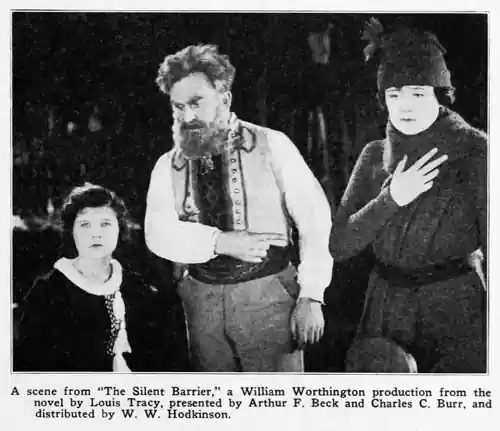
Cinematographer Herbert Oswald’s camera glides through the hotel’s bowels—kitchens belching steam, linen corridors where maids morph into Greek-chorus gossips—before soaring to the rooftop where a single violinist plays Strauss to an audience of starlight. That vertical voyage externalizes the class elevator Mary has boarded: ascent is thrilling, yet a misstep means plummet. The motif culminates in a midnight rescue sequence across a snow bridge that crackles like celluloid itself about to snap. For 1920 audiences, the tension must have felt post-coital; for us, it’s a reminder that CGI has not improved on the goose-bump economy of real precipices.
Charles T. Dazey’s titles deserve a raise from the grave. When Mary cables home “Am filing dispatch from cloud balcony,” the next card slyly retorts “Clouds, like creditors, have a way of drifting off.” It’s the sort of velvet-gloved snark that Oscar Wilde might have traded for a weekend in Biarritz. The linguistic snap rescues the film from the floral treacle that sinks many contemporaries such as Romeo and Juliet in the Snow.
Modern viewers often equate silence with absence. Watch instead how the film weaponizes the lack of audible gossip: words travel slower, so every rumor arrives like a frost-bitten telegram you must thaw beside the hearth. When Mary finally confronts Armitage about his invisible patronage, Lewis stages it in a cable-car cabin suspended mid-air—no escape, no sonic filler, only the wind’s howl provided by your own imagination. The scene anticipates the claustrophobic talkathons of The Secret Man without ever uttering a syllable.
One could read the entire plot as an allegory for women’s labor under capitalism: Mary’s writing is literally underwritten by a man who can withdraw support faster than an Alpine avalanche. Yet the film complicates that reading by granting her authorship of the final expose; the pen that was purchased becomes a weapon that wounds the purchaser. In 1920, such a twist bordered on suffragist fanfare, albeit wrapped in chiffon.
The film’s centerpiece is a moonlit toboggan race doubling as courtship duel. Forster sabotages Mary’s sled by loosening a runner screw—an act of microscopic villainy that feels almost Shakespearian. Armitage, discovering the tampering, must decide whether to expose his rival and thus reveal his own surveillance of Mary. The sequence unspools in silhouette: three figures, a wrench, a moonlit screwdriver, the hiss of escaping snow. It’s the sort of visual haiku that makes later slapstick mountain chases—say, in The Biggest Show on Earth—look like bloated carnival barking.
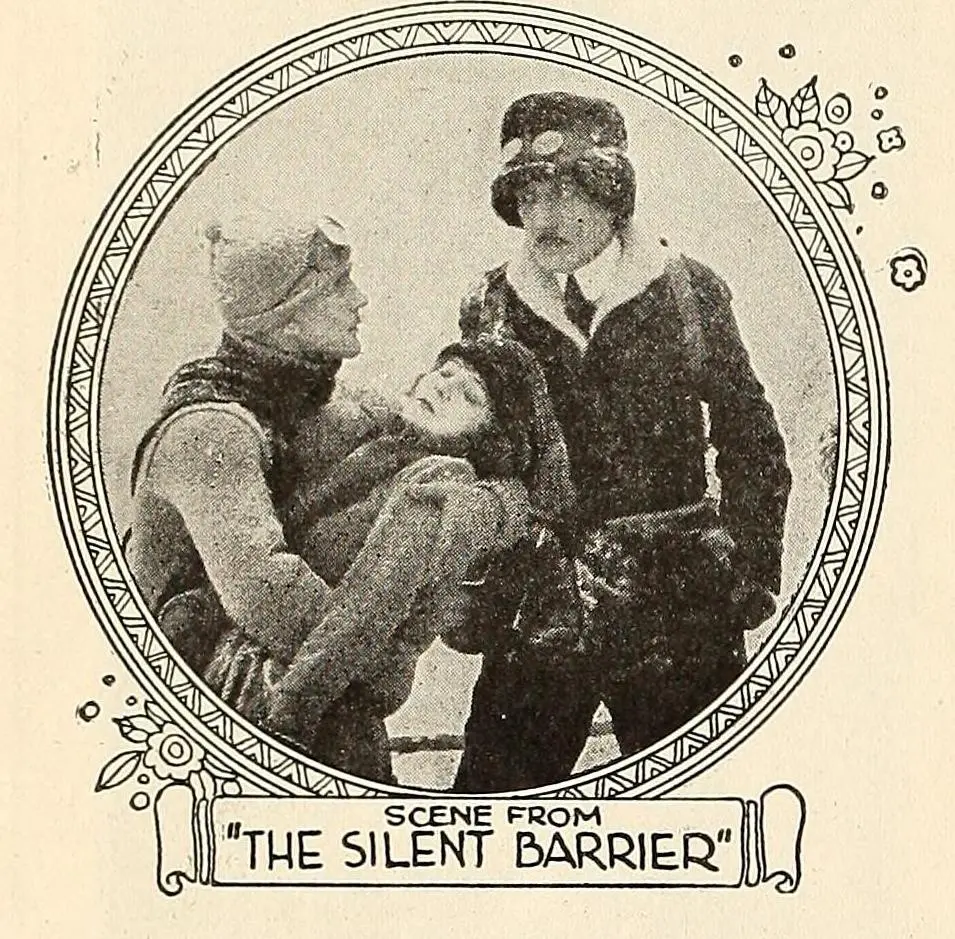
Notice how Oswald’s camera frequently frames characters through door keyholes or the reflection of hallway mirrors. The effect is a proto-cubist fragmentation: every guest is simultaneously watcher and watched. When Mary’s newspaper back in London finally prints theexposé of Alpine hotel corruption, the headline arrives at the front desk like a postcard from her past self. The bellboys circulate it on silver trays; guests who once snubbed her now fear the typewriter’s clack. Power has changed pockets without a single banknote in sight.
Without spoiling the precise configuration of hearts, suffice it to say the finale rejects both the saccharine clinch and the punitive fall from grace typical of Victorian morality plays. Instead, Mary descends the mountain not as beneficiary nor victim but chronicler, her newly purchased fur coat flapping like a banner that reads “Paid in Full.” Armitage, stripped of anonymity, must ascend the social staircase she now vacates. Their final glance inside the departing train compartment is less romantic than contractual: two parties acknowledging the bill has been settled, though interest rates of the soul remain murky.
Only a 35 mm nitrate print at the BFI National Archive and a 16 mm safety reduction at MoMA have survived; both were scanned at 2K for a 2019 Blu-ray that’s currently out of print. Gray-market uploads flutter across the internet like moths, but colors skew toward bruised lavender. If you snag a copy, project it onto a wall while a playlist of Schubert impromptus hums in the background—the effect approximates the 1920 road-show experience, minus the live orchestra and plus your neighbor’s leaf-blower.
Place The Silent Barrier beside Alone in London and you’ll spot a shared obsession with urban poverty as spectacle. Pair it with Something New and you’ll find diametric approaches to the New Woman: one film sends its heroine into the wilderness armed only with wit, the other wraps her in patronage like mink-lined handcuffs. Meanwhile fans of Scarlet Days will recognize the same moral chiaroscuro—daylight virtue, nighttime venality—though Lewis’s Alpine snow refracts that light into blinding glare.
In an era when influencer jaunts are bankrolled by shadowy brand syndicates, the film’s inquiry into who funds narrative feels prophetic. Every sponsored vlog about “finding yourself” in the Swiss Alps carries the DNA of Armitage’s covert patronage. The only difference is that 1920 audiences were shrewd enough to question strings attached; we’ve mistaken the strings for lifelines.
Great art doesn’t always arrive trumpeting; sometimes it sneaks in under a pseudonym, like a check forged for a stranger’s dream. The Silent Barrier is that clandestine gift—an icy valentine to anyone who ever believed travel widens horizons without noticing the leash. Watch it, shiver, and maybe—just maybe—book your own ticket to the mountains, paying your own way this time.
If you enjoyed this deep-dive, glide over to my take on The Great Mistake for another tale of wealth warping ethics—or revisit The Children in the House for domestic claustrophobia that rivals any Alpine precipice.
IMDb —
1924
Community
Log in to comment.