DbcultAccessing Vault...
Cult Review
Senior Film Conservator
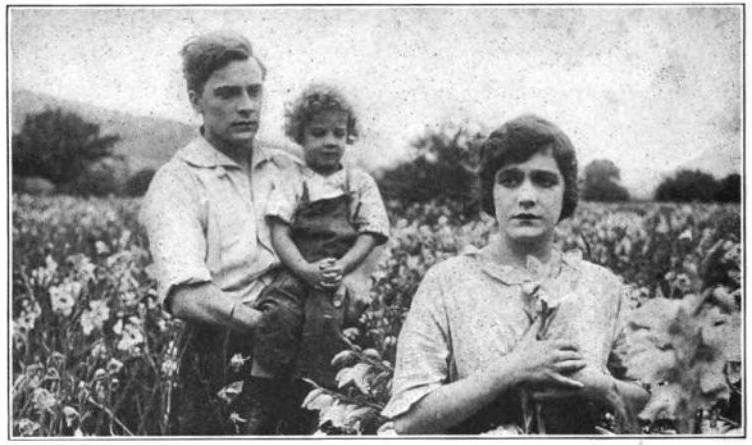
We open on a palette of ochre and sage, the frame itself seeming to smell of turned earth and bruised gladiola petals. Director Mary Rider—yes, the scenarist was a woman, whisper it to the chronicles—lets her camera loiter like a gossip in the furrows, catching the tremor of a hem, the swallow of a throat, the moment when friendship tips into something too delicate to name.
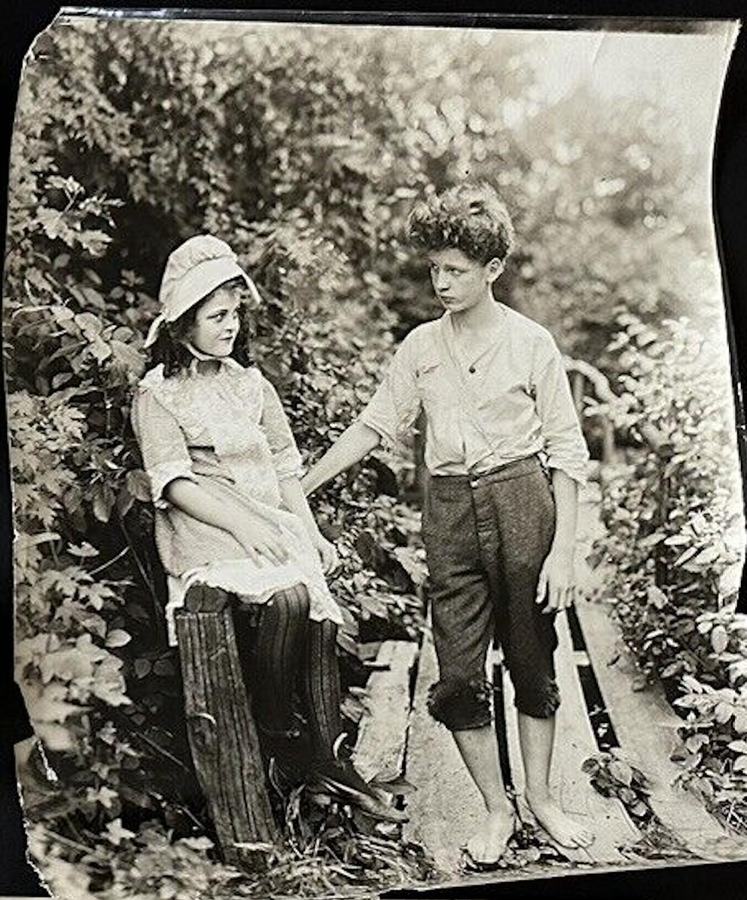
Warren Scott Moore’s Abner is the film’s still center, a man carved from hickory and reticence. Watch how he polishes the same scythe for three scenes straight, never meeting the lens, yet every sinew murmurs stay. Opposite him, Viola Dana blooms flagrantly as Gladiola—petulant, luminous, incapable of half-measures. When she laughs, the whole county seems to inhale; when she crumbles, the sound of her heartbeat drowns the crickets.
Ned Williams—Harry Linson in a boater tilted just so—arrives with a motorcar that backfires like a punchline. He is idle in the existential sense: a man killing time until time kills him. Rider’s script refuses to brand him outright villain; instead, he is a boy playing house who accidentally scorches it down. The courtship montage is a masterclass in pre-Hollywood shorthand: a dissolve from Gladiola’s bare feet to her first high-heeled wobble on asphalt; a cut from Ned’s cigarette glowing in the barn to the same ember reflected in a champagne flute. You can practically taste the carbonated danger.
The mock-marriage sequence is shot in a cramped parlour wallpapered with peacocks. A minister appears—collar too crisp, voice too buttery. The camera retreats behind a lace curtain, turning the vows into shadow play. It is the first time we sense the machinery of male deceit, humming smoothly beneath the floorboards.
When the legitimate wife materializes—her silhouette preceded by a hat bristling with aigrette feathers—the film pivots from pastoral idyll to flaying chamber. Gladiola’s confrontation with Ned is staged in a narrow hallway whose walls appear to squeeze like corset stays. Dana’s face cycles through disbelief, fury, and something closer to pity for her own innocence. She utters no intertitle dialogue; she doesn’t need to. The tear that halts midway down her cheek, suspended by the iris shot, is the silent era’s answer to a four-letter word.
Back home, the village matrons cluster like blackbirds on a telephone wire, their whispers illustrated by superimposed gladiola petals drifting across the frame—beauty weaponized into shame. Yet Rider withholds easy martyrdom. Gladiola milks cows at dawn, slaps away pity, and teaches her infant to grip a sunflower stem like a scepter. Motherhood here is not redemption; it is reclamation.
Ned’s second arrival is heralded not by a car but by a thunderclap and a telegram soaked in rain. He stands at the farm gate, suitcase in hand, hat literally in hand, the brim drooping like a spaniel’s ear. Moore’s Abner watches from the porch, posture relaxed but eyes wired tight. The men share a two-shot that lasts all of four seconds yet contains an entire novella of class tension: the prodigal idler vs. the man who never left the dirt yet owns the moral deed to it.
Gladiola greets Ned in the gladiola field—Rider’s symmetrical punchline. The flowers, once emblems of her namesake fragility, have grown tall enough to swallow waists. Overcranked wind ripples the spikes so they seem to jeer. Dana delivers her refusal in a medium-close-up: chin high, voice spelled out on the intertitle with period-perfect cold fire—“I loved a ghost; the ghost is dead.” Cut to Ned’s back receding between two rows of blooms, the crimson heads closing behind him like a curtain.
Though monochromatic, the tinting strategy speaks volumes. Amber dominates the farm sequences, suggesting both wheat and nostalgia; azure baths the city interludes, implying both freedom and frigidity. The final reel alternates between amber and sea-blue, as if the film itself cannot decide whether the prodigal has come home or merely trespassed. Notice how the yellow gladiolas appear only when Gladiola is on the cusp of choosing herself—Rider’s private Morse code.
Where Lydia Gilmore interrogates marital duty through legal loopholes and Garden of Lies perfumes deception with opulence, Gladiola roots its tragedy in agrarian candor. The film’s DNA also shares a helix with Beatrice Cenci—both heroines are cornered by patriarchal contracts—but Gladiola’s revenge is existential: she chooses indifference, the one weapon patriarchy cannot metabolize.
Viola Dana’s filmography is flecked with flappers and hoydens, yet Gladiola is her ur-text, the role that distills her gift for luminous volatility. Watch her hands: they start the picture fluttering like trapped moths, end folded calmly across her child’s chest—an arc traced without dialogue. Moore, often relegated to stalwart second leads, imbues Abner with a stoic eroticism; his final half-smile as Gladiola’s hand brushes his sleeve contains multitudes of unspoken futures. Linson, saddled with the thankless cad role, resists moustache-twirling villainy; his Ned is more hollow than evil, a man who mistakes acquisition for affection.
Rider’s authorship matters. In 1916, women wrote roughly a quarter of all scenarios, but few enjoyed solo credit. Her script excises the moralistic finger-wagging typical of contemporaneous The Daughters of Men or My Old Dutch. Instead, she gifts her heroine the right to anger without retribution, to sexuality without annihilation. The film’s closing stroll is not a betrothal but a choosing—of self, of soil, of a partner whose devotion is measured in seasons, not diamonds.
Cinematographer Robert Conness leverages natural light with startling modernity. Dawn sequences are shot contre-jour, faces haloed like early religious frescoes; interiors rely on kerosene lamps that flicker against the iris, turning every room into a confessional. The film’s single tracking shot—following Gladiola as she sprints through the field after discovering Ned’s betrayal—predates Four Feathers’ jungle treks by a decade, yet feels as kinetic as any Steadicam sprint.
The surviving print is scored by a 2019 Kino restoration: solo viola, breathy flute, and distant snare. The viola’s guttural tremolo underscores Gladiola’s rural life; the flute enters with Ned’s city promises; the snare erupts at the wife’s revelation, a gut-punch reminding us that wars are not always waged in trenches. The final cue joins all three instruments in unresolved harmony—an aural metaphor for lives that keep vibrating beyond the fade-out.
For decades, Gladiola slumbered in the Library of Congress’s paper-print vaults until a 4K scan resurrected its bruised beauty. Stream it on Criterion Channel or snag the Blu-ray with commentary by Shelley Stamp, who positions the film within the she-tragedy cycle that includes Trilby and Silence of the Dead. Academic syllabi on proto-feminist cinema have begun pairing it with After Sundown, arguing both picture women who refuse to die of sorrow simply because the ledger says they ought.
Great melodrama does not ask you to pity its characters; it demands you recognize the scaffolding of your own longing in their collapse. Gladiola ends on a note so quietly radical—mother, child, and loyal friend stepping into a future unauthored by church, state, or patriarch—that it feels like the first gulp of air after a long submersion. The flowers keep nodding, the sun keeps climbing, and somewhere between the rows, a woman rewrites the oldest story in the world: not the one where she is ruined, but the one where she refuses the ruin.
IMDb —
1930
Community
Log in to comment.