DbcultAccessing Vault...
Cult Review
Senior Film Conservator
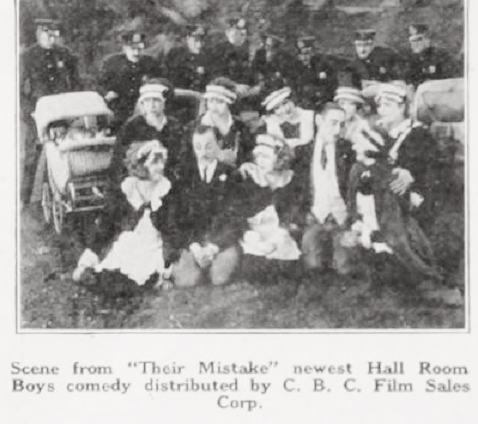
Stepping into the flickering glow of a 1922 cinema, one might expect a straightforward melodrama or a rollicking adventure. Yet, My Mistake, a profound and often unsettling character study, offers something far more intricate and emotionally resonant. It is a film that delves into the very core of human fallibility, exploring the devastating ripple effects of a single, desperate decision. This isn't just a story; it's a stark mirror held up to the moral ambiguities that haunt us all, presented with an artistry that belies its silent origins.
George Williams, a titan of the silent screen, delivers a performance in My Mistake that is nothing short of mesmerizing. As John Caldwell, a bank manager whose life is meticulously ordered and ethically sound, Williams embodies the quiet dignity of a man respected by his peers and adored by his family. His initial portrayal is one of unwavering composure, a man whose principles are as solid as the bank vault he oversees. This steadfastness makes his eventual, agonizing descent all the more impactful. The crisis arrives with the sudden, severe illness of his wife, Mary. The medical costs are astronomical, far beyond his means, yet a glimmer of hope exists in an experimental, distant treatment. It’s a classic cinematic dilemma, but handled here with a raw, visceral urgency that transcends typical melodrama.
The film doesn't rush Caldwell's 'mistake.' Instead, it patiently builds the psychological pressure. We witness his sleepless nights, his frantic calculations, the desperate pleas to uncaring lenders. Williams’s subtle facial expressions—the tightening of his jaw, the haunted look in his eyes—communicate volumes without a single intertitle. When he finally opens the ledger of dormant accounts, the act is not one of greed, but of a broken man grasping at the last straw. It’s a moment of profound moral compromise, a decision made under duress that will unravel his entire existence. This portrayal of a good man driven to an unthinkable act is where My Mistake truly distinguishes itself from simpler morality plays. It asks us to empathize not with a villain, but with a victim of circumstance, whose fatal flaw is an excess of love.
Every tragic hero needs an antagonist, and in My Mistake, Sidney Smith delivers a chillingly understated performance as Arthur Finch. Finch is not a mustache-twirling villain, but something far more insidious: a man consumed by quiet resentment and ambition. He's the loyal assistant, the one who knows the inner workings of Caldwell's life and the bank. His discovery of Caldwell's transgression isn't a dramatic revelation; it’s a calculated observation, a moment where a flicker of opportunity ignites a slow-burning malevolence. Smith plays Finch with a cunning restraint, his eyes often darting, a subtle smirk playing on his lips, betraying the calculating mind beneath the facade of deference.
Finch's manipulation is a masterclass in psychological warfare. He doesn't directly expose Caldwell; instead, he skillfully plants seeds of doubt among the townsfolk, spreads rumors, and subtly alters records to paint Caldwell in the worst possible light. The film's direction excels in showing these machinations through clever visual storytelling: a whispered conversation in a dimly lit office, a seemingly innocent suggestion that turns a colleague against Caldwell, a misplaced document that implicates him further. This slow, agonizing erosion of Caldwell's reputation is almost more painful to watch than his eventual arrest. It highlights a societal vulnerability, the ease with which trust can be shattered and a man's character assassinated by insidious gossip and manufactured evidence. In this regard, the film shares a thematic resonance with earlier works like The Woman Who Dared, which also explored the devastating power of societal judgment and the fragility of reputation in the face of accusation, however unfounded.
Beyond the compelling performances, My Mistake is a triumph of silent film technique. The cinematography, though credited to an unknown hand, is remarkably sophisticated for its time. Close-ups are employed judiciously, magnifying Williams's internal turmoil and Smith's subtle malevolence. The use of shadow and light, particularly in the scenes depicting Caldwell's clandestine activities and Finch's scheming, creates a pervasive atmosphere of dread and moral ambiguity. The stark contrasts between the brightly lit, orderly bank and the shadowy corners where secrets are kept are particularly effective.
The film's pacing is deliberate, allowing the audience to fully absorb the emotional weight of each scene. There are no wasted frames; every gesture, every glance, every lingering shot of a newspaper headline or a deserted street contributes to the overarching narrative of a man's undoing. The visual metaphors are potent: the locked vault representing Caldwell's suppressed guilt, the increasingly disheveled appearance of his home mirroring the chaos in his life, and the judgmental stares of the townspeople forming an invisible, inescapable prison. This evocative visual language elevates My Mistake beyond a simple cautionary tale, transforming it into a profound cinematic experience.
What truly distinguishes My Mistake is its incisive commentary on societal hypocrisy and the unforgiving nature of public opinion. The film paints a vivid picture of a small town, ostensibly built on communal trust, yet quick to condemn when scandal emerges. Caldwell's fall isn't just a personal tragedy; it's a social one. His family, particularly his wife and children, bear the brunt of the town's scorn, highlighting the devastating collateral damage of a man's perceived transgression. This echoes the social critique found in films like Within Our Gates, though in a different social context, both films expose the harsh realities of judgment and the profound impact of reputation, or lack thereof, on an individual's life and standing.
The film forces us to confront uncomfortable questions: Are intentions irrelevant when a law is broken? Does a lifetime of integrity count for nothing against a single error? The justice system, as depicted, is swift and uncompromising, more concerned with the letter of the law than the extenuating circumstances. The mob mentality, subtly portrayed through quick cuts of gossiping townsfolk and accusatory newspaper headlines, serves as a powerful indictment of collective judgment. Caldwell's struggle for redemption, once imprisoned, is not merely about clearing his name, but about regaining his dignity in a world that has branded him an outcast. This narrative thread resonates with the moral complexity explored in films such as The Barrier, where societal lines and personal ethics are constantly tested.
While My Mistake might not be as widely celebrated today as some of its contemporaries, its artistic merit and thematic depth are undeniable. It stands as a testament to the power of silent cinema to convey complex human emotions and societal critiques without uttering a single word. The film's exploration of guilt, betrayal, and the arduous path to redemption is timeless. It reminds us that mistakes, particularly those born of desperation, can have far-reaching consequences, amplified by the malice of others and the swift judgment of a community.
The performances by Williams and Smith are foundational, anchoring the film with their compelling portrayals of a man broken and a man consumed by envy. The nuanced direction, the evocative cinematography, and the powerful social commentary coalesce to create a film that is both deeply moving and intellectually stimulating. It's a film that stays with you, prompting introspection long after the final frame fades to black. In an era often characterized by simpler narratives, My Mistake dared to delve into the darker corners of the human psyche, offering a poignant reminder that the line between right and wrong can be agonizingly thin, and the price of crossing it, even for the noblest of intentions, can be utterly devastating. It’s a compelling argument for the enduring power of early cinema, a piece that, much like Foolish Lives or The Tiger's Coat, showcases the era's capacity for intricate storytelling and profound character development. This film deserves a renewed appreciation for its brave and unflinching look at the human condition. Its relevance, even a century later, remains strikingly apparent, making it a crucial watch for any cinephile interested in the evolution of dramatic storytelling.
IMDb 6
1929
Community
Log in to comment.