DbcultAccessing Vault...
5.9/10
Senior Film Conservator
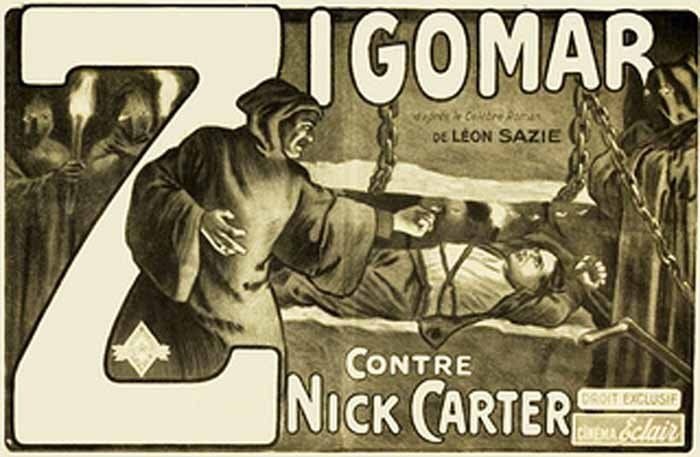
A definitive 5.9/10 rating for a film that redefined the boundaries of cult cinema. Zigomar contre Nick Carter remains a cornerstone of transgressive art.
The year 1912 stands as a monumental pivot in the history of the moving image. While the world was reeling from the tragedy of the Titanic and the Ottoman Empire was fracturing, the cinema was undergoing a radical metamorphosis. It was the era of the "film d'art," where theatricality met the lens, but more importantly, it was the birth of the crime serial. At the heart of this revolution was Victorin-Hippolyte Jasset, a director whose name should be whispered with the same reverence as Feuillade or Lang. In Zigomar contre Nick Carter, Jasset didn't just film a story; he architected the very DNA of the modern thriller.
To understand the gravity of this film, one must first appreciate the cultural weight of its protagonists. Zigomar, the creation of Léon Sazie, was the anti-establishment phantom, a figure of pure, unadulterated criminality who resonated with a public weary of rigid societal structures. Nick Carter, conversely, was the American importation—a symbol of scientific detection and unwavering moral rectitude. When Jasset brought these two together, he created a collision of ideologies. Unlike the more static narratives of Les amours de la reine Élisabeth, which relied on the prestige of stage actors like Sarah Bernhardt, Jasset’s work thrives on movement, danger, and the visceral thrill of the chase.
The narrative structure of Zigomar contre Nick Carter is a relentless sequence of traps and escapes. Carter is not merely a detective; he is a survivalist. From the moment he is ordered to prosecute the gang, the film plunges into a series of "thorny situations" that would make modern action directors envious. The pacing is breathless for 1912. While films like From the Manger to the Cross were exploring the epic possibilities of religious history, Jasset was focused on the grit of the gutter and the shadows of the secret lair.
The cinematography in this film is a revelation. Jasset, working for the Eclair studio, utilized location shooting with a sophistication that was rare for the time. The streets of Paris are not merely backdrops; they are active participants in the drama. The use of depth—placing characters in the foreground while action unfolds in the distant background—prefigures the deep focus techniques that would later be celebrated in Hollywood. Compare this to the relatively flat staging of Cleopatra (1912), and you see Jasset’s pioneering spirit. He understood that the camera could do more than record; it could build suspense through perspective.
One cannot discuss the visuals without mentioning the subterranean aesthetic. Zigomar’s hideouts are marvels of early production design—labyrinths filled with trapdoors, secret panels, and an almost gothic sense of enclosure. This is the birthplace of the "supervillain lair," a trope that would travel through the decades to the James Bond franchise. The way Jasset lights these scenes—often utilizing high-contrast shadows—hints at the German Expressionism that would arrive years later. It is a proto-noir sensibility that feels remarkably contemporary.
While Alexandre Arquillière’s Zigomar is a masterclass in villainous charisma, it is Josette Andriot as Olga who truly steals the celluloid. Olga is not your typical damsel in distress; she is a woman of agency, driven by the complex motivations of a former lover scorned. Her decision to aid Nick Carter is the catalyst for the entire plot, and Andriot plays her with a physicality that is startling. She moves with a feline grace, suggesting a character who is just as dangerous as the men surrounding her.
Andriot’s performance here is a precursor to her iconic role in Protéa, and her athletic presence marks a departure from the more demure female roles seen in contemporary films like Vampyrdanserinden. In the early 1910s, female characters were often relegated to being either victims or moral anchors; Olga, however, exists in a gray area. She is a defector from the underworld, bringing with her the secrets of the abyss. This adds a layer of psychological complexity that elevates the film above a simple cat-and-mouse game.
To truly appreciate Zigomar contre Nick Carter, one must look at its peers. 1912 was a year of massive variety. We had the sprawling social realism of Les misérables and the historical weight of The Life and Death of King Richard III. Yet, while those films sought to adapt the grandeur of literature and history, Jasset was tapping into the ephemeral energy of the pulp magazine. He recognized that the cinema was the perfect medium for the serialized adventure—a format that kept audiences returning week after week.
The film also shares a certain technical kinship with The Mystery of the Rocks of Kador, another Jasset production. Both films exhibit a fascination with the modern world—telephones, automobiles, and scientific gadgets. In Zigomar contre Nick Carter, the technology of the detective is pitted against the cunning of the criminal, reflecting a society that was simultaneously fascinated and terrified by the rapid pace of technological advancement.
Jasset’s mastery of the "thorny situation" is what makes this film so enduringly watchable. Each set-piece is constructed with a mathematical precision. Whether Carter is being lured into a warehouse trap or escaping a bomb, the tension is palpable. The editing, though primitive by today's standards, shows a sophisticated understanding of rhythm. Jasset knows exactly when to cut to a close-up of a hand reaching for a weapon or a face contorted in fear.
This sense of urgency was a sharp contrast to the more meditative pacing of films like The Prodigal Son or the documentary-style capture of Westinghouse Works. Jasset was an entertainer who understood the power of the cliffhanger. He wasn't just telling a story; he was manipulating the audience's heart rate. The escape sequences are particularly noteworthy for their ingenuity, often involving Carter utilizing his surroundings in ways that prefigure the resourcefulness of MacGyver or Indiana Jones.
The influence of the Zigomar series cannot be overstated. It caused a moral panic in its time, with authorities in several countries (including Japan) banning the films for fear they would encourage criminal behavior. This notoriety only added to the film's allure. It paved the way for Louis Feuillade’s Fantômas and Les Vampires, which would further refine the crime serial format.
Final Verdict: Zigomar contre Nick Carter is a towering achievement of early cinema. It is a film that refuses to be confined by the limitations of its era. With its dynamic direction, charismatic performances, and a visual style that remains haunting to this day, it is a must-watch for anyone interested in the origins of the thriller. Jasset didn't just make a movie; he unleashed a phantom that continues to haunt the hallways of cinematic history. While other 1912 films like Oliver Twist or The Life of Moses offer valuable historical insights, Zigomar offers something far more potent: a direct, unmediated connection to the thrill of the chase. It is pure, kinetic energy caught on a strip of celluloid.
In the grand tapestry of film history, where we often focus on the giants of the sound era, it is essential to return to the pioneers like Victorin-Hippolyte Jasset. He was a filmmaker who understood that the true power of the medium lay in its ability to transport the audience into a world of shadow, danger, and ultimate triumph. Zigomar may have been a criminal, but in the hands of Jasset, he became a cinematic legend.
IMDb 5.4
1933
Community
Log in to comment.