DbcultAccessing Vault...
6/10
Senior Film Conservator
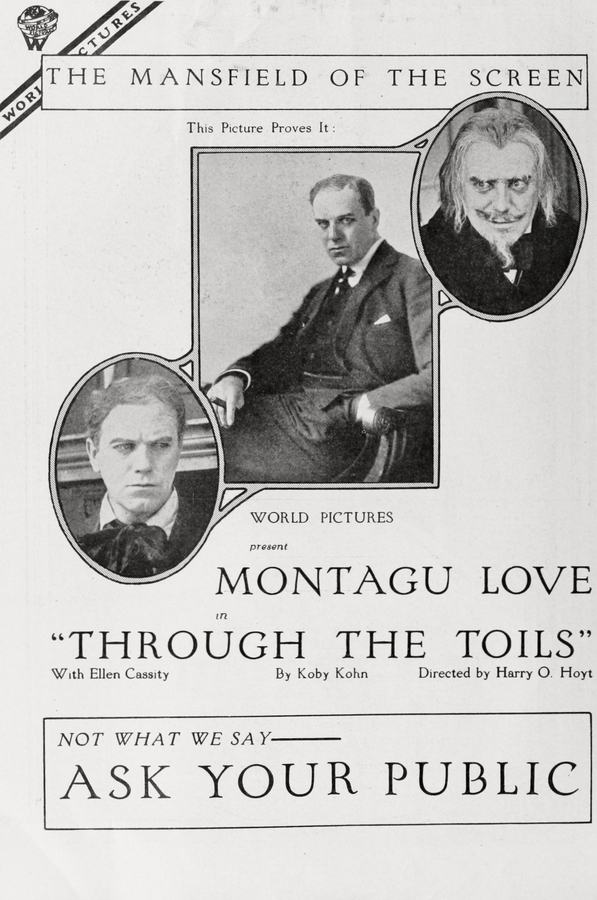
A definitive 6/10 rating for a film that redefined the boundaries of cult cinema. Through the Toils remains a cornerstone of transgressive art.
In the annals of early cinema, where grand gestures and melodramatic arcs often held sway, certain films distinguish themselves not just by their narrative ambition, but by their audacious psychological underpinnings. Through the Toils, a cinematic artifact from a bygone era, stands as a compelling testament to the complex interplay between artistic creation, ethical compromise, and the raw, vulnerable nature of human affection. It’s a film that, despite its age, still resonates with a profound exploration of manipulation and the quest for authentic expression, making it far more than just a historical curiosity.
From its very premise, co-written by Koby Kohn and Harry O. Hoyt, the film plunges us into a narrative rich with moral ambiguity. We meet Noel Graham, portrayed with earnest conviction by Thomas Carr, a writer seeking solace and inspiration in the secluded village of Mondon, a place imbued with the echoes of his own ancestry. The picturesque setting, however, belies the intricate human drama soon to unfold. His chance encounter with Rhona Allerton, embodied by the delicate yet spirited Laura West, sparks a love story that feels both fated and tragically vulnerable. Rhona is under the guardianship of Lewis Moffat, a celebrated literary figure in his twilight years, brought to life with chilling precision by Montagu Love. Moffat, a man whose artistic wellspring has seemingly run dry, views the burgeoning romance between Noel and Rhona not as a beautiful blossoming, but as a fertile ground for his own creative resurgence.
Moffat is the quintessential manipulative artist, a character type that has fascinated storytellers for centuries. His ambition is not merely to write a passionate romance, but to craft one from the living, breathing agony of others. He is a puppet master, pulling the strings of love and despair for the sake of his art, a concept that immediately elevates Through the Toils beyond a simple romantic melodrama. With the aid of old Benson, a character played by Joseph Burke, whose past as a derelict adds a layer of moral complexity to his later actions, Moffat meticulously cultivates the affection between Noel and Rhona. Benson, initially an unwitting accomplice, becomes a crucial cog in this ethical quagmire, his own redemption arc intertwined with the unfolding tragedy. Moffat's plan is as audacious as it is cruel: to nurture their love, then systematically dismantle it, observing their suffering as a detached scientist observes an experiment. This narrative choice imbues the film with a psychological depth that was perhaps ahead of its time, inviting audiences to ponder the true cost of artistic inspiration and the moral boundaries of creation.
Montagu Love's portrayal of Moffat is nothing short of masterful. He conveys a man whose intellect is sharp but whose soul is corroded by a desperate hunger for relevance. His performance is nuanced, revealing a character who, despite his villainy, is driven by a very human fear of artistic obsolescence. This portrayal prevents Moffat from becoming a one-dimensional antagonist, instead presenting him as a tragic figure whose brilliance is overshadowed by his moral failings. The tension he generates through his subtle manipulations is palpable, a testament to Love's skill in conveying complex internal states without the aid of extensive dialogue often found in later sound films.
Noel and Rhona, in stark contrast to Moffat's calculated coldness, represent the purity of genuine affection. Their love story unfolds with a gentle sincerity, making Moffat's impending betrayal all the more agonizing. Thomas Carr's Noel is earnest and idealistic, a writer who believes in the inherent goodness of human connection. Laura West's Rhona is equally endearing, her innocence and vulnerability making her an ideal target for Moffat's machinations. When Noel proposes and Rhona joyfully accepts, the audience is lulled into a sense of romantic bliss, only for it to be shattered by Moffat's cruel intervention. He expertly plants seeds of doubt, weaving a tapestry of lies that convinces each lover of the other's infidelity. This segment of the film is particularly heart-wrenching, as we witness the devastating impact of Moffat's psychological warfare. Rhona's heartbroken retreat to New York is a poignant moment, a visual representation of love’s fragility in the face of malicious intent.
The film’s portrayal of emotional manipulation is strikingly effective, particularly given the cinematic conventions of its era. It doesn't rely on overt theatrics but rather on the subtle erosion of trust, a testament to the strength of the screenplay. One might draw parallels to the psychological intensity found in films like The Christian, which also delves into profound moral quandaries and the suffering of its characters, albeit through a different lens. Here, the suffering is directly engineered for artistic gain, raising uncomfortable questions about the artist's responsibility.
As Moffat's health declines, his grand work remains unfinished, a testament to the idea that even the most brilliant mind cannot sustain its creative output indefinitely, especially when fueled by such dark intentions. It is Noel who, through a twist of fate, is tasked with completing the manuscript. This narrative choice is profoundly symbolic. Noel, the victim of Moffat's scheme, now finds himself in the unique position of giving voice to a story born of his own pain. The film suggests that authentic experience, even if agonizing, ultimately produces a more resonant and powerful art than fabricated suffering. Noel's completion of the book, which surpasses anything Moffat had previously written, serves as a powerful validation of his innate talent and the integrity of his spirit.
The climax of Through the Toils is both dramatic and morally resonant. A burglary at Moffat's house, which Noel thwarts, leading to him saving Benson’s life, becomes the catalyst for truth. Benson, whose conscience has been gnawing at him, finally reveals Moffat's insidious scheme to Noel. This moment of confession is pivotal, shifting the film from a tale of manipulated romance to one of moral reckoning. The revelation shatters Noel's perception of Moffat and his art. His subsequent act of declaring Moffat and the book 'false' and burning the manuscript is not merely an act of defiance but a powerful rejection of art born from exploitation. It is a purification, a cleansing of the tainted narrative, and a reclaiming of his own story. This act of destroying the 'masterpiece' is a bold statement on artistic integrity, suggesting that genius divorced from ethics is ultimately hollow.
Moffat's death following this revelation serves as a fitting, if somewhat tragic, end to his character. He dies, presumably, with the knowledge that his ultimate artistic achievement was rejected by the very individual he sought to exploit. His demise clears the path for true reconciliation. Rhona's return and subsequent marriage to Noel signify a triumph of genuine love over calculated deceit, a powerful affirmation that authentic connection, though tested by hardship, can ultimately prevail. The film's conclusion, while offering a conventional happy ending, earns it through the preceding crucible of emotional torment and moral awakening.
Beyond its compelling narrative, Through the Toils showcases strong directorial choices and performances that elevate it. While details on the director are not provided, the execution of such a complex plot with subtle character work speaks volumes about the filmmaking talent involved. The pacing, crucial for silent films, builds tension effectively, allowing the emotional beats to land with maximum impact. The visual storytelling, characteristic of the era, relies on expressive acting and well-composed shots to convey internal struggles and external conflicts. The use of close-ups during moments of emotional intensity, for instance, would have drawn the audience deeper into the characters' turmoil, a technique employed effectively in many films of the period, from the dramatic flourishes of Wolves of the Night to the more intimate character studies of The Brat.
The casting, too, is a significant strength. Thomas Carr and Laura West imbue Noel and Rhona with a believable innocence and vulnerability, making their eventual reunion all the more satisfying. But it is arguably Montagu Love's Lewis Moffat who anchors the film's dramatic weight. His performance is a masterclass in controlled villainy, a portrayal that lingers long after the credits roll. It’s a performance that could stand alongside other memorable antagonists of the era, perhaps even inviting comparison to the morally ambiguous figures in films like The Tidal Wave or the intense characterizations found in The Border Legion.
Thematically, Through the Toils is remarkably rich. It probes the ethical boundaries of art, questioning whether any creation is worth the suffering of others. It explores the destructive power of ambition when unmoored from morality. Moreover, it is a testament to the resilience of the human spirit and the enduring power of genuine love. The film suggests that true art must come from a place of authenticity, not from calculated exploitation. Noel's act of burning the manuscript is not an act against art itself, but against corrupted art, a powerful statement on the artist's responsibility to truth and integrity.
In an era where cinema was still finding its voice, Through the Toils dared to tackle complex psychological themes with a sophistication that belies its silent nature. It's a film that resonates because its core conflicts—the struggle between ambition and ethics, the pain of betrayal, and the triumph of truth—are timeless. It's a poignant reminder that while the mediums of storytelling evolve, the fundamental human dramas that captivate us remain constant. For those who appreciate early cinema that delves beyond superficial romance into the darker corners of the human psyche, this film offers a compelling and thought-provoking experience. It's a journey through emotional turmoil that ultimately champions the enduring light of integrity and authentic connection, proving that some narratives, like true love, can indeed overcome the most treacherous toils.
IMDb 5.8
1930
Community
Log in to comment.