DbcultAccessing Vault...
Cult Review
Senior Film Conservator
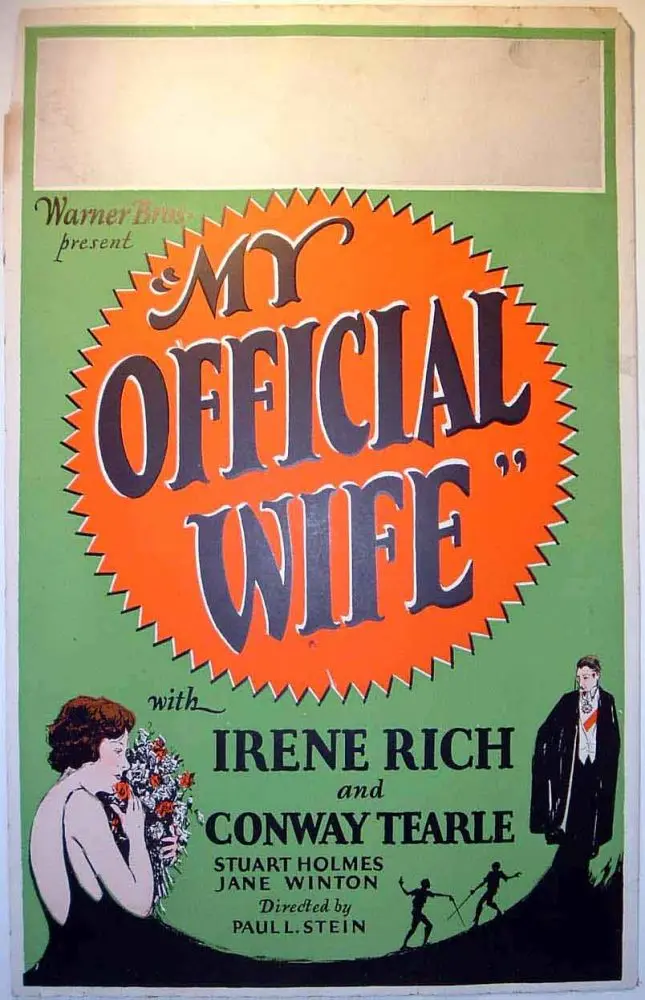
Is My Official Wife (1926) a film worth dedicating your time to in the modern era? The short answer is yes, but with significant caveats, primarily for those with a deep appreciation for the silent era's unique narrative rhythms and visual storytelling. This is a film that speaks directly to the sensibilities of its time, offering a window into early cinematic spectacle, and as such, it's best suited for history buffs, silent film scholars, and anyone curious about the cinematic portrayal of pre-revolutionary Imperial Russia.
It is not for audiences seeking fast-paced plots, contemporary dialogue, or nuanced character development by today's standards. If your patience for intertitles is thin, or if you find the melodramatic flourishes of the 1920s more amusing than engaging, then 'My Official Wife' will likely test your resolve.
‘My Official Wife’ arrives from 1926, a silent epic attempting to capture the decadent, yet ultimately doomed, spirit of Imperial Russia. It’s a film that promises, and largely delivers, on visual splendor: gorgeous gowns, stunning sets, and a general air of aristocratic excess. Directed by Emile Chautard, it aims for a grand canvas, painting a picture of a society luxuriating in its final moments of unbridled privilege before the storm of revolution.
This isn't a story of political intrigue or revolutionary fervor, at least not explicitly. Instead, it frames the 'reckless life' of the aristocracy as its central drama. We are invited to observe, rather than deeply engage with, the lives of individuals whose biggest concerns appear to be matters of the heart, social standing, and maintaining appearances amidst lavish balls and glittering soirées. It’s a fascinating historical artifact, if not always a compelling narrative experience.
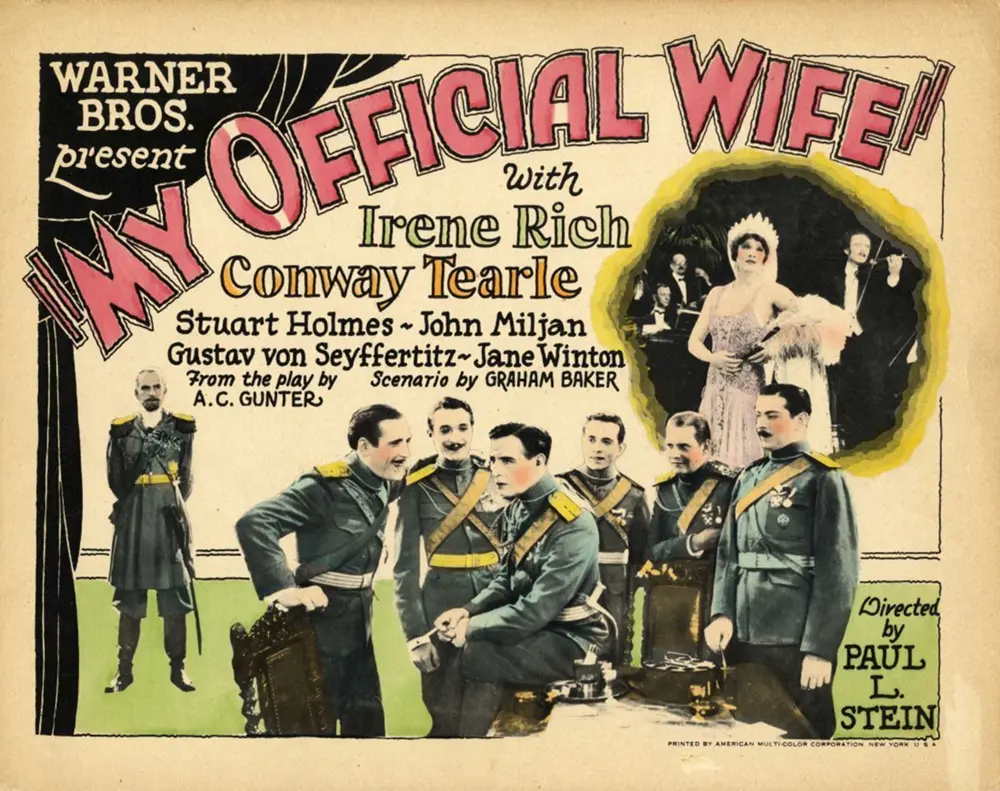
Let’s be direct about its merits and drawbacks:
Emile Chautard, as director, clearly understood the assignment: deliver spectacle. The film’s strength lies almost entirely in its visual presentation. The camera, handled by an uncredited cinematographer (a common practice then), revels in wide shots of expansive ballrooms, intricate interiors, and sweeping outdoor scenes that hint at the vastness of the Russian landscape, even if often recreated on a Hollywood backlot. The sheer scale of some sequences, particularly the grand gatherings of the elite, is remarkable for a 1926 production.
One particularly memorable aspect is the meticulous attention to detail in the set dressings and costumes. Every scene involving a gathering of the aristocracy feels like a living painting, with each extra and every piece of furniture contributing to an overwhelming sense of period authenticity and wealth. For instance, a long tracking shot through a crowded palace corridor, showcasing dozens of meticulously dressed background artists, speaks volumes about the production's ambition. This visual density is truly the film's strongest suit, overshadowing its narrative thinness.
However, Chautard’s direction, while adept at grandiosity, struggles with intimacy. Close-ups, when they occur, often feel functional rather than emotionally revealing. The camera rarely lingers on a face long enough to truly plumb the depths of a character’s internal struggle, preferring to cut away to another sweeping vista or a reaction shot from an ensemble. This creates a disconnect, where the characters feel like pieces in a grand historical diorama rather than living, breathing individuals with complex inner lives. It’s a common pitfall of silent epics, but here it feels particularly pronounced given the 'drama' promised by the plot summary.
The cast of 'My Official Wife' is a who's who of silent-era talent, tasked with conveying emotion and narrative through exaggerated gestures and facial expressions, a language often lost on modern viewers without careful study. Irene Rich, often lauded for her beauty and screen presence, carries much of the film's emotional weight. Her performance, while undoubtedly 'of its time,' manages to convey a certain aristocratic elegance and underlying vulnerability that grounds the more flamboyant aspects of the story. There's a scene where she silently observes a social slight, her eyes alone communicating a world of hidden pain and societal pressure. It’s a moment of surprising subtlety.
Opposite her, Conway Tearle, a matinee idol of the era, embodies the dashing, perhaps morally ambiguous, aristocrat. His portrayal relies heavily on a confident swagger and a certain theatrical charm. While effective in establishing his character's social standing, his performance rarely ventures beyond the archetype, leaving little room for genuine surprise or deep emotional connection. The chemistry between Rich and Tearle is palpable in some scenes, but often it feels like a practiced dance rather than a spontaneous connection.
The supporting cast, featuring names like John Miljan and Stuart Holmes, fills out the aristocratic milieu with varying degrees of success. Some deliver genuinely engaging performances, while others lean into the broad caricatures often associated with silent film villains or comic relief. It’s a mixed bag, but one that largely serves the film’s primary goal of painting a picture of a bustling, complex society.
The pacing of 'My Official Wife' is undeniably slow by today's standards. This is not a criticism, but an observation of silent cinema’s inherent rhythm. Narratives unfolded with a deliberate, almost stately pace, allowing audiences to absorb the visual information and intertitles. Here, this deliberate pace can feel like a protracted build-up, especially when the 'drama' hinted at in the plot summary takes its time to manifest beyond social machinations.
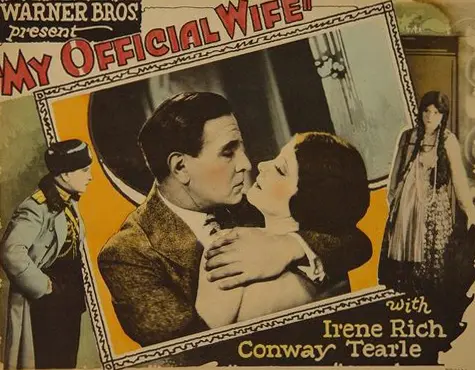
The tone is largely one of high melodrama, tempered by an underlying sense of historical grandeur. The 'reckless life' of the aristocracy is portrayed with a certain romanticism, even as it implicitly foreshadows the coming upheaval. There’s a distinct lack of genuine grit or realistic consequence; instead, we get heightened emotions and dramatic confrontations that feel more performative than truly consequential. This isn't a film aiming for realism, but for a romanticized, almost mythical, portrayal of a fading empire.
One could argue that this romanticism is itself a commentary on the aristocracy's detachment from reality. They are so engrossed in their own glittering world that the impending revolution feels almost an afterthought, a distant rumble in the background of their elaborate balls and personal intrigues. This unconventional observation suggests the film, perhaps inadvertently, captures the insular nature of the ruling class.
Absolutely, but with a clear understanding of what you're signing up for. 'My Official Wife' is a fascinating relic. It offers a unique glimpse into the filmmaking techniques and storytelling conventions of the 1920s. Its visual ambition is its strongest asset. The sets, costumes, and sheer scale of production are genuinely impressive for the era. However, its narrative can feel sluggish and its character development superficial to modern eyes. It's a journey into a specific cinematic past, not a universally engaging story.
‘My Official Wife’ is a fascinating, if flawed, window into a bygone era of both history and filmmaking. It works. But it’s flawed. Its strengths lie almost entirely in its visual ambition and its ability to transport the viewer to a specific time and place through sheer spectacle. As a narrative, it struggles to maintain engagement for a modern audience, often sacrificing depth for dazzling surfaces. Yet, for those with the patience and the right frame of mind, it offers a rich, if somewhat distant, experience of cinematic history. It’s a film to be appreciated for what it represents, rather than purely for its narrative power. Don't expect a thrilling plot; expect a meticulously crafted, silent-era painting of a world on the brink. A worthwhile watch for the niche audience it serves, but not a universal recommendation.
IMDb 7.1
1929
Community
Log in to comment.