DbcultAccessing Vault...
Cult Review
Senior Film Conservator
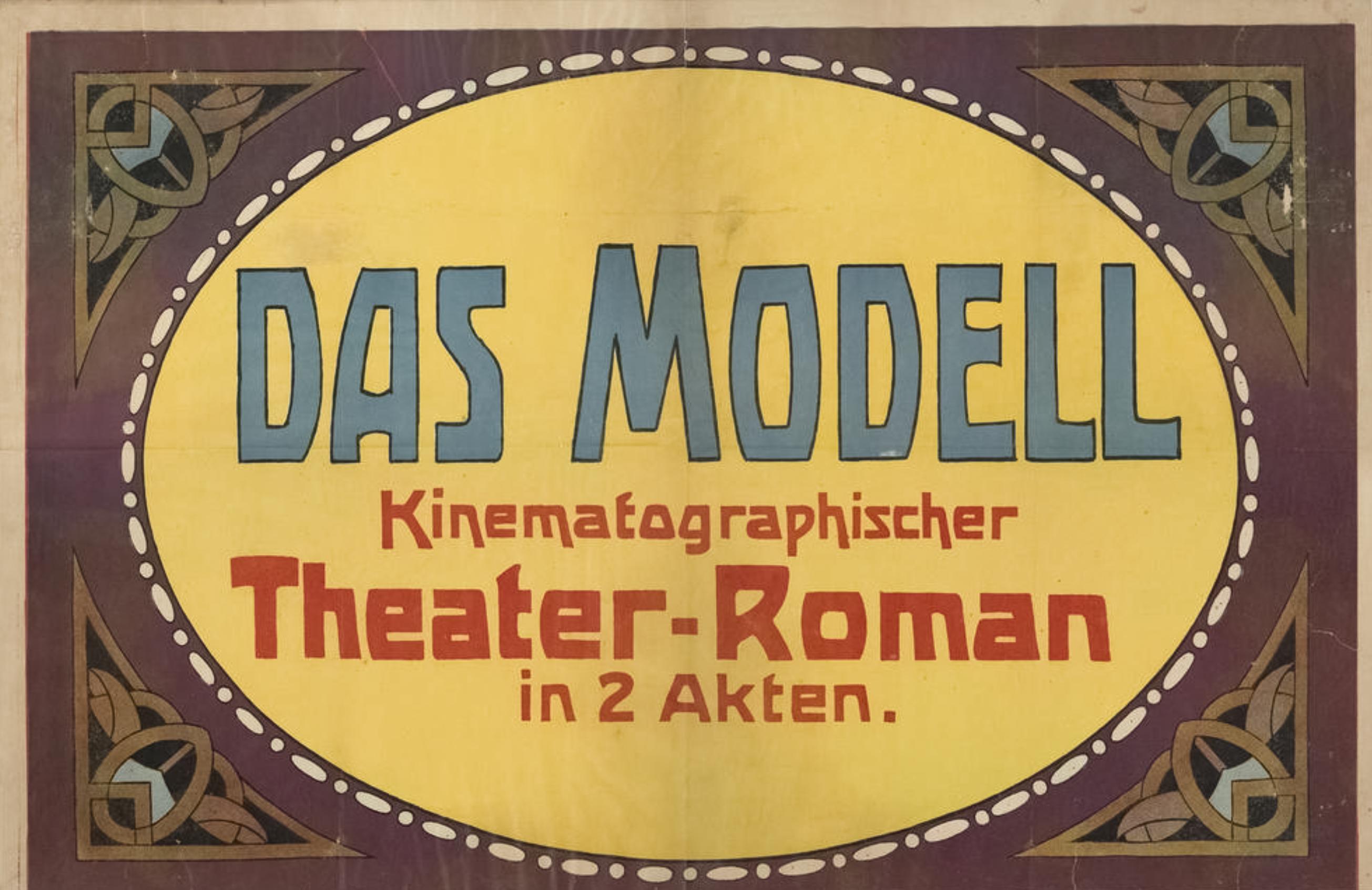
Berlin, 1913. A klieg-light moon hangs over the city’s first purpose-built glass-walled studio; inside, the air tastes of talcum, hot copper, and the coppery tang of unspooled ambition.
Das Modell is not a story so much as a slow crack spreading across the porcelain face of Wilhelmine cinema. In the negative space between each iris-out, the film whispers that every image is a doll dressed in borrowed skin, every spectator an unwitting tailor measuring humanity for a straitjacket of light.
Hugo Flink—equal parts Auguste Rodin and carnival huckster—plays the nameless sculptor-photographer who discovers Henny Porten’s shop-window mannequin, limbs hinged like a marionette, eyelids painted with the expectant hush of a virgin saint. He drags her into his atelier, a cathedral of skylights and dust-motes, and begins a frantic pas de deux: first molding wet plaster over her cold curves, then cranking the hand-cranked Bioscop camera until the sprockets scream. The faster the reel spins, the warmer the wax grows; by reel two, the dummy’s chest rises—imperceptibly—like a tide ashamed of its own existence.
Carl Wilhelm’s silk-cravat patron stalks the periphery, chequebook poised as though art were a duel he can win by applause. Rosa Flügel, the dresser whose eyes burn with guttering candle-fat jealousy, slips between shadows, swapping the sculptor’s chisel for a hatpin sharp enough to puncture illusion itself. Their triangle is scalene: power, desire, and the hollow echo of applause ricocheting off brick.
The plot, if one insists on Euclidean geometry, folds like this: artist animates mannequin; mannequin animates artist; both discover the camera has been watching, hungry, all along. Yet the narrative is merely the armature; the clay is meta-cinema decades before the term calcified in academic journals. Each time the sculptor steps back to admire his living creation, director Carl Wilhelm cuts to the flickering mirror of the rushes, so we watch a film watching itself give birth to itself—a Möbius strip of celluloid flesh.
Visually, the picture is a chiaroscuro fever. Candle flames smear into comet tails, gaslights balloon into sulphur suns, and the mannequin’s skin oscillates between ivory and bruise-blue depending on who observes her. When Porten finally steps off the revolving pedestal, the camera retreats in reverent dread, as if afraid she might stride straight through the fourth wall and out of the projector beam.
Porten—already Germany’s sweetheart—performs with the brittle precision of a clockwork ballerina. Watch her pupils: they dilate not in shock but in recognition, as though she remembers being wood before she became woman. Flink counterbalances her stateliness with frantic kinetic energy; his hands never stop moving, sculpting air, adjusting invisible f-stops, forever trying to frame a world that refuses to sit still.
The film’s true coup is its soundless scream. Intertitles appear sparingly, haiku-brief: “Wach werden” (“to awaken”), “Sehen ist Fressen” (“to see is to devour”). Each card lingers three frames longer than comfortable, allowing silence to pool like mercury. In that hush you can almost hear the squeak of the mannequin’s ball-joints, the wet inhale of plaster sucking air, the faint electric crackle of nitrate beginning its slow self-immolation.
Compare it to contemporaries and it detonates them. Beside the static parades of Birmingham or the pugilistic ballets of The Corbett-Fitzsimmons Fight, Das Modell is a cubist confession. Where Life and Passion of Christ seeks transcendence through tableaux, this film peers into the abyss between frames and discovers the abyss winking back.
Gender politics bristle under the surface like broken glass beneath velvet. The moment Porten’s mannequin twitches into sentience, ownership curdles; she becomes both Pygmalion’s Galatea and Bluebeard’s key-jangling wife. Yet the lens refuses to grant the male gaze its customary victory. In the penultimate shot she turns, stares straight at us—at you—and the iris closes not on her face but on the camera’s own reflection, a perfect circle swallowing itself like Ouroboros in evening dress.
Technically, the picture flaunts tricks that would make Méliès blush: double exposures that split Porten’s profile against her wax effigy; jump-cuts that swap mannequin and actress mid-gesture so smoothly you doubt your own retina; a final dolly-in that appears to push through the screen surface, as though the auditorium itself were merely another room in the atelier. The print survives only in a 35 mm French tint at Cinémathèque de Bois-d’Arcy, its emulsion scarred like the face of a duellist, each scratch a miniature lightning strike fossilized in silver.
Historians dismiss it as a curio, a 14-minute trifle wedged between Porten’s more lucrative melodramas. They miss the point: Das Modell is the first film to recognize the camera as both scalpel and mirror, cutting and reflecting until subject and spectator bleed into one another. Ninety seconds before the end, Wilhelm interrupts a love scene with a single white frame—pure, blinding, apocalyptic. In that flash you glimpse the entire century of cinema to come: voyeurism, exhibitionism, the knowledge that every spectator is complicit, every screen a two-way mirror.
Restorationists debate the proper tint; some argue for Berlin-blue, others for the arterial red of early Agfa stock. I say leave it bruise-purple, the color of flesh deciding whether to become blood. Watch it at 18 fps, not the modern 16; let the stutter become a heartbeat, let the sprocket-hole chatter sound like teeth deciding whether to bite.
After the final iris, the lights rise and you half-expect to see plaster dust on your lap, a single golden hair curled on your cuff. That is the film’s triumph: it doesn’t end, it escapes—leaving you behind to wonder whether you, too, are merely a silhouette cutout propped before an unseen camera, waiting for someone to crank the handle and bring you to jerky, flickering life.
Verdict: Das Modell isn’t a relic; it’s a prophecy wearing yesterday’s couture. Seek it out, project it on a bedsheet in a midnight attic, and when the mannequin blinks, remember: the blink is yours.

IMDb 6.1
1936
Community
Log in to comment.