DbcultAccessing Vault...
Cult Review
Senior Film Conservator
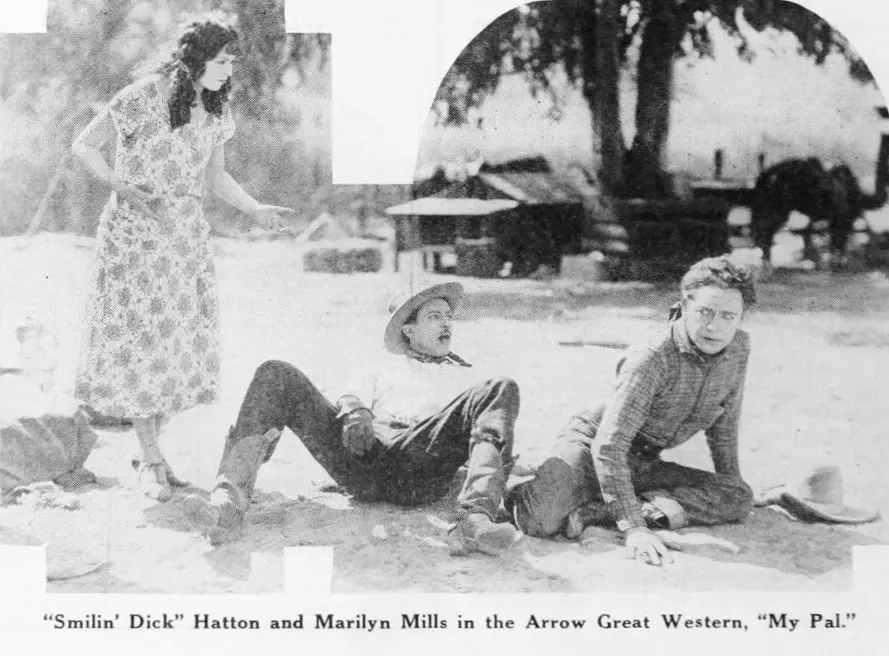
Should you invest your time in a century-old silent western about a smart horse? Short answer: yes, but only if you appreciate the raw, unpolished roots of the 'animal hero' subgenre. This is a film that prioritizes the charisma of its equine lead over the complexity of its human script.
It is specifically for viewers who enjoy the historical lineage of films like Lassie or Rin Tin Tin. It is definitely not for those who require modern pacing or nuanced character arcs. It is a product of its time, for better and for worse.
1) This film works because: The physical chemistry between Dick Hatton and Star the Horse transcends the limitations of silent film acting, creating a believable bond that carries the emotional weight of the first act.
2) This film fails because: The secondary plot involving bank embezzlement and the villainous foreman Jim Bledso is generic, rushed, and lacks any real sense of suspense or cleverness.
3) You should watch it if: You are a student of early cinema history or an animal lover who wants to see one of the earliest examples of a horse performing complex narrative tasks like untying ropes.
In 'My Pal,' the human actors are frequently upstaged. Star the Horse, credited alongside 'Beauty the Horse,' delivers a performance that feels more naturalistic than many of the stage-trained humans in the cast. While Dick Hatton provides a sturdy, if somewhat forgettable, hero in Dick Hammond, it is Star’s reaction shots that draw the eye. The sequence where Star is first wounded by Red Barrett is surprisingly visceral for 1925. The camera lingers on the horse’s struggle, making the eventual rescue by Hammond feel earned rather than just a plot convenience.
The film relies heavily on the audience's ability to project human emotions onto the animal. When Hammond tends to Star's wounds, the framing is intimate. Unlike the more stylized direction found in international films of the same year, such as Kaliya Mardan, the cinematography here is utilitarian. It serves the horse. Every shot of Star is designed to showcase his intelligence and his 'devotion.' It is a calculated move by the filmmakers to tap into the 'animal actor' craze that was sweeping Hollywood at the time.
The human drama, unfortunately, doesn't quite match the stakes of the horse’s survival. We are introduced to the Miller ranch, a setting that feels like a dozen other westerns from the era, including The Devil's Trail. The conflict arises from Jim Bledso, the foreman whose villainy is telegraphed the moment he appears on screen. Bledso is a caricature of greed, embezzling $40,000—a staggering sum for the time—while simultaneously trying to force a marriage with the boss's daughter, Marion.
Marilyn Mills, playing Marion, is given very little to do other than look distressed and eventually provide the romantic payoff for Hammond. Her chemistry with Hatton is serviceable, but it lacks the spark seen in contemporary romances like Her Love Story. The film is much more interested in the 'pal' aspect of the title than the 'lover' aspect. This focus makes the middle section of the film feel somewhat lopsided, as the embezzlement plot feels like an intrusion on the horse-training documentary that the first twenty minutes promised to be.
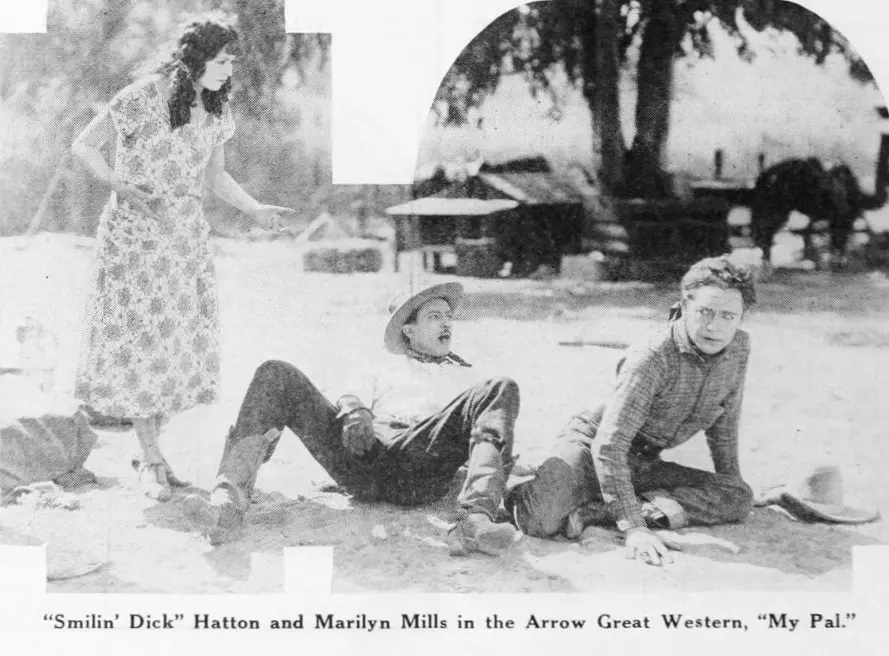
The pacing of 'My Pal' is emblematic of the B-westerns produced in the mid-20s. It moves quickly, clocking in at a length that ensures it never overstays its welcome, but it also means that significant plot points are glossed over. The transition from Miller suspecting Bledso to Bledso pulling a gun on everyone happens with startling speed. There is no slow burn here; it is a rapid-fire progression of tropes. If you've seen Stop at Nothing, you will recognize this frantic narrative economy.
The direction by the uncredited filmmaker (though often attributed to the production house's house style) is competent but uninspired. There are no daring tracking shots or experimental lighting. The film uses flat, high-key lighting for almost every outdoor scene, which was standard for low-budget productions to ensure clarity on the primitive film stocks of the day. However, the lack of shadows makes the final confrontation in the cabin feel less claustrophobic than it should. It lacks the atmospheric tension found in The Boy in Blue.
Yes, 'My Pal' is worth watching if you want to see a foundational piece of the 'smart animal' genre. It is a fascinating look at how early Hollywood marketed non-human stars to a broad audience. While the human plot is thin and the villain is a cliché, the central relationship between the man and his horse remains genuinely touching. It is a simple story told with a sincerity that is often missing from modern, more cynical westerns.
The highlight of the film is undoubtedly the escape sequence. When Hammond and Miller are tied up, it is Star who saves the day. The scene where the horse unties the ropes with his teeth is the film's 'money shot.' It is performed without obvious cuts, suggesting a high level of animal training that was the pride of the production. This moment elevates the film from a standard western to something slightly more magical. It turns the horse from a pet into a protagonist.
The subsequent fight scene is standard fare—lots of swinging haymakers and dust. It doesn't have the choreographed grace of modern action, but there is a certain charm to the raw physicality of it. When the sheriff finally arrives to arrest Bledso, it feels like a foregone conclusion. The real resolution happened minutes earlier when Star chose to save his master. The horse is the hero. The humans are just cleaning up the paperwork.
Pros:
Cons:
'My Pal' is a sturdy piece of silent cinema that knows exactly what it is. It doesn't try to be a grand epic like some of its contemporaries. Instead, it focuses on a universal theme: the bond between a man and his animal. The horse is the heart of the movie. The plot is a skeleton. It works. But it’s flawed.
If you are looking for a deep exploration of the human condition, look elsewhere. If you want to see a horse outsmart a group of grown men while a cowboy looks on with pride, this is exactly the film for you. It remains a charming, if slight, entry in the history of the American Western.
"A relic of a simpler time when a hero's best friend didn't need a single line of dialogue to steal the audience's heart."
IMDb 6.2
1927
Community
Log in to comment.