DbcultAccessing Vault...
Cult Review
Senior Film Conservator
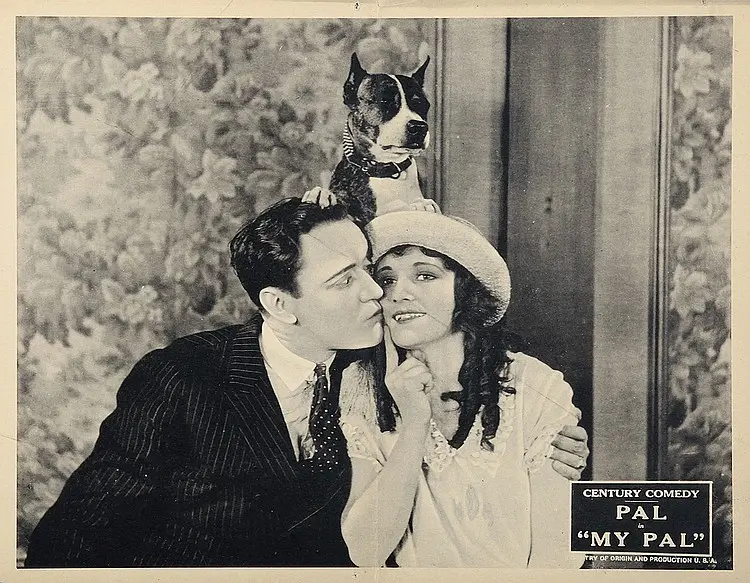
In the pantheon of silent-era capers, My Pal emerges as a kinetic tapestry woven from the threads of slap‑slap‑slap, canine cleverness, and a daring critique of hierarchical labor relations. The film opens with a kinetic tableau: Dick (Fred Spencer), a dashing chauffeur whose swagger is matched only by the whirring of his telescoping rumble‑seat, captures Molly (Alice Day) in a tableau reminiscent of a modern‑day Pied Piper. The scene is drenched in chiaroscuro, the black‑film medium allowing the director Albert Herman to sculpt shadows that echo the cavernous intimacy of the ensuing romance.
Dick’s courtship is not a whispered sonnet but a thunderous, mechanical overture. He lifts Molly onto his roadster, the rumble‑seat extending like a metallic armature, propelling them through streets that seem to pulse with the era’s burgeoning automobile obsession. This kinetic romance is punctuated by a dark orange flash of brass, a visual cue that foreshadows the impending collision between personal desire and professional duty.
The narrative’s fulcrum arrives when Dick, in a misguided attempt to protect his beloved employer’s interests, employs his contraption on his own boss—a figure who epitomizes the aloof, aristocratic patronage prevalent in 1920s studio systems. The resulting mayhem is swift: the boss’s dignified composure is shattered, and Dick is unceremoniously dismissed. This act of hubris is not merely a plot device; it mirrors the broader tension between labor and capital that pervaded early Hollywood, where the ‘star’ often eclipsed the invisible hands that kept the reels turning.
Enter Pal, the eponymous canine whose antics are a study in animal agency within a human‑dominated narrative. When the municipal dog‑catcher—a symbol of bureaucratic overreach—sets his sights on Pal, the dog orchestrates a series of artful ruses: slipping through a laundry chute, masquerading as a sack of coal, and ultimately outwitting his pursuer with a clever diversion involving a rolling barrel of apples. These sequences, choreographed with a precision that rivals the most intricate physical comedy of Chaplin or Keaton, underscore the film’s celebration of ingenuity over authority.
Pal’s escapades are intercut with Dick’s own struggle to extricate himself from an unwanted engagement. The telephone—a technological marvel of the era—becomes a metaphorical barrier; each dialed number reverberates with static, symbolizing the disconnect between intention and outcome. Dick’s futile attempts to break the engagement echo the broader theme of communication breakdowns in a rapidly modernizing world.
The film’s penultimate act transports the audience to a verdant spring, where Dick, ensnared by a literal spring, teeters on the brink of a watery abyss. The cinematography here is a masterclass in suspense: the camera lingers on the rippling surface, the light refracting like shards of glass, while Dick’s panic is rendered through exaggerated pantomime. Pal, ever the loyal ally, dives into the cold depths, emerging with Dick clutched in his jaws—a tableau that juxtaposes the ferocity of survival with the tenderness of friendship.
This rescue is not merely a physical triumph; it serves as an allegorical cleansing. The spring, a symbol of renewal, washes away the grime of Dick’s previous missteps, allowing him to reemerge—both literally and figuratively—reborn.
Emboldened by their aquatic victory, Dick and Pal storm a bustling film studio, a meta‑cinematic setpiece that blurs the line between diegetic chaos and real‑world production. Their intrusion is a chaotic ballet: they tumble onto sets, disrupt rehearsals, and inadvertently become part of the on‑screen action. This self‑referential moment anticipates later works like Susan’s Gentleman, where the film‑within‑a‑film trope is employed to critique industry excesses.
The studio’s eventual decision to hire Dick and Pal reflects a narrative closure that aligns with the American Dream mythos: perseverance, even through mischief, yields reward. Their employment also subtly comments on the era’s burgeoning star system, where even the most unlikely participants could find a niche within the cinematic machine.
Fred Spencer’s portrayal of Dick balances roguish charm with a palpable vulnerability. His physicality—precise, exaggerated, yet grounded—recalls the kinetic energy of Buster Keaton while maintaining a distinct, modern sensibility. Alice Day, as Molly, provides a counterpoint of elegance and resilience; her expressive eyes convey a spectrum of emotions without the need for intertitles, a testament to Day’s nuanced performance.
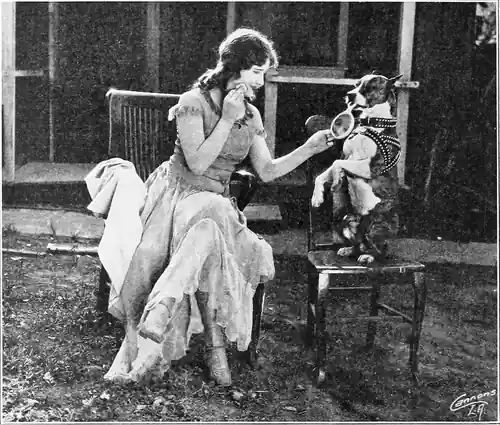
Pal the Dog, though non‑verbal, commands a screen presence that rivals his human counterparts. The training and direction required to elicit such timing and emotional resonance speak to Albert Herman’s adeptness at integrating animal performers—a skill also evident in his handling of the canine chaos in The Fox and the Crow.
Cinematographer Harry Pringle employs a palette of stark contrasts, utilizing the deep blacks of the medium to make the occasional burst of dark orange—whether a streetlamp or a flickering engine—pop with visceral intensity. The use of sea blue (#0E7490) appears in the spring scenes, lending the water a cool, almost ethereal quality that underscores the thematic rebirth.
Beyond its surface-level comedy, My Pal engages with themes of class mobility, the tension between mechanization and humanity, and the subversive power of the underdog—both literal and figurative. The telescoping rumble‑seat, a symbol of technological progress, becomes a double‑edged sword: it facilitates romance but also precipitates Dick’s downfall. This duality mirrors the 1920s societal ambivalence toward rapid industrialization.
Moreover, the film’s portrayal of the dog‑catcher as an antagonistic bureaucrat resonates with contemporary anxieties about governmental overreach, a motif echoed in later works such as Wrath of Love, where institutional forces threaten individual autonomy.
The resolution—Dick and Pal securing studio employment—reinforces the era’s optimism: the notion that perseverance, ingenuity, and a dash of serendipity can overturn even the most rigid hierarchies. This optimism is underscored by the film’s concluding tableau: Dick, Pal, and Molly standing beneath a marquee lit in yellow, their silhouettes framed against a night sky that hints at endless possibility.
When juxtaposed with contemporaneous comedies such as Fashion Follies and The Last Payment, My Pal distinguishes itself through its integration of animal agency and its meta‑cinematic commentary. While Fashion Follies relies heavily on sartorial satire, and The Last Payment delves into melodramatic poverty, My Pal weaves together slapstick, social critique, and a celebration of loyalty into a cohesive, albeit chaotic, whole.
The film’s pacing, though frenetic, never sacrifices narrative clarity. Each set piece—whether the spring rescue or the studio intrusion—serves both comedic and expository purposes, advancing character arcs while maintaining audience engagement. This structural efficiency is a hallmark of Herman’s direction, aligning him with the likes of the era’s master storytellers.
In contemporary discourse, My Pal offers a fertile ground for discussions about animal representation in media, the evolution of workplace satire, and the early cinematic exploration of meta‑narratives. Its influence can be traced to later works that blend animal protagonists with human drama, such as the 1930s classic The Fox and the Crow, and even to modern family comedies that hinge on the bond between humans and their four‑legged companions.
From a preservation standpoint, the film’s surviving prints demonstrate the resilience of nitrate stock when properly archived, offering scholars a window into the visual aesthetics of late‑silent comedy. Restoration efforts have highlighted the vibrancy of the original tinting—particularly the subtle sea‑blue washes applied to aquatic scenes—underscoring the importance of color theory even in ostensibly monochrome works.
In sum, My Pal stands as a testament to the ingenuity of early filmmakers who, constrained by technology, nevertheless crafted narratives that resonated across class lines, gender expectations, and species boundaries. Its blend of high‑octane physical comedy, poignant thematic undertones, and a dog who outsmarts the system ensures its place in the annals of cinema history, inviting both scholars and casual viewers to revisit its charms with renewed appreciation.
IMDb 6.5
1936
Community
Log in to comment.