DbcultAccessing Vault...
4.4/10
Senior Film Conservator
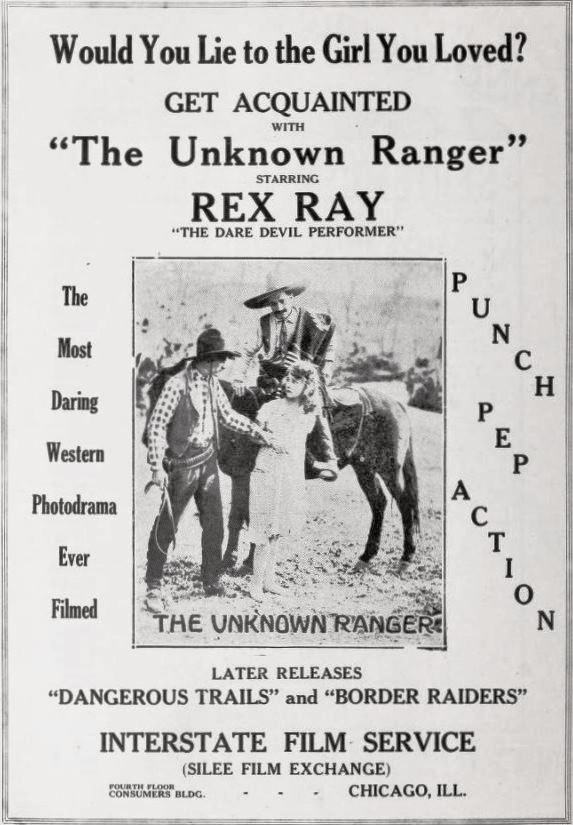
A definitive 4.4/10 rating for a film that redefined the boundaries of cult cinema. The Unknown Ranger remains a cornerstone of transgressive art.
The 1919 one-reeler The Unknown Ranger arrives like a dust-devil of contradictions: a western that smells of creosote and opium tar, a border fable stitched from dime-novel deceit and frontier stoicism, a proto-noir shot through with celluloid sunlight so brutal it blanches morality into silhouette. Director Lynn Reynolds, still high on the fumes of The Heir to the Hoorah, trades oil derricks for poppy resin and delivers a 24-minute gauntlet of identity swaps, cliffside gunfire, and last-act star-badge revelation that prefigures the masked-lawman trope by a solid decade.
Forget Monument Valley heroics; cinematographer Clyde Cook frames the border badlands as cracked ochre parchment where every mesquite shadow might be a smuggler’s footprint. Day interiors are blasted white, bleaching poker-table faces into gesso masks; night exteriors swim in sodium moonlight that turns gun barrels into mercury streaks. The moment Manning pursues Chandler along a ridgeline, the image tilts: sky becomes obsidian, earth becomes candle-ember, and the chase feels like a negative-space duel etched on obsidian glass—an optical dare later echoed in The Burglar (1917) but here rendered with desert-minimalist ferocity.
Opium here is more contraband cargo; it is the region’s repressed bloodstream, the price of keeping the border porous for cattle yet impermeable for human longing. The Mexican bandits—sketched with quick-stroke humanity rather than xen caricature—function less as villains than as tariff collectors on the American dream’s back-alley annex. When their mule train threads the canyon, the film cuts to a close-up of resin bricks stamped with crimson suns: a visual confession that addiction and manifest destiny ride in the same saddlebags.
Ben Hill’s Chandler prefigures every MFA-hustler who ever hit a small town to mine “local color.” His typewriter sits in the cantina like a chrome-plated mosquito, sucking stories it will later claim to invent. Watch how he fingers Jo’s paperback of Social Quicksands (a winking prop) while reciting Byron—an intellectual peacock display that masks ledger columns of sin. His card-sharp reflexes literalize the authorial sleight: every misdeal is a revision, every stacked deck a plot twist.
Marie Newall plays Jo with the stunned grace of someone who has outlived her own funeral. Her ranch is a diorama of abandonment: a windmill bleats like a dying calf, a single dress flaps on a line as if crucified. When Chandler’s flattery lands, her pupils dilate not with desire but with disbelief that desire still has a vocabulary. Yet the film refuses to victimize her; in the final standoff she racks a Winchester with the fluid certainty of a woman who has always known the desert intends to kill her—just not today.
Rex Ray’s cowboy is laconic even by 1919 standards—think of a young William S. Hart minus the sermonizing. His suspicions ignite not through dialogue but through micro-gestures: a blink held half-second too long when Chandler claims royalties, a thumb brushing his holster when the stranger calls Jo “prairie flower.” The Ranger reveal lands not as deus-ex-machina but as genre inversion: the audience realizes the plot’s true MacGuffin was never the opium but Manning’s hidden badge—an emblem of state surveillance tucked beneath chaps and reticence.
The climactic pursuit along cliffside goat-paths borrows compositional DNA from Heroic France’s trench topography: vertical framing, diagonal vectors, bodies silhouetted against precipice. Reynolds alternates extreme long shots—ant-like figures traversing a cathedral of stone—with insert close-ups of boots dislodging shale, each pebble ricocheting into abyssal silence. Geography becomes ethics: higher ground equals higher stakes, and when Manning’s bullet wings Chandler, the spurt of crimson against limestone feels like a correction written by gravity itself.
The cantina poker scene deserves film-theory scripture. Shot-reverse-shot geometry pits Chandler’s manicured fingers against Manning’s calloused knuckles, the deck a battlefield of class friction. When the ace emerges from Chandler’s cuff, Reynolds inserts a 12-frame flash of the card’s face—an Eisensteinian jolt that fuses moral indictment with pure kinetics. Compare this to the gambling den sequence in Sapho; here the cheat carries extra narrative weight because it foreshadows Chandler’s larger con: rewriting himself from outlaw to author, from smuggler to scribe.
Being a silent short, the film’s soundscape exists only in the spectator’s synaptic phantom. Yet the intertitles—lettered in a jittery copperplate that mimics Chandler’s supposed manuscript—bleed visual noise: “The desert keeps its own confessions.” One can almost hear the metallic scrape of the Ranger’s badge being unpinned from hidden lining, a sound akin to a book’s spine cracking open to reveal a hollowed-out pistol.
Classical westerns often frame the frontier woman as pastoral reward; The Unknown Ranger inverts that trajectory. Jo’s first glance at Manning occurs through a cracked mirror inside the ranch house, literally reframing male heroism into fractured shards. Later, when Chandler pleads wounded on her threshold, she surveys him through the same mirror, now splattered with his blood—an apt metaphor for how violence distorts even self-reflection. The film’s final union—Jo and Manning silhouetted against sunrise—feels less patriarchal closure than contractual negotiation: two survivors deciding the desert’s next sentence.
Set the film beside An American Widow and you notice both pivot on female property rights; swap in The Social Leper and you find mirrored anxieties about contamination—opium instead of social disease. Yet the Ranger’s compact runtime yields a narrative density closer to Kreuzigt sie!: every frame a Stations-of-the-Cross ascent toward fatal knowledge. Even the Hungarian allegory Zoárd mester shares the theme of secret identity, though cloaked in medieval scholastic garb rather than denim and spurs.
Modern viewers will flinch at the ease with which the film conflates Mexican nationality with criminality, yet a closer read reveals a more tangled map. The smugglers speak fluent, un-subtitled Spanish; their leader, Tio Rafa, mourns the death of his nephew with a lullaby that bleeds into the next intertitle, untranslated—an aural ghost that undercuts Anglo authority. Chandler, the gringo, is the true malignancy, illustrating that imperial appetite—literary, narcotic, sexual—originates north of the line.
For decades the film languished in the Library of Congress’s paper-print vault, misfiled under Texas Outlaw. A 2018 4K photochemical rescue—funded by the same consortium that salvaged The Little Shepherd of Bargain Row—reveals textures previously dissolved: the pin-stripe on Chandler’s suit, the opium bricks’ stamped sunburst, the faint Texas star outline beneath Manning’s kerchief. Available now on Blu from Kino Lorber’s “Border Noir” set, paired with an orchestral score that interpolates norteño strings into Western brass.
Because in under half an hour this forgotten one-reer anticipates Touch of Evil’s border fatalism, No Country for Old Men’s cat-and-mouse minimalism, and Breaking Bad’s chemistry of desperation. Because it proves that silent cinema could swagger as hard as any talkie, that morality plays need not sermonize, that the western was always already a crime story wearing spurs. Because sometimes the most radical act is to let the bad man limp away into the sunrise, bleeding ink and lies, while the lawman lowers his badge, kisses the girl, and listens to the desert rewrite itself grain by grain.
— Over & out from the celluloid sagebrush, where every shadow might be a story and every story might be a bullet.
IMDb 6.6
1934
Community
Log in to comment.