DbcultAccessing Vault...
Cult Review
Senior Film Conservator
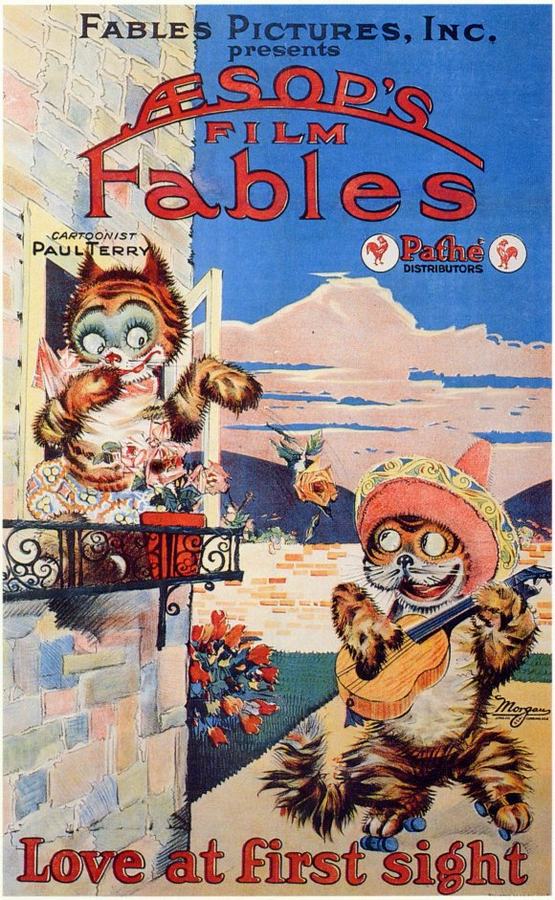
The year 1929 stands as a seismic threshold in the annals of moving images, a period where the industry teetered between the refined visual language of the silents and the crude, yet intoxicating, allure of synchronized sound. Love at First Sight, a production that often escapes the broader historiography of the era, serves as a fascinating specimen of this evolutionary flux. It is not merely a film; it is a historical artifact that captures the frantic, sometimes clumsy, yet always earnest transition into the 'talkie' paradigm. Starring Paul Terry, an actor whose presence here provides a grounding, everyman quality to the whimsical premise, the film navigates the tropes of romantic comedy with a specific, rhythmic cadence that feels uniquely tethered to its time.
In analyzing the structural integrity of Love at First Sight, one must acknowledge the inherent limitations of the recording technology available during its production. Unlike the more polished narratives found in contemporary works like The Triflers, this film embraces a certain raw theatricality. The camera, often anchored by the cumbersome weight of sound-proofing 'blimps,' relies on the actors to generate momentum. Paul Terry rises to this challenge with a performance that is both sonorous and physically evocative. He plays a songwriter, a role that allows the film to justify its sonic existence through diegetic music—a common strategy for early sound films attempting to integrate melody without the fluidity of the later MGM musicals.
The narrative arc is deceptively simple, yet it possesses a diaphanous beauty. The 'first sight' of the title is treated not as a cliché, but as a metaphysical event. In an era where social mores were shifting, the concept of instant, undeniable attraction offered a cinematic escape from the rigid expectations of courtship seen in earlier dramas like His Official Fiancée. Here, the romance is unburdened by the weight of Victorian residues, opting instead for a breezy, almost improvisational feel that mirrors the jazz-age sensibilities of the late twenties.
When placed alongside the darker, more cynical explorations of the human condition found in Life in a Western Penitentiary, Love at First Sight appears as a vibrant counterpoint. It lacks the harrowing sociological critique of the former, yet it provides a necessary document of the era's lighter aspirations. While The Great London Mystery utilized shadows and suspense to captivate audiences, this film utilizes the clarity of the human voice and the brightness of the musical stage. It is an exercise in optimism, a stark contrast to the brooding atmosphere of Occultism or the legalistic tension of The Alibi.
The film's pacing is notably different from the European sensibilities of Politik och brott or the Hungarian psychological depth of A lélekidomár. Instead, it adheres to a distinctly American tempo—quick-witted, slightly brash, and relentlessly forward-moving. The screenwriting, though uncredited in many archives, displays a penchant for the 'wisecrack' that would soon become the staple of the 1930s screwball comedy. This linguistic dexterity is a far cry from the somber tones of The Iron Ring, suggesting a culture eager to shed its collective anxieties in favor of melodic levity.
Paul Terry’s performance is a masterclass in the 'transitional style.' He possesses the expressive eyes of a silent star, yet his voice carries the resonance needed to satisfy the new demands of the microphone. His chemistry with the female lead—a dynamic that must be palpable for the 'first sight' premise to hold any narrative water—is achieved through a series of subtle glances and shared musical motifs. In many ways, his character represents the Everyman of the 1920s, much like the archetypes explored in Striking Models, yet Terry imbues the role with a specific vulnerability that feels remarkably modern.
The film’s portrayal of the music industry—the 'Tin Pan Alley' of the screen—is both romanticized and revealing. It depicts the creative process as a frantic, collaborative endeavor, often interrupted by the very life experiences the songs seek to emulate. This meta-commentary on the nature of art and inspiration gives the film a depth that belies its surface-level charm. It isn't just about finding a girl; it's about finding the rhythm of a new era. This thematic resonance is something missing from more straightforward melodramas like Wives and Old Sweethearts or the domestic struggles of Nobody's Wife.
Visually, Love at First Sight manages to find moments of genuine cinematic grace despite the static nature of early sound equipment. The use of lighting to isolate the protagonist during his moments of musical epiphany creates a dreamlike quality that elevates the film above mere 'canned theater.' There is a sequence involving a rainy windowpane that serves as a visual synecdoche for the protagonist's longing—a technique that feels as sophisticated as anything found in The Broadway Madonna. The director understands that while the audience came for the sound, they must stay for the image.
The costume design and set decoration further ground the film in its specific cultural moment. The flapper dresses, the art deco furniture, and the smoke-filled rehearsal rooms create an immersive atmosphere. It lacks the pastoral simplicity of Miss Peasant, favoring instead the jagged, electric energy of the city. Even the supporting cast, featuring character actors who would become staples of the studio system, contribute to a sense of a living, breathing world. When someone asks, 'Here He Is?' referring to the lead, the response is often a comedic beat that underscores the film's brisk editorial style.
Critically, Love at First Sight deserves a re-evaluation not as a masterpiece of narrative complexity, but as a triumph of tone. It successfully captures the 'lightning in a bottle' sensation of a world on the cusp of profound change. The songs, while perhaps dated to the modern ear, possess a melodic purity that speaks to a time before the cynicism of the post-war era took hold. The film’s resolution, though predictable in the way all great romances are, feels earned because of the genuine warmth Terry brings to the screen.
In the grand tapestry of 1920s cinema, this film is a bright, shimmering thread. It doesn't possess the heavy-handed moralizing of its contemporaries, nor does it succumb to the mindless slapstick that plagued many early talkies. Instead, it maintains a poised, sophisticated balance. It understands that 'love at first sight' is a fantasy, but it treats that fantasy with the utmost respect, allowing the audience to inhabit a world where a single song and a single look can indeed change the course of a life. It is a testament to the power of the medium to not just record sound and image, but to synthesize them into a singular, emotional experience that resonates across the decades.
Ultimately, the film serves as a reminder of the fragility of the human connection in an increasingly mechanized world. As the characters navigate the gears of the city and the music industry, their eventual union feels like a small, beautiful rebellion. For the modern viewer, Love at First Sight offers a window into a vanished world—a world of crackling microphones, shimmering silk, and the eternal, intoxicating possibility of a chance encounter. It is a film that demands to be seen, not just for what it is, but for what it represents: the moment cinema truly found its voice, and in doing so, found its heart.
IMDb 6.6
1931
Community
Log in to comment.