DbcultAccessing Vault...
6.5/10
Senior Film Conservator
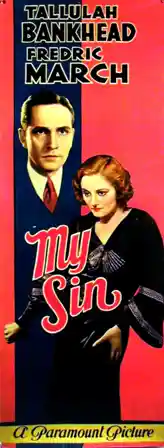
A definitive 6.5/10 rating for a film that redefined the boundaries of cult cinema. My Sin remains a cornerstone of transgressive art.
So, My Sin from 1931. This is definitely one for the die-hard classic film lovers out there. If you like your old movies with snappy pre-Code dialogue and don't mind a story that feels a bit like a stage play caught on film, you might actually dig it. But anyone looking for modern pacing or a big, cinematic spectacle? Yeah, you'll probably be bored stiff.
It’s a curious beast, this one. Carlotta, played by Tallulah Bankhead, has just gotten off a murder charge. And I mean, *just* gotten off. She decides a change of scenery is in order, so off to New York she goes.
Immediately, you feel that pre-Code energy. No slow build-up here. Bankhead is just magnetic from her first scene, even if her character, Carlotta, is a bit of a walking enigma at the start. She’s not trying to win you over; she just *is*.
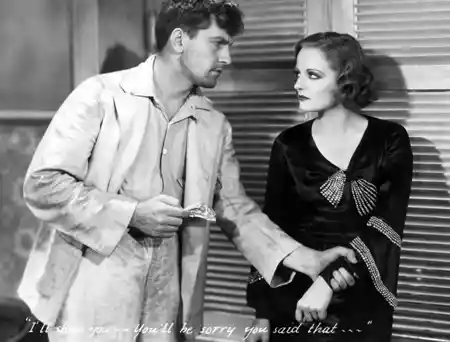
The whole acquittal thing? It's kind of just a launchpad. The film doesn't really dwell on the trial itself. Instead, it dives into her attempt at reinvention, which is where things get interesting.
She meets this guy, Jerry, played by Fredric March. And boy, is their chemistry something. It's not a gentle, swooning romance. It’s got a real bite to it, a push-and-pull that feels very real for the time. You can almost feel the air crackle between them in some of their scenes.
One moment that sticks with me is when Carlotta is trying to explain her situation to Jerry. She doesn’t quite explain it, though. She just dances around it, with this look in her eyes that tells you everything and nothing at the same time. It’s a masterclass in holding back just enough.
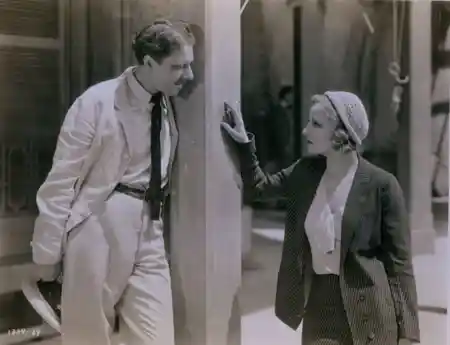
The dialogue is **sharp** sometimes, almost startlingly so. There's a line where someone says something about her reputation, and Carlotta just fires back, *"My reputation has usually gotten there before me."* Boom. Mic drop.
Then there are these weird little scenes, too. There’s a party scene that goes on a little too long, and some of the extras look like they were just pulled off the street. It gives it a very raw, almost documentary feel in a strange way. Like you’re just observing real people in a slightly awkward situation.
The film does a good job of showing how Carlotta’s past keeps nipping at her heels. It's not some big, dramatic reveal every time. Sometimes it's just a glance, a whispered comment, or someone recognizing her at an unexpected moment. It’s effective, that creeping dread.
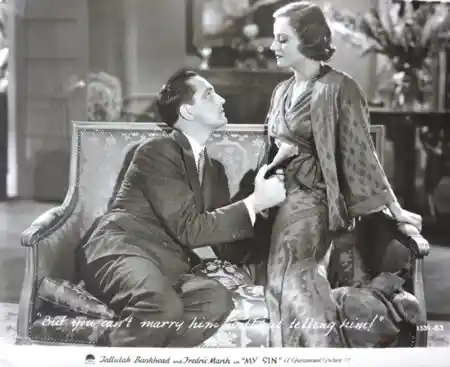
Tallulah Bankhead, she’s really the whole show here. Her voice, her mannerisms. She owns every frame she's in. There are moments where she just looks off into the distance, and you can practically see her character's whole tangled history playing out behind her eyes. You just don’t get performances like that anymore. 🤩
Fredric March is a good foil for her, too. He brings a kind of earnest intensity that grounds her wilder energy. He’s not just a love interest; he feels like a genuine force that challenges Carlotta.
The story itself, it’s not super complex. It's a morality play, really. Can you truly escape your past? Or is it always going to be part of who you are, no matter how far you run?
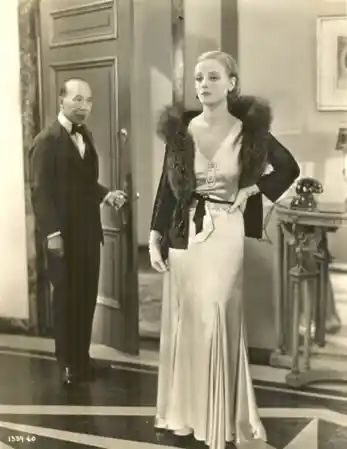
Some of the supporting characters fade into the background pretty quickly. Jay Fassett plays a lawyer character, and while he’s fine, he just sort of exists to move a few plot points along. Not every performance gets to shine, you know?
The pacing can feel a bit uneven. Sometimes it zips along with snappy banter, and other times it just slows down to let a mood settle. It’s not always a smooth ride, but that’s part of its charm, I think. It feels less manufactured.
One detail I found funny: Carlotta's apartment in New York. It's so *glamorous* for someone supposedly trying to keep a low profile. Like, she’s trying to disappear, but she’s living in this incredibly swanky pad. It makes you wonder about her priorities, or perhaps the film's budget for set design. 🤔
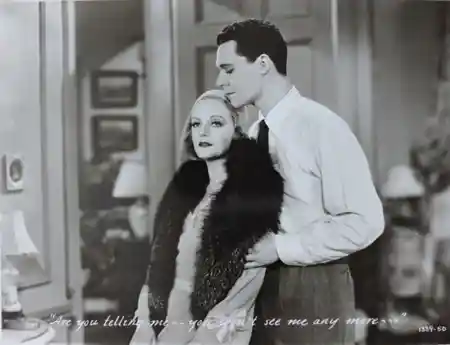
The film’s ending… it feels a little abrupt. Like they just decided to cut it off rather than resolve everything perfectly. It leaves you thinking, which is a good thing sometimes. Not everything needs a neat little bow.
Ultimately, My Sin is a snapshot. It’s a raw, sometimes clunky, but undeniably engaging piece of early Hollywood. It’s not polished like films from later decades. But that rawness, that unfiltered energy, is what makes it worth revisiting.
It’s a peek into a different era of filmmaking, where the rules were still being written. And Bankhead? She was definitely writing her own rules.
IMDb 4.5
1928
Community
Log in to comment.