DbcultAccessing Vault...
Cult Review
Senior Film Conservator
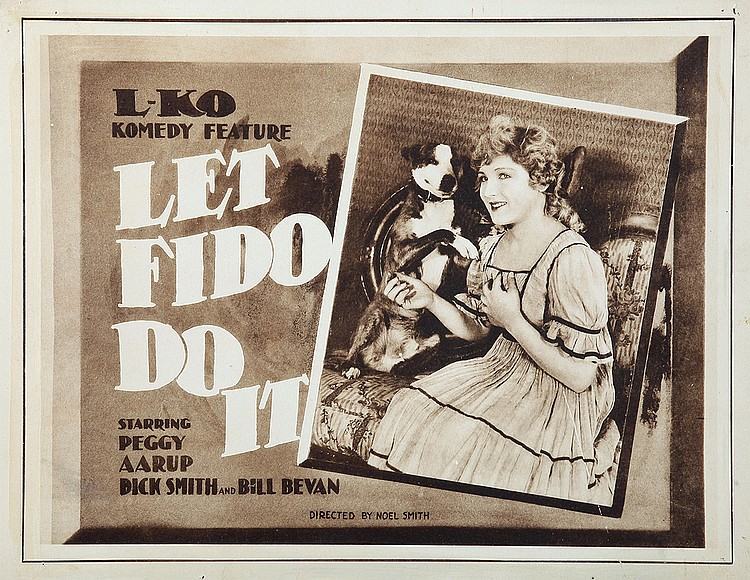
The year 1920 stood as a threshold, a temporal gateway where the burgeoning sophistication of silent cinema began to shed its primitive skin. Within this transformative milieu, Let Fido Do It occupies a niche that is as endearing as it is technically fascinating. While the industry was elsewhere preoccupied with the grandiosity of historical epics like Veritas vincit, this modest production focused its gaze on the microcosm of the household, proving that cinematic resonance does not always require a cast of thousands or a sprawling timeline.
Eva Novak, a performer whose screen presence possessed a rare mixture of vulnerability and sharp comedic timing, serves as the emotional anchor of the piece. Unlike the more somber roles seen in The Recoil, Novak here utilizes a lighter touch. Her ability to communicate volumes through a slight tilt of the head or a fleeting glance toward the camera illustrates the pinnacle of pantomimic acting. She doesn't just inhabit the frame; she commands it with a grace that feels remarkably modern, avoiding the hyperbolic gesticulation that occasionally marred the performances of her peers in films like Prudence on Broadway.
The true genius of Let Fido Do It lies in its subversion of the 'man’s best friend' trope. Fido is not a passive observer. In many ways, the dog is the most proactive character in the script. Where Richard Smith’s character remains paralyzed by the social rigmarole of the era—a theme explored with much more gravity in The Dollar and the Law—the canine protagonist operates outside these constraints. The dog is the agent of chaos and the harbinger of resolution, a duality that keeps the pacing brisk and the engagement high.
Consider the sequence where a misplaced letter threatens to unravel the central romance. In a lesser film, this might lead to a tedious series of explanatory intertitles. Here, the director trusts the visual storytelling. We see the dog’s realization, the physical struggle to retrieve the parchment, and the eventual delivery that saves the day. This reliance on visual kinetics over textual exposition marks a significant evolution in the medium, echoing the rhythmic precision found in Hitting the Trail.
The cinematography, while constrained by the equipment of the time, exhibits a surprising depth of field. The interior sets are layered, allowing for action to occur in the background while Novak occupies the foreground, creating a sense of lived-in reality that was often missing from the flat, stage-like presentations of early shorts. This depth reminds one of the artistic ambitions of A napraforgós hölgy, though applied here to a much more intimate subject matter.
The lighting, too, deserves mention. There is a soft, diffused quality to the garden scenes that contrasts sharply with the high-key lighting of the indoor sequences. This visual dichotomy mirrors the characters' internal states—freedom versus domestic duty. It is a subtle touch, likely overlooked by casual viewers in 1920, but for the modern cinephile, it reveals a level of intentionality that elevates the film above mere slapstick.
When we look at the broader landscape of 1920 cinema, Let Fido Do It stands as a counterpoint to the rugged masculinity of Westerns like Satan Sanderson or the high-stakes tension of The Cold Deck. It shares a certain DNA with Bettina Loved a Soldier in its portrayal of innocent affection, yet it strips away the military backdrop in favor of a more relatable, suburban charm. The film’s brevity is its strength; it does not overstay its welcome or attempt to inject unnecessary melodrama, a pitfall that sometimes affected the pacing of By Injunction.
To dismiss this film as a mere antiquity would be a disservice to the craft of Novak and Smith. Their chemistry is palpable, even through the grain of a century-old master. Richard Smith provides a sturdy, if somewhat conventional, foil to Novak’s effervescence. His performance is reminiscent of the stoic leading men found in Calibre 38, though he allows for moments of genuine warmth that humanize his character beyond the archetype of the 'suitor'.
The film also serves as a fascinating sociological document. It captures the fashion, the manners, and the architectural nuances of a world that was about to be irrevocably changed by the advent of sound and the Great Depression. In the carefree antics of Fido, we see a reflection of a society that, for a brief moment, found joy in the simple, the tactile, and the wordless. It possesses a purity of intent that is often lost in the cynical machinery of modern blockbusters.
The editorial rhythm of Let Fido Do It is remarkably tight. Each scene serves a purpose, whether it is to establish a character trait or to advance the dog’s quest. This economy of storytelling is a hallmark of great silent cinema. It reminds one of the intricate plotting in A Night in New Arabia, where every detail is a Chekhovian gun waiting to fire. The climax, involving a chaotic chase through the house, is choreographed with a precision that rivals the best work of the era, including the sophisticated comedies like Die tolle Heirat von Laló.
In the final analysis, Let Fido Do It is more than a footnote in Eva Novak’s filmography. It is a testament to the power of small-scale storytelling. It proves that with a talented cast, a clever canine, and a director who understands the visual language of the era, one can create a work that transcends its time. It invites us to look past the scratches on the film stock and see the vibrant, breathing art underneath. It is a reminder that sometimes, the best way to solve a human problem is to simply let the dog handle it.
The film’s endurance in the memory of silent film aficionados is a testament to its charm. While it may not have the philosophical weight of The Homebreaker, it possesses a lightness of spirit that is perhaps even more difficult to achieve. It is a sparkling jewel of the 1920s, a brief but brilliant flicker in the dark that continues to illuminate the foundations of cinematic comedy.
IMDb —
1928
Community
Log in to comment.