DbcultAccessing Vault...
6.3/10
Senior Film Conservator
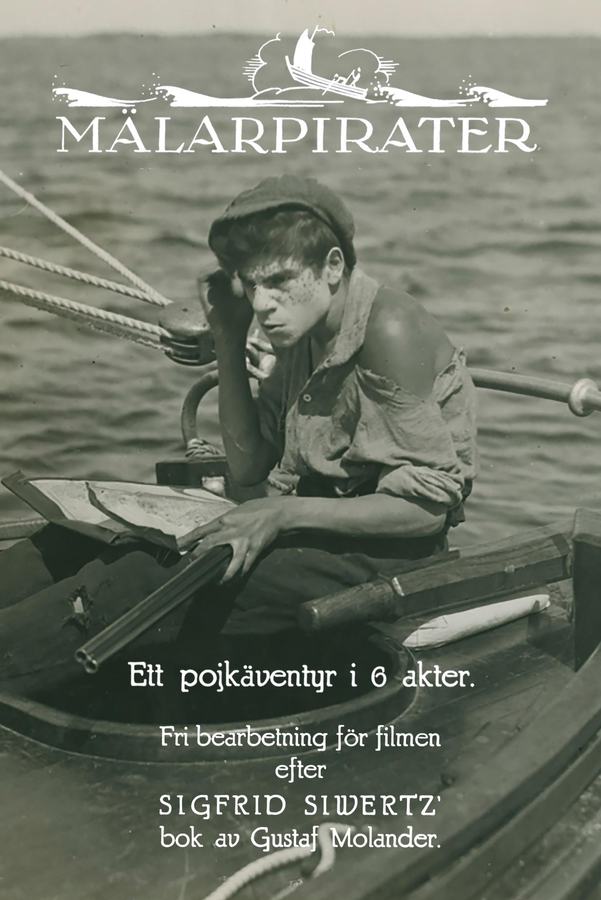
A definitive 6.3/10 rating for a film that redefined the boundaries of cult cinema. Malar Pirates remains a cornerstone of transgressive art.
There’s a certain ineffable magic that emanates from films that capture the fleeting, often reckless, spirit of youth. Gustaf Molander’s adaptation of Sigfrid Siwertz’s novel, Malar Pirates (original title: Mälardrottningen, if we’re being precise, though the international title has its own charm), is precisely one such cinematic artifact. It's a journey into the heart of adolescent rebellion, a sun-drenched, wind-swept ode to the call of the wild, albeit a domesticated, Swedish wild in the form of Lake Mälaren. Released in an era when cinema was still finding its voice, this film speaks volumes about freedom, the allure of the unknown, and the profound, often challenging, transition from boyhood to something approaching manhood.
The very premise is imbued with a delightful, almost audacious simplicity: three boys, driven by a cocktail of boredom, ambition, and perhaps a touch of youthful nihilism, decide to abscond with a sailboat. Their destination? Not some exotic, far-flung locale, but the familiar yet vast expanse of Lake Mälaren, transforming the everyday into an epic stage for their nascent identities. Sigfrid Siwertz’s original novel undoubtedly provided a robust framework for this narrative, rich in character nuance and evocative descriptions of the Swedish landscape. Molander, as director, alongside Siwertz himself in the writing credits, faced the formidable task of translating the novel’s internal monologues and environmental subtleties into a visual medium, a challenge they met with remarkable grace for the period.

What makes this particular act of 'piracy' so compelling isn't its grandiosity, but its deeply personal stakes. This isn't a swashbuckling tale of buried treasure or grand naval battles, but a more intimate, psychological exploration of self-discovery through defiance. The sailboat becomes more than just a vessel; it transforms into a symbol of their burgeoning autonomy, a temporary fortress against the encroaching demands of adulthood. It's a theme that resonates across generations, echoing the universal desire to escape, to chart one's own course, even if that course leads only to the next bend in the lake.
The narrative unfurls with a delicate balance between the exhilarating freedom of the open water and the subtle, creeping anxieties of their transgression. For Georg Grönroos, whose performance anchors much of the film’s youthful spirit, the journey is an awakening. His character embodies the purest form of adolescent yearning for independence, a desire to test the boundaries of his world. Yet, as with any act of rebellion, consequences, both foreseen and unforeseen, begin to ripple through their adventure. The film avoids simplistic moralizing, instead opting for a more nuanced portrayal of how youthful idealism inevitably confronts the pragmatism of the real world. This isn't a story about 'bad' boys, but rather about boys striving for agency in a world that often denies it to them.
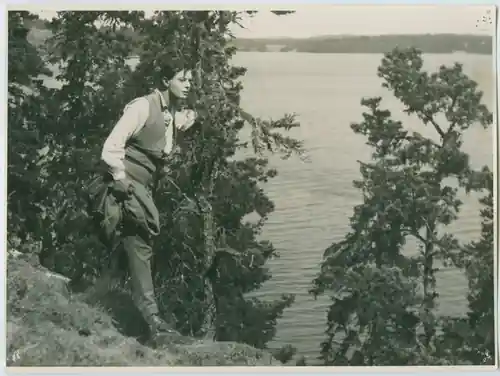
Molander’s direction, even with the technical limitations of early cinema, manages to imbue the lake itself with a character all its own. The vastness of Mälaren isn't merely a backdrop; it’s an active participant, reflecting the boys' moods, offering both solace and challenge. The cinematography, while perhaps not as groundbreaking as some of its contemporaries, effectively conveys the sense of scale and isolation, allowing the audience to feel the wind in their hair and the spray on their faces. One might draw a parallel to the way natural landscapes become extensions of character in films like The Blue Mountains Mystery, where the environment itself shapes the protagonists' journey and internal struggles.
While the focus remains firmly on the three young protagonists, the supporting cast provides a rich tapestry of human experience that grounds the film’s more adventurous flights of fancy. Tekla Sjöblom and Nils Aréhn, seasoned actors of their time, bring a gravitas to their roles, representing the adult world from which the boys are temporarily escaping. Their performances, even in what might be considered secondary roles, are crucial in providing the emotional and societal context for the boys' actions. Julia Cæsar, Carl Browallius, and Albert Christiernsson further flesh out this world, each contributing to the film's atmospheric depth. It's a testament to the strength of early Swedish cinema that such a robust ensemble could be assembled, each actor bringing a distinct flavor to their part.

The film also showcases the early talents of actors like Inga Tidblad and Einar Hanson, who would go on to have significant careers. Their presence, even in fleeting moments, hints at the burgeoning talent pool within Swedish cinema of the period. One can see how such foundational performances laid the groundwork for the more complex character studies that would emerge in later decades, much like how early character-driven dramas such as Jeanne Doré or Dr. Rameau allowed actors to explore the depths of human emotion without the benefit of extensive dialogue.
Beneath the surface of a thrilling summer escapade, Malar Pirates subtly explores themes of lost innocence and the bittersweet nature of memory. The adventure, while exhilarating, is ultimately finite. The boys must, eventually, return to shore, to the responsibilities and realities they sought to evade. This impending return casts a gentle melancholy over the latter half of the film, transforming the initial burst of freedom into a poignant reflection on the ephemeral nature of childhood itself. It reminds us that such moments of pure, unadulterated liberty are rare and precious, often only truly appreciated in hindsight.
The film's exploration of youthful bonds and shared experiences also resonates deeply. The camaraderie between the three boys, their silent understandings and occasional squabbles, paints a realistic picture of adolescent friendships. These are the formative relationships that shape individuals, and the film captures their intensity with a quiet authenticity. It’s a far cry from the more overtly comedic or dramatic portrayals of friendship seen in films like Tillie's Punctured Romance or even the more allegorical Brother of the Bear, opting instead for a grounded, observational approach.
Gustaf Molander, a pivotal figure in early Swedish cinema, demonstrates a remarkable command of pacing and emotional resonance in Malar Pirates. His directorial style, even at this early stage in his career, shows a preference for understated drama and character-driven narratives. He allows the story to unfold organically, trusting his actors and the inherent power of Siwertz’s source material. There are no grandstanding theatrics, no unnecessary melodramatic flourishes. Instead, Molander presents a story that feels authentic, a slice of life elevated by the universal themes it explores. This approach stands in contrast to the more sensationalist narratives sometimes found in other early films, such as The Crime of the Camora, which often leaned into more overt spectacle.

The adaptation process from novel to screen is always fraught with challenges, yet Molander and Siwertz appear to have navigated these waters with considerable skill. They retained the essence of the novel's spirit while making the necessary concessions for visual storytelling. The film effectively uses visual cues and the actors’ subtle expressions to convey internal states, a crucial element in silent or early sound cinema. This skill in visual narrative can be seen as a precursor to the more sophisticated cinematic language that would develop in films like Moon Madness, where visual metaphor and symbolic imagery played an increasingly significant role.
Despite its age, Malar Pirates retains a surprising freshness, a testament to the timeless nature of its themes. The longing for adventure, the thrill of breaking free, the complex dynamics of friendship, and the inevitable march towards maturity are all elements that transcend specific eras and cultures. It’s a film that speaks to the inner child in all of us, reminding us of those moments when the world felt boundless and possibilities seemed infinite. In an age saturated with special effects and rapid-fire editing, there’s a quiet beauty in the film’s deliberate pace and its focus on character over spectacle.
The performances, particularly by the younger cast members like Georg Grönroos, are remarkably naturalistic for the period. They avoid the often exaggerated gestures common in silent films, opting instead for a more subdued, emotionally resonant style that anticipates later developments in acting technique. This authenticity is a key factor in the film’s enduring appeal, allowing modern audiences to connect with the characters on a deeper level. Compare this to the more overtly theatrical performances sometimes seen in other period pieces like Die Hexe, and the subtle power of Malar Pirates becomes even more apparent.
In many ways, Malar Pirates serves as a valuable historical document, offering a glimpse into Swedish society and cinematic artistry of its time. It’s a film that, while perhaps not as widely known internationally as some other European classics, deserves recognition for its quiet strength and its poignant portrayal of a universal human experience. It stands as a charming counterpoint to the more dramatic fare of the era, such as Fickle Women or Divorced, which often focused on adult relationships and societal scandals. Instead, it finds its profundity in the simple, yet powerful, narrative of youthful exploration.
As the credits roll on Malar Pirates, one is left with a sense of melancholic satisfaction. The adventure may be over, the boat returned, and the boys perhaps a little wiser, but the memory of their journey lingers. It’s a film that doesn't preach or offer easy answers, but rather invites contemplation on the nature of freedom, the complexities of growing up, and the indelible mark left by those fleeting moments of rebellion. It's a reminder that sometimes, the greatest adventures aren't found in distant lands, but in the courage to set sail on familiar waters, transforming the ordinary into the extraordinary. Much like the quiet heroism found in The Silent Master or the understated charm of Miss Dorothy, Malar Pirates proves that cinematic impact doesn't always require bombast; sometimes, it only requires a compelling story, well told, with a heartfelt understanding of the human condition.
The film, a collaboration between Sigfrid Siwertz's literary genius and Gustaf Molander's directorial finesse, alongside the dedicated performances of its cast including Georg Grönroos, Tekla Sjöblom, Nils Aréhn, Julia Cæsar, Carl Browallius, Albert Christiernsson, Tom Walter, Georg Blomstedt, Inga Tidblad, and Einar Hanson, remains a captivating piece of cinematic history. It’s not merely a film about stealing a sailboat; it’s a film about stealing a moment of pure, unadulterated life, and holding onto it for as long as the wind will carry you. Its gentle power is akin to finding a long-lost treasure, not of gold, but of a forgotten feeling, a distant echo of one's own youthful daring. It’s a film that encourages us to look at the seemingly mundane and find the adventure hidden within, much like discovering the unexpected joy in Just Dogs or the subtle drama in Embers. Malar Pirates is, ultimately, a quiet triumph, a narrative current that continues to flow, carrying its timeless message across the cinematic landscape.
IMDb 6.5
1933
Community
Log in to comment.