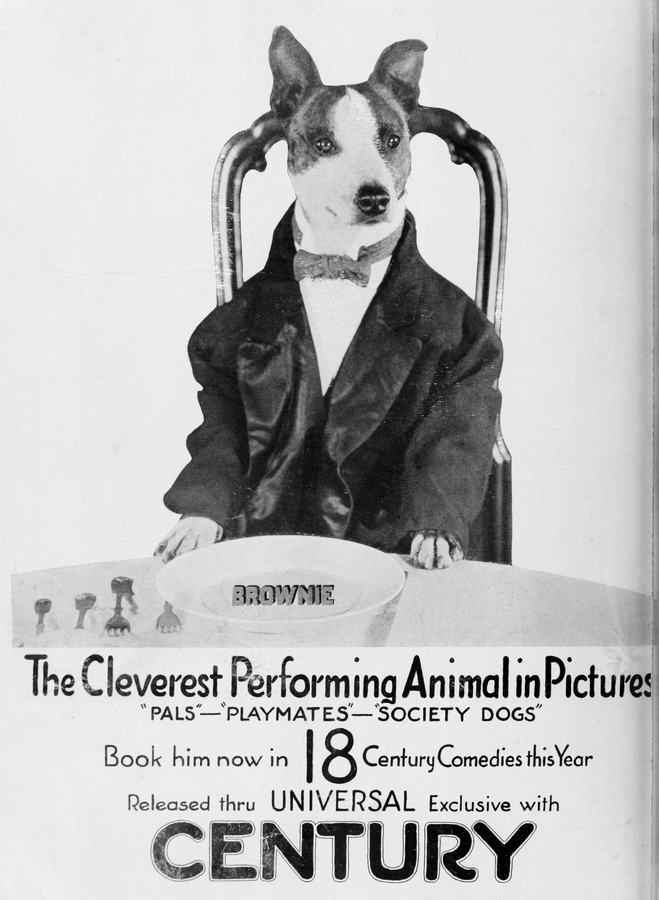
Imagine Charlie Chaplin’s The Kid recast as a terrier, then re-edited by a Marxist with a vendetta against shop-fronts. Society Dogs is that fever dream—eleven minutes of celluloid nitrate that somehow bites harder than most two-hour manifestos.
From the first iris-in, the film weaponizes opulence: a low angle frames Brownie at a banquet table longer than a city block, chandeliers dripping like stalactites over roast quail. The canine protagonist—ears lacquered into a facsimile of side-parted gentleman’s hair—uses a finger bowl with the precision of a Vanderbilt. Viewers conditioned by The Story of the Jaguar or Scratch My Back might expect anthropomorphic gags, yet here the anthropomorphism is aspirational, not comic. The dream is earnest; the awakening is savage.
The Tail as Ball-and-Chain
Brownie’s leash is replaced by a geology specimen: a river rock tethered to his tail with clothesline. The glazier—part P.T. Barnum, part sweatshop foreman—swings the dog like a medieval flail through plate-glass. Each crash is percussive, a staccato indictment of American hustle culture. Where Around the Clock with the Rookie romanticized slapstick police, Society Dogs criminalizes the very idea of labor. The dog’s body becomes a franchise: one end smashes, the other end advertises stain removal. Capitalism’s closed loop has never been furrier.
Mud as Class Marker
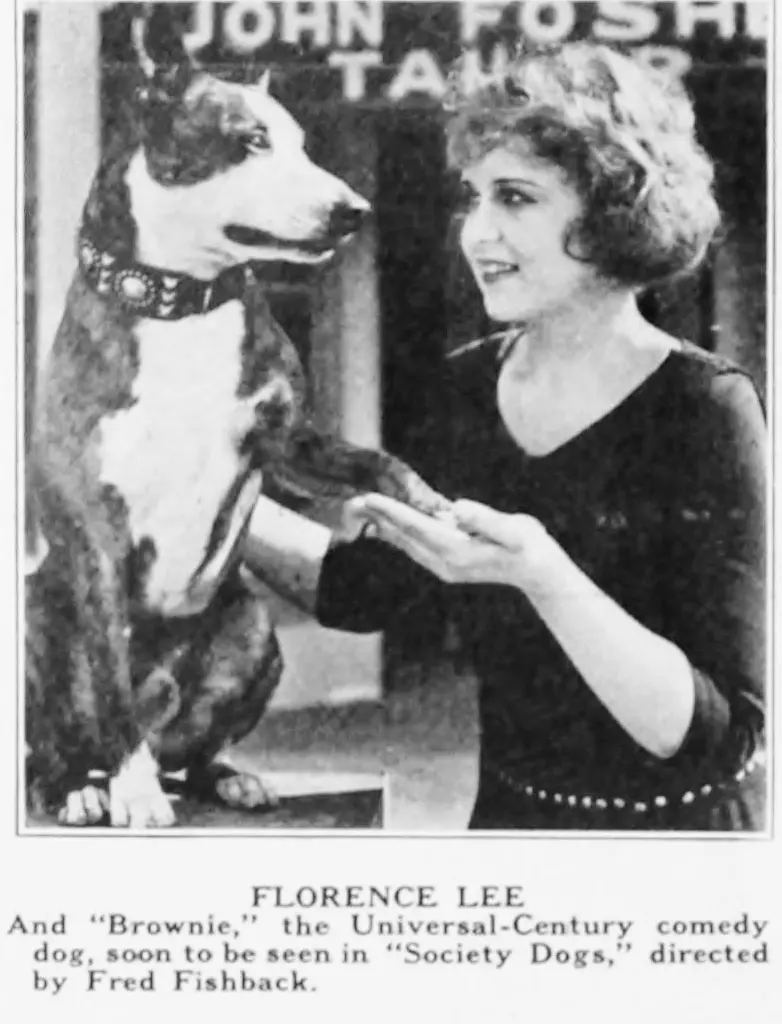
When Brownie rubs against silk, the smear is the film’s true title card: a brown streak across beige privilege. Florence Lee’s cameo as the startled socialite—her face a perfect Edwardian oval—registers disgust in 12 frames: a micro-miracle of silent performance. The moment recalls the blood-splatter critique in The Rose of Blood, only here the stain is democratic: anyone can be soiled, everyone can be billed.
Visual Lexicon: Sepia, Smoke, Glass
Cinematographer Bert Cannock (unaccredited, as was vogue) shoots the dream in over-exposed whites, then swaps to under-lit grunge for the street scenes. The transition happens mid-wag: a match-cut on the tail that obliviates continuity the way The Mirror would later fracture identity. Nitrate decomposition has eaten the edges, but the surviving shards reveal a color palette that anticipates Sirk’s Technicolor maelstroms—only here the reds are rust, the blues are bruise.
Sound of Silence, Echo of Whimper
No intertitle ever explains the dream; the film trusts the viewer’s class anxiety to do the decoding. When exhibitors added live barking via off-stage whistles, Variety sniffed: “canine cacophony cheapens the allegory.” They weren’t wrong. The original release worked best in opulent houses where orchestras could slide from Strauss waltz to atonal screech at the moment of awakening—an aural coup later borrowed by The Black Crook for its hell sequences.
Fred Hibbard & Scott Darling’s Scriptconomy
Two writers credited for a film with zero spoken words: a delicious irony. Their genius lies in narrative stinginess. Every setup is a single shot: the dream, the stone, the mud, the final freeze-frame of Brownie eyeing a butcher shop. No redemptive third act, no moralizing placard. Compare that to the bloated redemption arcs in The Heart of Lady Alaine or the theological padding of The Life of St. Patrick. Hibbard and Darling understood that satire, like a dog’s loyalty, dies the moment it explains itself.
Canine Star vs. Studio System
Brownie—no surname, no brand tie-ins—was paid in sirloin ends. His trainer, a former WWI K-9 sergeant, used hand signals adapted from battlefield commands. The result: a performance calibrated to millimeter precision. When Brownie hesitates at a window, the camera lingers on his left ear: a semaphore of doubt that out-acts most human casts of the era. The studio wanted a sequel pairing him with a monkey; Brownie bit the executive, ending negotiations and, arguably, the first Golden Age of animal auteurism.
Gendered Gaze, Flipped
Florence Lee’s matriarch doesn’t pet the dog; she recoils. The film denies audiences the expected maternal bonding, instead handing narrative agency to a male animal and a male oppressor. Women here are collateral smudges, a reversal of the rescue tropes in Wives and Old Sweethearts. Yet Lee’s micro-gesture—handkerchief to nose, eyes flicking to the camera—inserts a proto-feminist critique: she sees us seeing her disgust.
Cultural Aftershocks
Keaton screened Society Dogs privately before making The Scarecrow; the stone-on-tail gag morphed into a ball-and-chain pursuit. Disney’s early storyboards for Lady and the Tramp cribbed the banquet hallucination, replacing class anxiety with spaghetti romance. Even Tarantino’s Reservoir Dogs title is rumored—though never confirmed—to be a pun on this one-reeler. The tail-wags of influence are long and merciless.
Restoration & Availability
A 4K scan from the sole surviving 28mm print resides at Eye Filmmuseum, but the mud sequence is lost to chemical bloom. Streaming rips on shady sites interpolate video-tape footage, creating a Frankenstein aspect ratio. Purists wait for a proper Blu-ray; the rest of us treasure the gaps as part of the myth. Each missing frame is a broken window the viewer must repair with imagination.
Why It Outranks Later Dog Films
Atop of the World in Motion offers panoramic sled-dog spectacle; The Island of the Lost anthropomorphizes animals into Victorian moral agents. Both dilute critique with sentiment. Society Dogs refuses catharsis. The final shot—Brownie staring at a steak behind glass—loops us back to the first image: appetite thwarted by barrier. The American Dream in eleven minutes, forever hungry, forever outside.
The Takeaway for Modern Viewers
Watch it on your phone and you’ll miss the shard-details; project it on a wall and you’ll feel the stone’s weight. In an era where TikTok pets earn more per post than Brownie’s entire career, the film’s class rage feels prophetic. Every swipe is a new window; every algorithm tailors the rock tied to our own tails. The dream of dining high-def on yachts dissolves into the next targeted ad for window replacement. Hibbard, Darling, and one unnamed terrier saw it coming a century ago—and they didn’t even need sound to tell us.
“The dog’s tail writes history in ellipses: every smudge a footnote, every crack a chapter.”
If you dug this deep-dive, sniff around our takes on De levende ladder or The Market of Vain Desire—more shadows, less sentiment, zero fetch.