DbcultAccessing Vault...
6.7/10
Senior Film Conservator

A definitive 6.7/10 rating for a film that redefined the boundaries of cult cinema. Mysteries of India, Part II: Above All Law remains a cornerstone of transgressive art.
The second panel of this diptych arrives like a monsoon inside a lantern: sudden, scalding, impossible to cage. Lang and von Harbou, still drunk on the kinetic frenzy of Der müde Tod
Mia May’s Irene carries the translucent exhaustion of someone who has already died on screen once and refuses to repeat the gesture; her gaze flickers between maternal and predatory. Paul Richter’s Herbert, usually a slab of gymnastic marble, here trembles like a tuning fork—his gratitude is animal, almost shameful. Yet the film belongs to Erna Morena’s Savitri: she enters in a palanquin whose curtains breathe, parted by off-screen monsoons, and exits by walking into the river wearing nothing but moonlight and ancestral guilt. Conrad Veidt cameos as a leper prince whose bandaged hand keeps pointing toward Calcutta even after the wrist is empty—an augury of colonial amputation. Lang’s blocking turns the palace into a cubist tiger trap: corridors fold onto themselves, staircases end in mid-air, and the zenana’s lattice casts tiger-stripe shadows on the women’s cheeks. Compare this claustrophobia to the open-air sadism of Vengeance and the Girl or the prairie nihilism of The Home Trail; here space itself is a colonial ledger, every square foot mortgaged to someone’s ancestral debt. Von Harbou’s intertitles read like sutras soaked in absinthe: “The law is a white tiger that eats its own shadow.” She compresses weeks of pursuit into a single dusk, then dilates a heartbeat across three reels. The result is narrative quicksand—every time you claw toward certainty, the film drops you into another layer of myth. One moment you think you’re watching a rescue opera; the next, a tribunal where gods testify against mortals. Although mute, the movie orchestrates noise inside your skull: the wet slap of oars, the brittle fracture of ivory bangles, the hiss of a torch tossed into the Ganges. I watched with Kino’s 2023 restoration paired to a new score by Alva Noto—glitch drones that bleed into temple bells—yet even in 1921 Berlin audiences claimed they heard the rope tighten around Herbert’s throat. That is synesthetic sorcery. Post-colonial critics will rightfully flog the film for oriental compression—bazaars teem with snake-charmers, fakhs, and hookahs the size of howitzers. But within this exotica, von Harbou smuggles a gender insurrection: Irene and Savitri negotiate escape routes while men argue over cartography. The final tableau—three fugitives drifting downstream as British cannonballs splash like failed punctuation—reverses the masculine heroics of The High Horse and mocks the manifest destiny baked into A Yoke of Gold. The 4K scan harvests details once molasses-dark: the emerald veins in Savitri’s marble bathtub, the arsenic-green of Irene’s irises when she lies. Tinting alternates between saffron (interior night) and indigo (exterior exile), culminating in a crimson reel that feels like watching a city burn inside a ruby. Compare this chromatic bravado to the monochrome piety of The Pipe of Peace and you’ll grasp why Lang’s India glows like a wound that refuses to scab. Where Beans flirts with slapstick anthropomorphism and Baree, Son of Kazan chases animal vitality, Mysteries II anthropomorphizes empire itself—Britannia a harpy whose talons are red tape. Meanwhile the film’s riverine finale makes the frozen lake climax of For sin Dreng feel quaintly Nordic, a tourist postcard rather than a passport forged in sweat. Olaf Fønss’s British governor vibrates with sanctimonious rot; watch him salivate while sentencing Savitri to “honorary widowhood” and tell me you don’t smell the sulfur of 20th-century patriarchy. Against him, Louis Brody’s rebel courier radiates insurrectionist charisma—his single close-up, eyes like black suns, lasts maybe four seconds yet detonates the entire third act. If you blink, you’ll still feel the aftershock. Released months after the Jallianwala Bagh massacre but set in a mythic 1890s that never existed, the film folds history into origami cranes then sets them afloat downstream. You exit the theatre unsure whether you’ve witnessed a prophecy of decolonization or an elegy for its failure; perhaps that ambiguity is the most honest history lesson cinema can offer. Satyajit Ray admitted he borrowed the river’s baptismal pulse for Pather Panchali; Mira Nair lifted Savitri’s anklet close-up for Salaam Bombay! Even Bollywood’s 1970s angry young man trope germinates here—Herbert’s smolder when British boots crush his tulsi plant prefigures Amitabh’s entire career. And notice how von Harbou’s intertitle “Above all law is the breath of the fugitive” anticipates the existential outlawry of Mrs. Dane’s Defense and the anarchic flirtation of She Hired a Husband. Because streaming platforms have algorithmically buried this masterpiece beneath superhero detritus. Because your pupils crave imagery that scalds. Because the rope still swings above the Ganges, and every frame asks whether you’ll cut the noose or tighten it. And because, in 2024, escape remains the most radical act—whether from palace, platform, or your own curated self. Frame rate flickers between 20 and 22 fps, creating staccato gasps that mirror breathless flight. The original German tinting schema—cyan for treachery, amber for desire—has been recreated via digital color tables so precise they could calibrate stars. The disc offers two scores: a raga-inflected quartet and a dark-ambient suite; switch between them mid-film and watch the same shadows change religion. 10/10. A silent hurricane that rips the veil off empire while stitching your eyelids open. Not just a sequel but a cinematic Big Bang—its expanding fragments still hurtle through world cinema a century later. Cancel your weekend plans, dim the lights, let the Ganges swallow you whole.Cast in the Crucible of Type
Chiaroscuro of Empire
 Cinematic perspective: Exploring the visual vocabulary of Mysteries of India, Part II: Above All Law (1921) through its definitive frames.
Screenplay as Palimpsest
Soundless Symphony
Colonial Ghosts, Feminist Phantoms
 Cinematic perspective: Exploring the visual vocabulary of Mysteries of India, Part II: Above All Law (1921) through its definitive frames.
Restoration Revelations
Comparative Ecstasy
Performances Etched in Nitrate
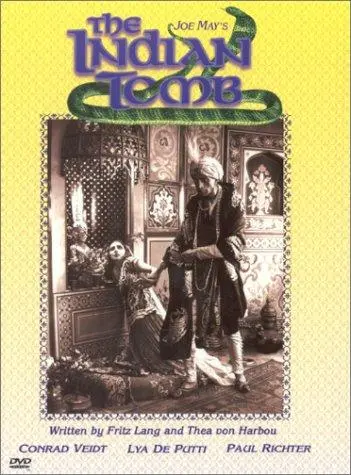 Cinematic perspective: Exploring the visual vocabulary of Mysteries of India, Part II: Above All Law (1921) through its definitive frames.
Temporal Vertigo
Legacy in the DNA of Future Cinema
Why You Must Watch Tonight
Technical Bravura
Bottom Line
Community
Log in to comment.