DbcultAccessing Vault...
Cult Review
Senior Film Conservator
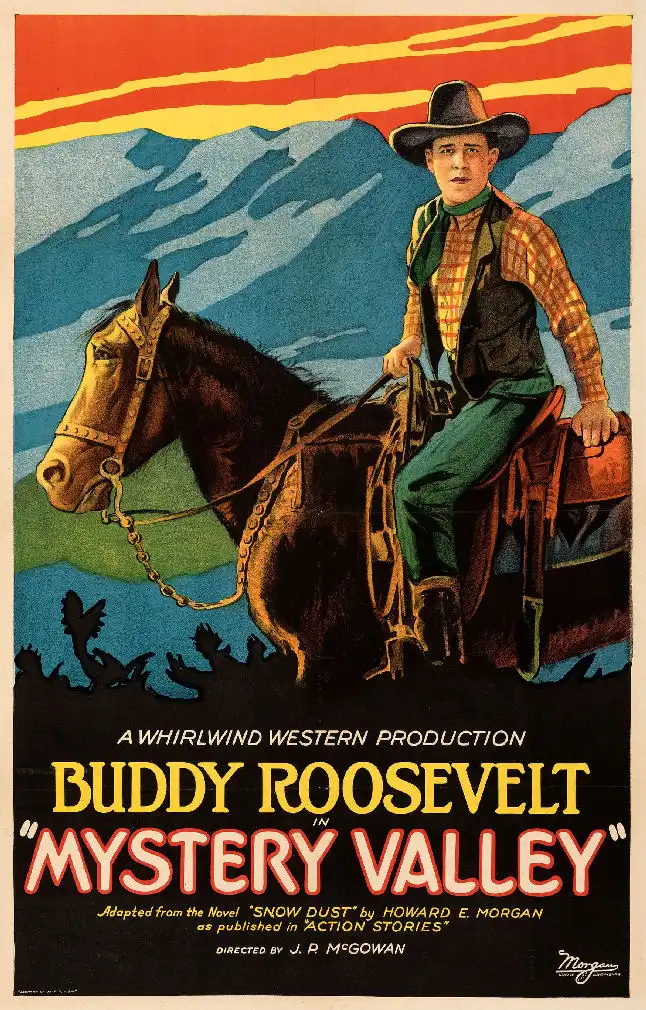
If you’re looking for a lost masterpiece of silent cinema, keep moving. Mystery Valley isn’t that. But if you have a soft spot for 1920s B-Westerns where the horses seem to be doing more acting than the humans, this is a perfectly fine way to kill an hour. It’s mostly for people who don't mind a bit of flicker and can appreciate the specific way a cowboy from 1928 wears a hat so tall it looks like it has its own zip code.
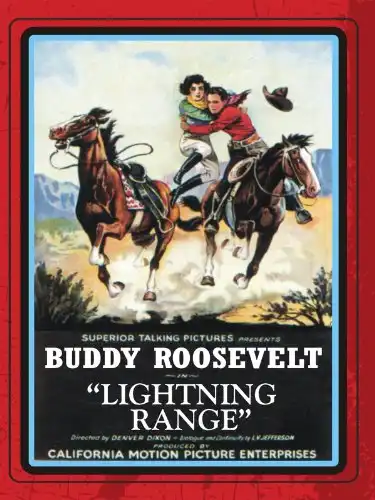
Buddy Roosevelt is the draw here. He had this very specific screen presence—not exactly a great actor, but he moved with a kind of athletic confidence that makes the action scenes work. There’s a moment early on where he dismounts while the horse is still moving, and it’s so fluid it makes you realize how much modern action movies rely on quick cuts to hide the fact that actors can't actually do anything physical.
The plot is supposed to be a mystery, hence the title, but the 'Mystery Rider' might as well be wearing a neon sign. The movie tries to play it coy, but the framing of certain shots gives it away immediately. There is a scene where the masked figure is lurking near a rock formation, and the camera lingers on his boots for a beat too long. If you’ve been paying attention to what Roosevelt was wearing in the previous scene, the jig is up. It’s the kind of 'reveal' that only works if the audience isn't looking at the screen.
J.P. McGowan directed this, and you can tell he was a guy who made hundreds of these things. Some of the edits are incredibly abrupt. We’ll be in the middle of a conversation, and then suddenly—wham—we’re looking at a wide shot of a dusty trail with no transition at all. It’s not 'experimental' editing; it’s 'we ran out of film or time' editing. It gives the whole thing a jagged, nervous energy that I actually kind of liked, even if it was accidental.
Art Rowlands plays the heavy, and he’s got one of those faces that was built for silent movie villainy. He does this thing with his eyes where he looks slightly to the left of the camera whenever he’s thinking of something evil. It’s incredibly theatrical. At one point, he’s having a confrontation with Carol Lane, and the height difference is so pronounced it’s almost comical. She’s trying to look defiant, but she has to crane her neck so far back it looks like she’s checking for rain.
Speaking of Carol Lane, her makeup is wild. I know it was 1928, but she’s out in the middle of a dusty ranch wearing enough eyeliner to be seen from the moon. It’s one of those tiny visual details that pulls you out of the 'Western' vibe and reminds you that you’re watching a bunch of people in a costume department in Gower Gulch. It’s charming in its own way, but it definitely kills any sense of realism.
The pacing drags a bit in the second act. There are way too many intertitles explaining land deeds and cattle rights. We get it—the bad guys want the land. We don't need three separate cards explaining the legalities of the valley. I found myself staring at the background of the indoor sets instead. You can see how flimsy the walls are; in one scene, when a character slams a door, the entire 'log cabin' wall visibly wobbles. It’s great.
There’s a fight scene near the end that is surprisingly scrappy. It’s not the choreographed dance you see in later Westerns. It’s just two guys rolling around in the dirt, losing their hats, and looking genuinely exhausted. It reminded me a bit of the raw energy in Square Shooter, though that film had a bit more polish in its photography. Here, the camera just kind of sits there, watching them struggle.
One thing that really stood out was a shot of the valley at sunset. For a movie that feels mostly rushed, there’s this one beautiful, static shot of the horizon that lasts for about ten seconds. No characters, no plot, just the landscape. It’s the only time the movie feels like it’s breathing. Then it cuts back to a guy in a fake mustache pointing a gun, and the spell is broken.
Is it as good as something like Riddle Gawne? No. That movie had a bit more grit and a better sense of how to use its lead. Mystery Valley feels like a Tuesday afternoon at the office for everyone involved. But there’s a comfort in these old B-Westerns. You know exactly what you’re getting: some good riding, some bad acting, and a lot of California dust standing in for the Wild West. If you’re bored and want to see how they used to churn out content before 'content' was a dirty word, give it a look. Just don't expect to be surprised by the mystery.
IMDb —
1920
Community
Log in to comment.