DbcultAccessing Vault...
6.2/10
Senior Film Conservator
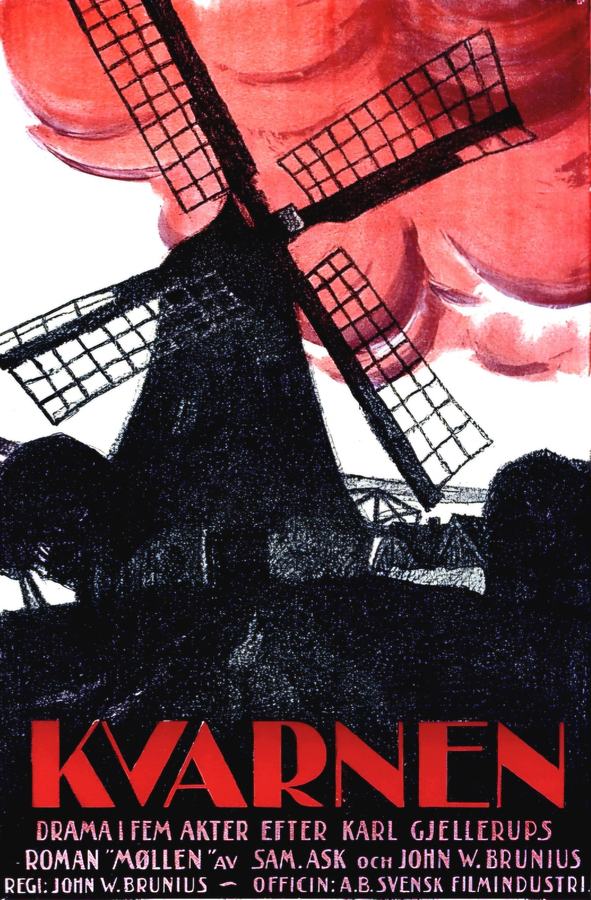
A definitive 6.2/10 rating for a film that redefined the boundaries of cult cinema. Kvarnen remains a cornerstone of transgressive art.
Kvarnen is not merely a film—it is a sonnet in motion, a silent dialogue between man, machine, and the women who seek to anchor his drifting soul. Set against the unyielding backdrop of a Swedish mill, the story unfolds like a slow-burning ember, its glow illuminating the contradictions of human longing. The widowed miller, portrayed with weary grace by Gösta Cederlund, is a man shaped by routine yet unmoored by grief. His wife’s absence haunts the film’s very architecture, her memory lingering in the creak of the mill’s beams and the dust motes suspended in the shafts of light.
The first of the two women, Ingrid Sandahl’s character, is a figure of quiet fortitude. Her presence is as steady as the river that feeds the mill, her dialogue sparse but weighted with the wisdom of someone who has learned to make do. The second, Helene Olsson’s creation, is a tempest in a shawl, her eyes darting with the restlessness of youth. These opposing forces—the grounded and the volatile—pull the miller into a maelstrom of introspection, their competing narratives refracted through the film’s masterful use of chiaroscuro. Shadows stretch across Sandahl’s face like the miller’s own doubts, while Olsson’s character is lit by flashes of candlelight, as if her very existence is a flicker in the dark.
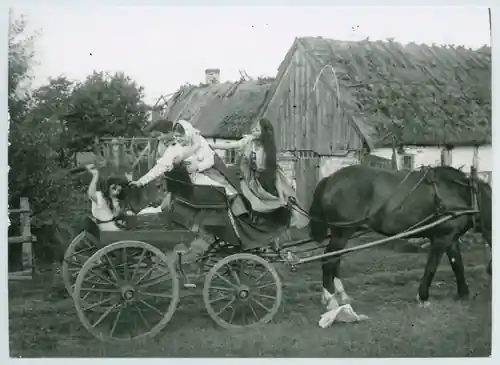
At its core, Kvarnen is a meditation on duality. The mill itself serves as a recurring symbol: a place of labor and sustenance, yet also of entrapment and monotony. The miller’s dilemma mirrors the broader human condition—a struggle between the known and the unknown, security and risk. This tension is echoed in the film’s visual contrasts. Wide shots of the mill’s stone walls, weathered by time, are juxtaposed with tight close-ups of trembling hands or averted glances. The camera lingers on these details not to sensationalize, but to underscore the fragility of the characters’ emotional states.
The script, adapted by Karl Gjellerup and Sam Ask, avoids the pitfalls of melodrama. Instead of grand declarations, it favors moments of silence—a paused loom, a half-smile that dissolves into a sigh. This restraint is particularly effective in scenes where the miller’s internal conflict is conveyed through his interactions with the mill’s machinery. The grinding of the stones becomes a metronome for his indecision, each revolution echoing the passage of time and the inevitability of choice.
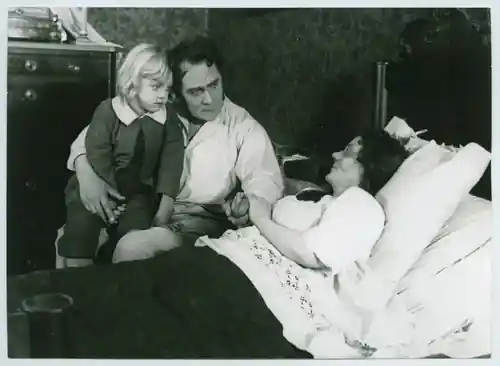
Gösta Cederlund’s portrayal of the miller is a masterclass in understatement. His expressions are minimal, yet each micro-gesture—a tightened jaw, a fleeting glance at the horizon—communicates volumes. This restraint is mirrored by Ingrid Sandahl, whose performance is a study in stillness. When she speaks, her voice carries the weight of unspoken sacrifices, her gestures as deliberate as the turning of the mill’s wheel. Helene Olsson, by contrast, brings a volatile energy to her role, her movements sharp and unpredictable, as if she might break free from the film’s constraints at any moment.
The supporting cast is equally compelling. Clara Kjellblad’s brief but poignant appearance as a neighbor’s daughter adds a layer of generational contrast, her youthful idealism a stark counterpoint to the miller’s weariness. Nils Lundell’s portrayal of a rival suitor introduces a secondary conflict that, while not central to the narrative, enriches the film’s exploration of desire. His character’s quiet jealousy is conveyed through physicality—slouched postures, lingering stares—that speak louder than dialogue ever could.

Director John W. Brunius and cinematographer Sam Ask craft a visual language that is both poetic and precise. The film’s palette is dominated by grays and earth tones, reflecting the miller’s somber world. Yet, in moments of emotional climax, bursts of color emerge: the crimson of a scarf, the gold of a sunset, the blue of a distant lake. These splashes of vibrancy are not mere decoration; they signal the characters’ emotional undercurrents. When the miller walks with Sandahl’s character through a field of goldenrod, the warm hues contrast with the cool tones of his earlier scenes with Olsson, subtly indicating his shifting priorities.
The use of sound (or its absence) is equally deliberate. As a silent film, Kvarnen relies on intertitles that are sparing and evocative. The absence of dialogue forces the audience to engage with the visual cues and the actors’ physicality. The score, though minimal, swells in key moments—a mournful violin during a memory scene, a dissonant chord during a confrontation—heightening the emotional stakes without overpowering the narrative.
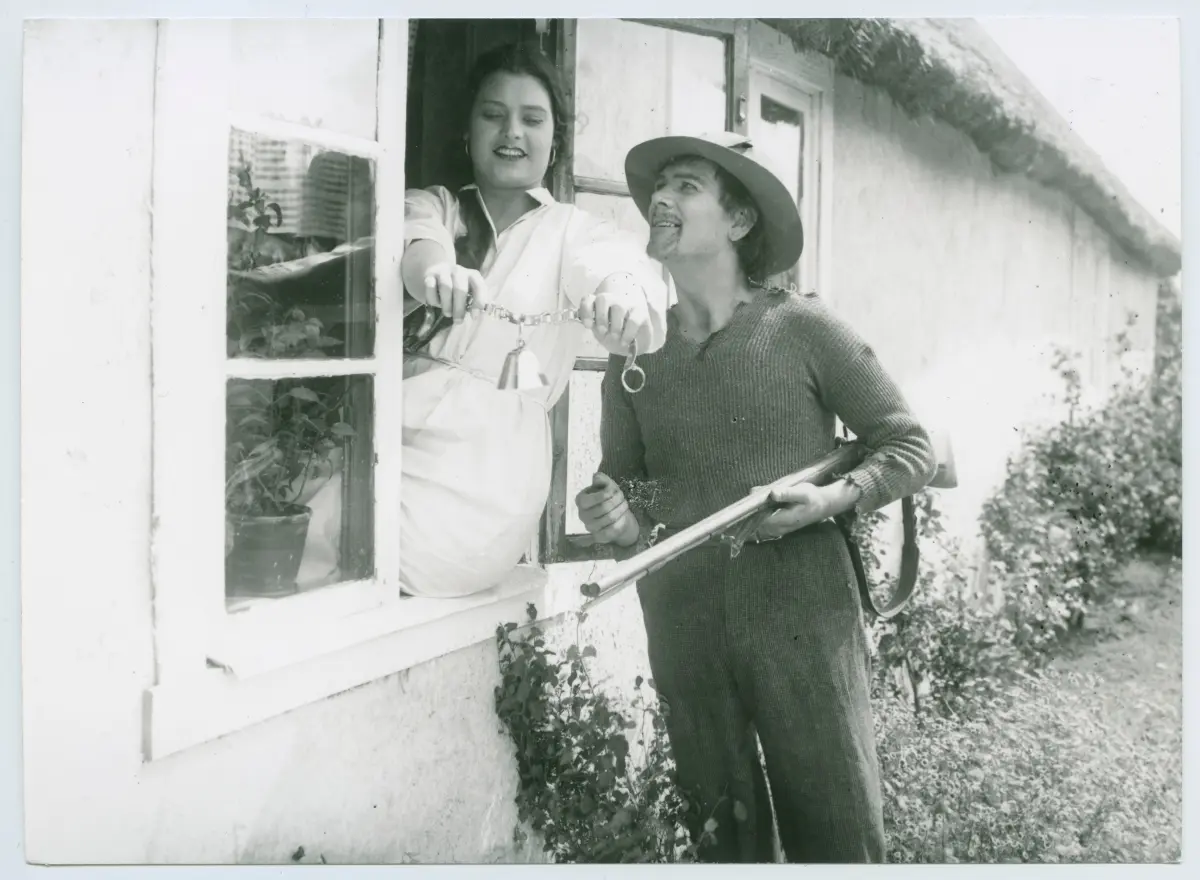
While Kvarnen’s themes of love and duty are universal, its cultural specificity is palpable. The Swedish landscape is not merely a setting but a character in its own right, its icy rivers and overcast skies mirroring the protagonists’ inner turmoil. This interplay between environment and emotion is reminiscent of films like The Raggedy Queen, where the natural world serves as both antagonist and witness. However, Kvarnen diverges in its lack of overt romanticism; the mill and its surroundings are depicted with a stark realism that grounds the story in a tangible, lived-in reality.
Among its contemporaries, Kvarnen shares thematic kinship with When Love Is Blind, which also grapples with the tension between societal expectations and personal desires. Yet, where that film leans into tragic fatalism, Kvarnen offers a more ambiguous resolution. The miller’s final choice, or lack thereof, lingers in the viewer’s mind like the fading sound of a bell, unresolved and haunting. This ambiguity is a testament to the film’s maturity, refusing to offer easy answers in a world where decisions are rarely binary.

Though over a century old, Kvarnen remains strikingly relevant in its examination of human relationships. The miller’s struggle to choose between two women—each representing a different path—echoes modern dilemmas of identity and belonging. In an age of rapid change, where traditional structures are continually dismantled, the film’s focus on stability versus reinvention feels both timeless and urgent. Its quiet, introspective tone stands in contrast to today’s fast-paced narratives, offering a reminder of cinema’s capacity to delve into the complexities of the human heart.
The film’s influence can be traced in later works that explore similar themes of duality. For instance, The Moth and the Flame employs a similar metaphor of opposing forces, though with a more overtly tragic arc. Kvarnen’s subtlety, however, is its strength; it invites multiple interpretations and rewards repeat viewings with new layers of meaning. The miller’s journey is not a climax but a continuum—a reflection of life’s ongoing negotiations between safety and desire, duty and passion.
Kvarnen is a film that demands patience, its rewards unfolding slowly like the turning of its titular mill’s wheel. It is a work that transcends its era, speaking to the universal human experience of grappling with choice and consequence. Through its masterful performances, evocative cinematography, and nuanced storytelling, it carves a space in the annals of cinema for introspective, character-driven narratives. As the final scene fades to black, the viewer is left with the lingering sensation of a question unanswered, a choice unmade—a testament to the enduring power of storytelling to mirror our own uncertainties and hopes.

IMDb 7.6
1928
Community
Log in to comment.