DbcultAccessing Vault...
Cult Review
Senior Film Conservator
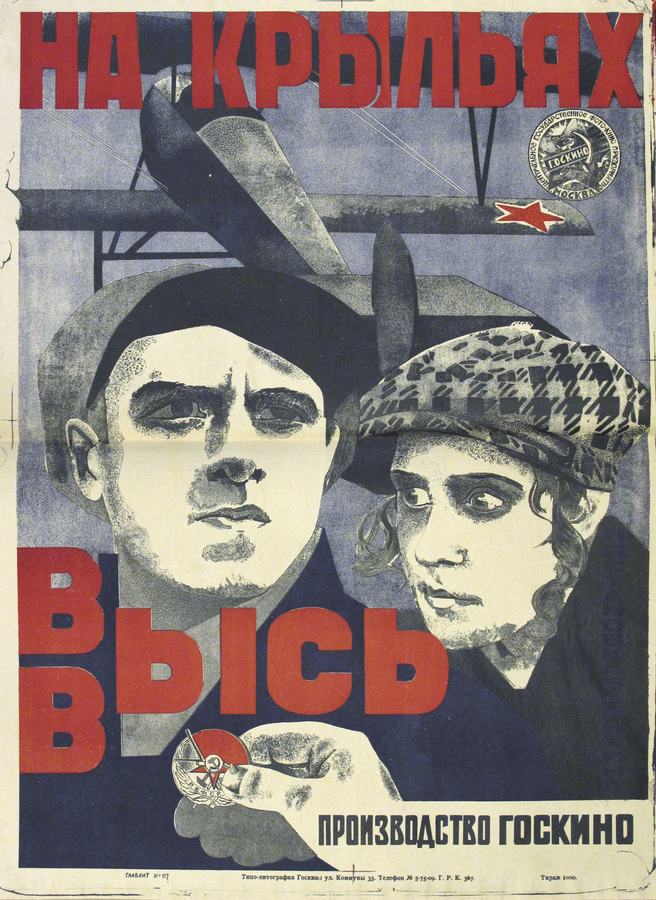
In the annals of early Soviet cinema, few films capture the zeitgeist of technological aspiration and nationalistic fervor quite like Na krylyah vvys (On Wings Upwards). This heroic-patriotic epic isn't merely a recounting of historical events; it's a vibrant, often stirring, testament to the pioneering spirit that characterized the nascent Soviet state. It delves into the very soul of a nation striving to define itself through monumental achievements, particularly in the realm of aviation, a field that symbolized modernity, progress, and military might in the early 20th century. Far from being a dry historical document, the film weaves a deeply personal narrative into its grander tapestry, focusing on the intertwined destinies of a visionary father and his intrepid son, whose lives become emblematic of a nation’s relentless push towards the future.
At the heart of Na krylyah vvys lies the compelling relationship between the elder Glagolev, a brilliant Russian engineer, and his son, Boris. The film masterfully portrays Glagolev Senior as an archetype of the dedicated, almost obsessive inventor, whose life's work is consumed by the audacious dream of flight. His character embodies the scientific optimism of the era, a profound belief in humanity's capacity to transcend earthly limitations through ingenuity and perseverance. This isn't just about building machines; it's about pushing the boundaries of what is thought possible, a relentless pursuit of innovation that mirrors the larger societal ambitions of the young Soviet Union. One might draw a thematic parallel to the single-minded dedication seen in the industrial narratives of films like The Night Workers, where the focus on human effort and mechanical progress becomes a central dramatic force. However, Na krylyah vvys elevates this by infusing it with a distinctly familial and nationalistic drive.
Boris, played with compelling conviction by Boris Glagolev himself, is no mere shadow of his father. He is the dynamic embodiment of the future, a brave aviator-designer who doesn't just inherit a legacy but actively shapes it. His transformation into a Red Army man during the turbulent years of the Civil War is pivotal. It signifies a crucial shift: the theoretical dreams of his father are grounded in the harsh realities of national struggle, demanding practical application and immediate utility. Boris’s journey is one of profound personal growth, where his passion for flight converges with his unwavering commitment to the revolutionary cause. He represents the ideal Soviet citizen: intelligent, courageous, and utterly devoted to the collective good. This dual role—innovator and soldier—makes him a remarkably complex and aspirational figure, reflecting the multifaceted demands placed upon individuals during that transformative period.
The Civil War is not merely a backdrop for Na krylyah vvys; it is an active, transformative force. The conflict provides the crucible in which the Glagolevs' dreams are tested and ultimately reforged. Aviation, initially a symbol of scientific advancement, quickly becomes an indispensable tool of warfare, a potent instrument in the Red Army's arsenal. The narrative skillfully illustrates how the exigencies of war accelerate technological development, pushing engineers and aviators to innovate under immense pressure. This urgency imbues every flight, every design modification, with a profound sense of purpose and peril. The stakes are not just personal glory or scientific breakthrough, but the very survival of the nascent Soviet state. The film doesn't shy away from depicting the sacrifices inherent in such a struggle, echoing the stark choices and grand narratives found in films like Life or Honor?, where individual destinies are inextricably linked to national causes.
The visual language of the film masterfully conveys the precariousness and heroism of these wartime flights. Aerial sequences, while perhaps rudimentary by today's standards, are imbued with a visceral sense of danger and exhilaration. The camera often places the viewer directly in the cockpit, creating an immersive experience that underscores the bravery of aviators like Boris. The stark landscapes and the rudimentary nature of early aircraft emphasize the sheer audacity of these pioneers who dared to take to the skies amidst the chaos of civil strife. This portrayal of technological innovation serving a revolutionary cause was a powerful message for its contemporary audience, fostering a sense of collective pride and inspiring further dedication to industrial and military development.
The ensemble cast of Na krylyah vvys delivers performances that resonate with the gravitas of the historical period. Yu. Shibanov and V. Neverov, though perhaps lesser known to modern international audiences, portray their roles with a sincerity that grounds the film's grand ambitions. Boris Glagolev, in particular, carries the weight of his character's arc with remarkable conviction, transitioning from an enthusiastic inventor to a battle-hardened hero with believable emotional depth. His portrayal avoids caricature, instead presenting a nuanced individual grappling with immense responsibilities. Nikolai Orlov and Boris Bylinkin contribute to the film’s rich tapestry of characters, each lending authenticity to the various facets of military and civilian life during the conflict. Yakov Volkov, Pyotr Nartov-Kurkin, Mariya Blyumental-Tamarina, and Asya Dodonova round out the cast, creating a believable community around the central figures, each performance, however brief, adding texture and emotional resonance to the unfolding drama. Blyumental-Tamarina, a revered figure in Russian theater, brings a particular warmth or stoicism to her role, anchoring the human element amidst the technological marvels and wartime heroics.
The narrative structure and thematic depth of Na krylyah vvys owe much to its talented writing team: Boris Mikhin, Boris Glagolev (who also stars), and Ivan Leonov. Their collective vision crafts a screenplay that is both epic in scope and intimate in its character focus. They deftly balance the grand patriotic narrative with the personal struggles and triumphs of the Glagolev family, ensuring that the audience remains emotionally invested. The dialogue, while sometimes reflective of the rhetorical style prevalent in early Soviet cinema, often rings with genuine passion and conviction. The writers understood the power of symbolism, using aviation not just as a plot device but as a potent metaphor for the nation's ascent, its breaking free from old limitations, and its embrace of a technologically advanced future. Their collaboration resulted in a story that, despite its specific historical context, taps into universal themes of ambition, sacrifice, and the relentless human drive to innovate and overcome adversity, making it a powerful cinematic statement of its time.
From a technical standpoint, Na krylyah vvys showcases the burgeoning capabilities of Soviet filmmaking. The cinematography, though black and white, effectively conveys the stark realities of the Civil War and the exhilarating freedom of flight. Camera angles are employed to emphasize the scale of the aircraft and the vastness of the sky, creating a sense of both awe and vulnerability. The editing paces the narrative effectively, building tension during aerial combat sequences and allowing moments of quiet reflection on the human cost of war and progress. The film’s aesthetic, while perhaps not as overtly experimental as some of its contemporaries, is nonetheless robust and purposeful, serving the narrative with clarity and emotional impact.
The enduring impact of Na krylyah vvys lies not only in its historical significance as an example of heroic-patriotic cinema but also in its ability to inspire. It speaks to the universal human desire to reach for the impossible, to innovate, and to contribute to something greater than oneself. In an era where a nation was rebuilding and redefining its identity, films like this served as powerful cultural artifacts, shaping public perception and galvanizing support for ambitious national projects. It celebrated the engineer, the aviator, and the soldier as heroes, intertwining their individual destinies with the grand narrative of Soviet progress. One could argue its themes of individual dedication to a larger cause resonate with the spirit found in films like One Man in a Million, albeit on a vastly different political and social canvas.
Moreover, the film stands as a valuable document of early aviation history, capturing the rudimentary yet revolutionary designs and the immense courage required to pilot them. It offers a glimpse into a time when flight was still a relatively new and dangerous frontier, a domain reserved for the bravest and most innovative. The meticulous attention to the technical details of aircraft design, combined with the dramatic narrative, makes it a compelling watch for anyone interested in the intersection of technology, history, and cinema. It reminds us that behind every grand technological leap are the dedicated individuals who dare to dream, design, and ultimately, take to the skies.
In conclusion, Na krylyah vvys is more than just a historical curiosity; it is a robust piece of filmmaking that continues to resonate. Its exploration of the father-son dynamic, the relentless pursuit of innovation, and the sacrifices demanded by national struggle are themes that transcend its specific political context. It offers a fascinating window into the early Soviet era, showcasing its aspirations, its challenges, and its indomitable spirit. For cinephiles and historians alike, it remains a compelling watch, a vivid portrayal of a nation finding its wings, both literally and metaphorically, in the crucible of revolution and technological advancement. It’s a testament to the idea that true progress often comes on wings upwards, propelled by both the genius of invention and the unwavering spirit of its pioneers.
IMDb 6.7
1930
Community
Log in to comment.