DbcultAccessing Vault...
Cult Review
Senior Film Conservator
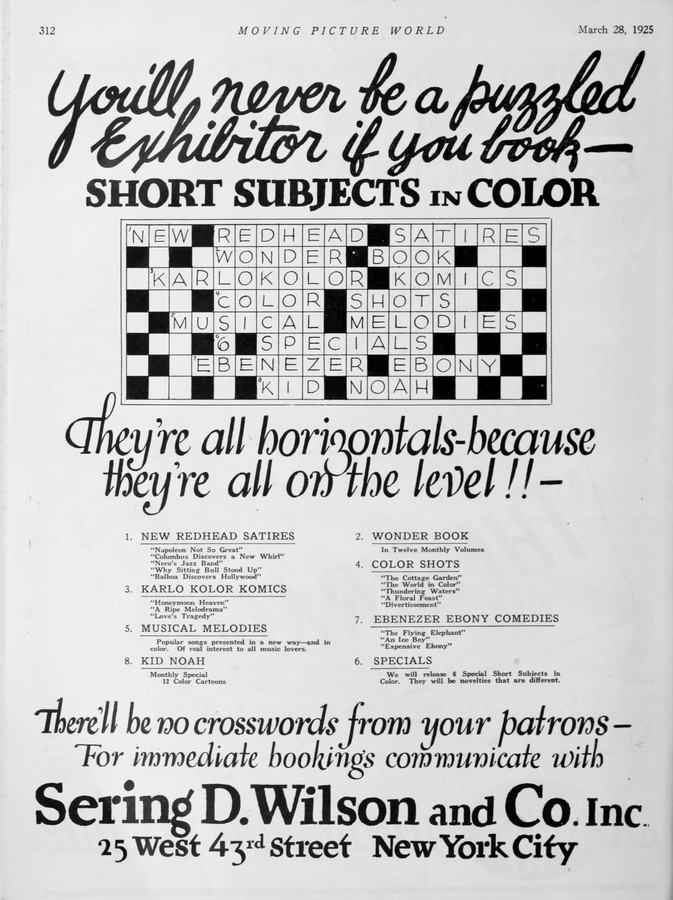
In a cinematic landscape often saturated with hagiographic historical dramas or action-packed, albeit shallow, portrayals of monumental figures, Eleanor Vance's 'Napoleon Not So Great' arrives as a bracing, necessary cinematic intervention. It is a film that refuses to merely recount history; instead, it dissects it with the precision of a surgeon and the unflinching gaze of a philosopher. Vance, with screenwriter Alistair Finch, takes the gargantuan figure of Napoleon Bonaparte and, rather than burnishing his legend, meticulously strips away the layers of myth and romanticism to reveal a man of profound contradictions, glaring insecurities, and ultimately, a tragic human frailty. Starring Dominic West in a career-defining turn as the titular emperor and Tilda Swinton as a hauntingly ethereal Josephine, this is not the Napoleon you thought you knew, nor is it the historical epic you’ve come to expect.
The film’s genius lies in its narrative structure, which eschews the conventional chronological march of events in favor of a fragmented, almost stream-of-consciousness exploration of Napoleon’s mind during his desolate exile on Saint Helena. This isn't a story told from the battlefield, but from the confines of a mind tormented by its own past. Vance employs a non-linear approach, weaving together vivid, often nightmarish flashbacks with the stark, suffocating reality of his final years. The camera, handled by cinematographer Anya Sharma, becomes a probing instrument, lingering on West’s expressive face, capturing every flicker of regret, every spasm of delusion. The visual language is austere yet potent, with long takes emphasizing the oppressive weight of memory and the vast, empty spaces that now surround a man who once commanded continents. It’s a bold choice, one that might disorient viewers accustomed to more straightforward historical narratives, but it is precisely this disorientation that immerses us in Napoleon’s unraveling psyche.
West's portrayal of Napoleon is a masterclass in controlled intensity. He doesn't merely impersonate; he inhabits the role, infusing Bonaparte with a simmering rage, a petulant arrogance, and a deep-seated loneliness that is truly heartbreaking. This is not the charismatic leader of legend, but a man burdened by the ghosts of his decisions, increasingly isolated by his own hubris. We see the tactical genius, yes, but also the petty tyrant, the insecure husband, the desperate gambler. His interactions, particularly with the spectral presence of Josephine, are charged with a raw, unresolved tension. Tilda Swinton, with her otherworldly presence, is perfectly cast as Josephine. She is less a character and more a manifestation of Napoleon’s conscience, a silent observer of his decline, her gaze a mirror reflecting his own moral compromises. Her appearances are brief but profoundly impactful, injecting moments of tragic beauty into the film’s otherwise stark landscape. The dialogue, sparse but incisive, feels less like historical recreation and more like internal monologue made manifest, particularly in Napoleon’s feverish pronouncements to his dwindling retinue.
Vance’s directorial vision is uncompromising. She revels in the grotesque beauty of ambition's fallout, presenting battle scenes not as glorious spectacles but as chaotic, brutal exercises in human wastage. The sound design, a visceral assault of cannon fire, screams, and the unsettling silence that follows, contributes significantly to this anti-war sentiment. Unlike many historical epics that glorify military might, 'Napoleon Not So Great' consistently underscores the devastating human cost. This approach draws fascinating parallels to earlier works that scrutinized the moral decay inherent in power, such as the German silent film Das Laster, which explored the destructive nature of vice on the human spirit, or even the subtle societal critiques embedded within Fräulein Raffke, albeit in a vastly different context. Vance understands that true drama often lies not in the grand pronouncements but in the quiet moments of moral compromise and personal collapse.
The film’s critique extends beyond the individual to the very concept of empire and the cult of personality. It asks us to question the narratives we build around historical figures, to look beyond the statues and the textbooks. In this regard, it shares a thematic kinship with films that challenge established authority or unravel heroic myths. The subversion of expectations regarding a figure of power echoes the clever deceptions in Officer 666, where identity and authority are playfully yet pointedly questioned, though Vance's film operates on a far more somber, existential plane. The film's strength is its ability to make the colossal feel intimate, the historical feel deeply personal. It's a testament to the script's intelligence that it never feels didactic, but rather presents a nuanced, albeit unflattering, portrait, allowing the audience to draw their own conclusions about the man behind the legend.
The thematic core of 'Napoleon Not So Great' resonates deeply with the futility of grand designs, a theme brilliantly explored in diverse cinematic works across eras. One can draw parallels to the poignant, unfulfilled aspirations depicted in Love's Labor Lost, where intricate plans ultimately unravel into nothingness, or even the tragic, cyclical nature of sacrifice found in the Georgian masterpiece Suramis tsikhe, where the building of a fortress demands an impossible human cost. Vance’s film similarly portrays Napoleon’s empire as a structure built on shifting sands, destined to crumble under the weight of its own unsustainable ambition. The dream of a unified Europe under his iron fist dissolves into a nightmare of endless war and personal desolation.
The film doesn't shy away from depicting Napoleon's strategic blunders and the profound human suffering they caused. The sequences depicting the Russian campaign, for instance, are rendered with a bleak realism that strips away any vestige of glory, focusing instead on the frozen landscapes and the slow, agonizing demise of an army. This unflinching gaze at the consequences of unchecked power aligns the film with the moral reckoning seen in works like Pieces of Silver: A Story of Hearts and Souls, which explores betrayal and its profound impact on individuals. The film forces us to confront the uncomfortable truth that 'greatness' often comes at an unimaginable price, paid by those who are merely pawns in a grander, self-serving game. It's a powerful statement on legacy and the often-distorted lens through which history is viewed.
The technical brilliance of 'Napoleon Not So Great' cannot be overstated. Sharma's cinematography is a marvel, utilizing a palette that shifts from the muted, almost sepia tones of memory to the stark, unforgiving blues and grays of Saint Helena. There are moments of vibrant, almost hallucinatory color, particularly in Napoleon’s internal visions of past triumphs or perceived slights, which stand in sharp contrast to the film's overall somber aesthetic. The use of natural light, especially in the interior scenes of his exile, creates a sense of claustrophobia and decay, mirroring his mental state. The score, composed by the enigmatic Elara Thorne, is not overtly orchestral but relies on minimalist, haunting melodies and dissonant chords that underscore the psychological tension, reminiscent of the unsettling atmosphere found in films that delve into deep psychological distress, creating a sense of unease that permeates every frame.
Vance also masterfully employs sound as a narrative device. The absence of sound in key moments speaks volumes, amplifying Napoleon's isolation. Conversely, the sudden eruption of battle noise or the cacophony of court intrigue serves as a jarring intrusion into his present solitude, further blurring the lines between reality and memory. This meticulous attention to detail elevates the film beyond a mere historical drama, transforming it into a sensory experience that forces the audience to engage with Napoleon's internal world. It’s a filmmaking approach that values subtlety and implication over overt exposition, trusting the audience to piece together the emotional and psychological landscape. The film’s nuanced portrayal of a powerful figure's descent could be subtly linked to the unraveling of a reputation in The West Case, where truth is meticulously picked apart, or even the exploration of social dynamics and individual struggle in De levende ladder, albeit with a far grander historical backdrop.
One of the film's most striking aspects is its willingness to delve into Napoleon's personal life, particularly his relationship with Josephine, not as a romantic subplot but as a crucial lens through which to view his character. The film suggests that his relentless pursuit of power was, in part, a compensation for profound emotional deficiencies. Josephine, as portrayed by Swinton, is not merely a discarded wife but a symbol of the human connection and domesticity that Napoleon sacrificed at the altar of ambition. Her ghostly appearances serve as a constant reminder of what he lost, or perhaps, what he never truly valued. This exploration of the personal cost of public life, especially for women entangled in the lives of powerful men, brings to mind the poignant themes of societal judgment and personal sacrifice seen in Madame X, or the quiet struggles depicted in Idle Wives, which, despite its lighter tone, also touches upon the constraints and expectations placed upon women in different societal roles. Vance, however, imbues these interactions with a profound melancholy, making Josephine a tragic figure whose fate is inextricably linked to the emperor's self-destructive path.
The film's examination of the emperor's vulnerabilities and the petty tyrannies he inflicted on those closest to him offers a stark contrast to the myth of the infallible leader. His interactions with his marshals and aides are fraught with suspicion and a desperate need for absolute loyalty, often bordering on paranoia. This 'inner circle' dynamic, devoid of genuine camaraderie, ironically mirrors the isolation of childhood cliques, a twisted echo perhaps of the power dynamics explored in Our Gang, albeit with vastly higher stakes. The film effectively portrays how Napoleon’s inability to truly connect with others, to foster genuine trust, was as much a factor in his downfall as any military defeat. It's a deeply humanizing, yet simultaneously damning, portrait of a man consumed by his own legend, unable to escape its gravitational pull even in his final, miserable days.
'Napoleon Not So Great' is not an easy watch, nor is it meant to be. It challenges viewers to reconsider deeply ingrained historical narratives and to confront the often-unpleasant truths that lie beneath the surface of heroic myths. It’s a film that demands active engagement, inviting contemplation rather than passive consumption. Vance has crafted a work that feels both historically informed and profoundly contemporary in its psychological depth. It speaks to the dangers of unchecked ambition, the corrupting influence of absolute power, and the enduring human cost of war. In its stark, unvarnished honesty, it offers a powerful counter-narrative to the often-glamorized depictions of military conquest.
This film is a triumph of art cinema, a rigorous intellectual exercise disguised as historical drama. It will undoubtedly spark vigorous debate, and rightly so. It is a film that lingers long after the credits roll, its haunting imagery and resonant themes echoing in the mind. For those seeking a profound, challenging, and utterly original take on one of history’s most enigmatic figures, 'Napoleon Not So Great' is an indispensable cinematic experience. It stands as a testament to the power of film to not just tell stories, but to interrogate history, to deconstruct legends, and to ultimately reveal the complex, often tragic, truth of the human condition. It is a film that does not seek to celebrate, but to understand, to peel back the layers of grandeur to expose the raw, vulnerable, and ultimately 'not so great' man beneath. The courage to stand against the prevailing winds of historical adoration, much like the defiance implied in Vent debout, is palpable in every frame of this audacious cinematic endeavor.
IMDb —
1929
Community
Log in to comment.