DbcultAccessing Vault...
Cult Review
Senior Film Conservator
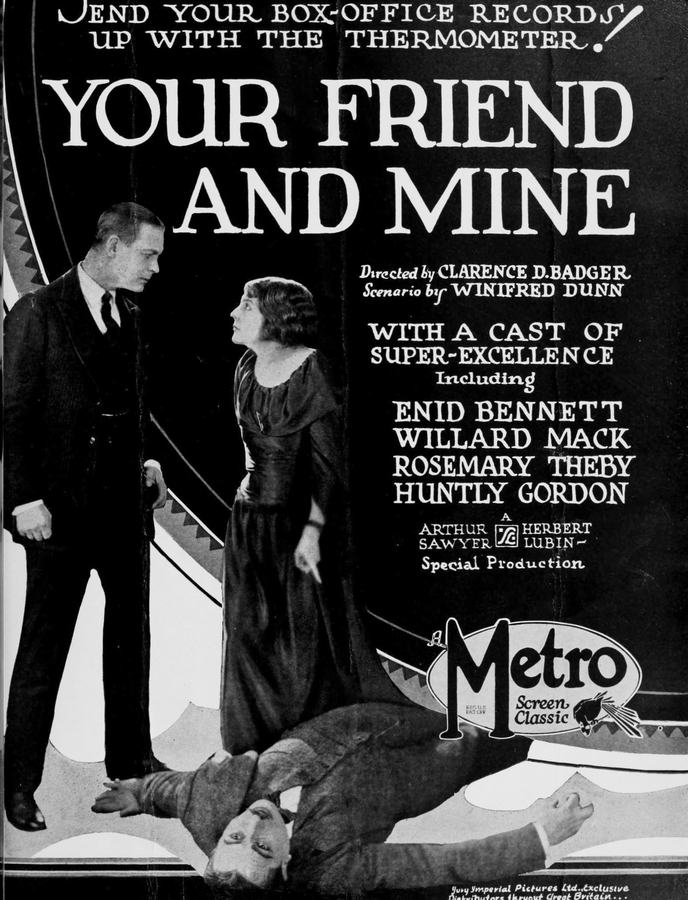
The silent era of the 1920s often operated as a mirror to the burgeoning anxieties of the American middle class, and Your Friend and Mine (1923) stands as a particularly resonant artifact of this period. It is a film that navigates the treacherous waters of marital neglect with a sophistication that belies its age. While many contemporary viewers might dismiss the plot as a standard melodrama, a closer inspection reveals a complex architectural study of vulnerability and the predatory nature of the 'artistic' interloper. The film doesn't just tell a story of a wandering husband and a tempted wife; it dissects the very foundations of trust in an era where industrial wealth began to eclipse traditional domestic values.
Enid Bennett, playing Patricia Stanton, provides a performance of remarkable subtlety. In an age where the Delsarte method of acting—characterized by grand gestures and exaggerated facial expressions—was still lingering, Bennett opts for a more internalized pathos. We see her isolation not just in the wide shots of her opulent home, but in the way she holds herself during the portrait sessions with Victor Raymier. She is a woman searching for a reflection of herself that her husband, Hugh Stanton (Huntley Gordon), is too preoccupied to provide. Stanton is the quintessential 1920s industrialist, a man whose eyes are fixed on the horizon of progress while the ground beneath his own hearth begins to crumble. His frequent business trips aren't just narrative devices; they are symbolic of the emotional absenteeism that plagued the post-WWI masculine ideal.
The character of Victor Raymier, played with a chillingly suave mendacity by J. Herbert Frank, is perhaps the most fascinating element of the film. Raymier is a fraud, a man who signs his name to the labor of others. This plot point serves as a powerful metaphor for the entire film: things are rarely what they seem on the surface. In many ways, Raymier is a more honest villain than the antagonists found in The Fatal Hour, because his deception is rooted in the appropriation of beauty. He doesn't just want Patricia; he wants the status that her portrait and her presence afford him. The irony of a man who cannot paint, yet demands the right to 'capture' the essence of a woman on canvas, is a stroke of brilliance from writers Willard Mack and Winifred Dunn.
When Raymier persuades Patricia to visit his country home, the film shifts gears into a psychological thriller. The storm that forces them indoors is a classic cinematic trope, yet it is executed here with a visceral intensity that rivals the atmospheric tension seen in Die schwarze Pantherin. The flickering light and the encroaching shadows of the estate mirror Patricia’s burgeoning realization that she has traded a neglectful husband for a predatory charlatan. The 'unwanted advances' mentioned in the plot summary are staged with a frantic energy that emphasizes the claustrophobia of the domestic space when it is occupied by a threat.
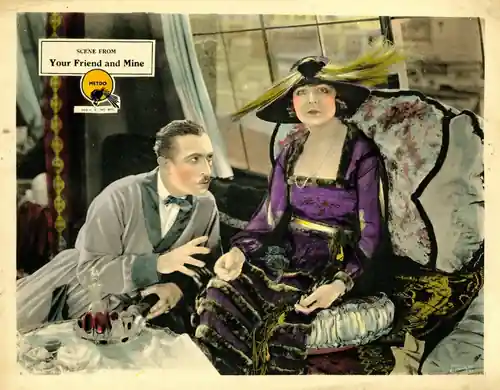
In comparing this work to other films of the era, such as The Frisky Mrs. Johnson, one notices a distinct lack of the comedic levity that often punctuated silent dramas. Your Friend and Mine is a somber affair, more aligned with the existential weight of The Seekers. It lacks the whimsicality of The Chocolate Soldier, opting instead for a gritty realism that feels surprisingly modern. Even the intervention of the Masons—Ted and Beatrice—feels less like a 'deus ex machina' and more like a necessary social correction. They represent the communal watchfulness that was supposed to safeguard the sanctity of the home while the men were away at the 'front' of industry.
The technical merits of the film deserve significant praise. The cinematography utilizes the interplay of light and shadow to articulate Patricia's shifting moods. During the scenes in the city, the lighting is bright, almost sterile, reflecting the public-facing perfection of the Stanton marriage. However, as the narrative moves toward the country estate, the palette becomes darker and more expressionistic. This transition is reminiscent of the visual storytelling found in The Destroying Angel, where the environment itself becomes a character in the drama. The use of close-ups on Raymier’s hands—the hands that do not paint—serves as a recurring motif of his fundamental falseness.
The conclusion of the film is perhaps its most controversial element from a modern perspective. Hugh Stanton returns, not because he has realized the error of his emotional neglect through a moral awakening, but because his 'oil well' has finally come in. The proceeds from this venture allow him to be a 'full-time husband.' This suggests a transactional nature to marital fidelity that is deeply unsettling. It implies that Patricia’s safety and Stanton’s presence are commodities that must be purchased with industrial success. This theme of economic liberation versus domestic duty is also explored in Open the Bars, though in a vastly different context.
One must also consider the role of the secondary characters. Otto Lederer and J. Herbert Frank provide a groundedness to the film that prevents it from floating off into pure melodrama. Their performances remind us of the social machinery that exists outside the central triangle. Unlike the more isolated narrative of The Egg, Your Friend and Mine feels lived-in, as if the characters have a history that predates the first frame. This sense of continuity is a hallmark of Winifred Dunn’s writing, which always prioritized character motivation over mere plot progression.
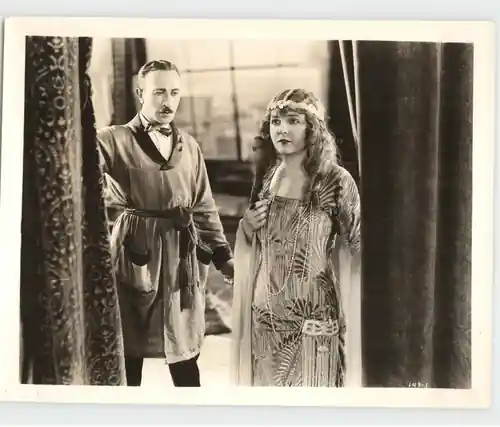
Reflecting on the film's place in history, it is clear that it served as a precursor to the domestic thrillers of the 1940s. The 'fraudulent artist' trope would be revisited many times, but rarely with the specific class-conscious bite found here. Raymier isn't just a villain; he is a symptom of a society that values the 'signature' over the 'work.' In an era where the 'brand' was beginning to take precedence over the 'craft,' this film offered a stinging critique of the emerging celebrity culture. Even films like A Phantom Fugitive deal with the concept of the hidden self, but Your Friend and Mine anchors this in the most intimate of settings: the marriage bed.
The pacing of the film is deliberate, refusing to rush toward the inevitable confrontation. This patience allows the audience to feel the weight of Patricia’s boredom and the slow creep of Raymier’s influence. It is a masterclass in tension-building that avoids the frantic editing seen in The Bar Cross War. Instead, the director (though credited mostly to the writers in archival records) allows the camera to linger on the faces of the actors, capturing the minute shifts in their psychological states. This is especially evident in the scene where Patricia first realizes Raymier’s advances are not merely 'artistic.' The shock on Enid Bennett’s face is a masterwork of silent communication.
Ultimately, Your Friend and Mine is a film about the cost of being 'looked after.' Patricia is passed from her husband to the Masons, and then nearly to Raymier, treated more like a piece of fine porcelain than a woman with agency. Her eventual return to her husband’s care—now funded by oil—feels less like a victory and more like a lateral move within a patriarchal structure. It is this ambiguity that makes the film so compelling today. It doesn't offer easy answers; it only offers a reflection of the compromises required to survive in a world where friendship is often a mask for ulterior motives.
In the broader landscape of 1923 cinema, which included experimental works like A Trip to Mars or the stylistic diversions of The Fable of Fearless Fido, Your Friend and Mine remains a sturdy, intellectually honest piece of filmmaking. It deals with the 'oil of the earth' and the 'toil of the heart' with equal gravity. For those interested in the evolution of the domestic melodrama, it is an essential watch, providing a bridge between the Victorian morality plays and the more cynical noir films that would follow decades later. It is a cautionary tale, a social critique, and a gripping drama all rolled into one, proving that even in the silent era, the loudest messages were often those whispered in the shadows of a country estate during a storm.
IMDb —
1916
Community
Log in to comment.