DbcultAccessing Vault...
6.4/10
Senior Film Conservator
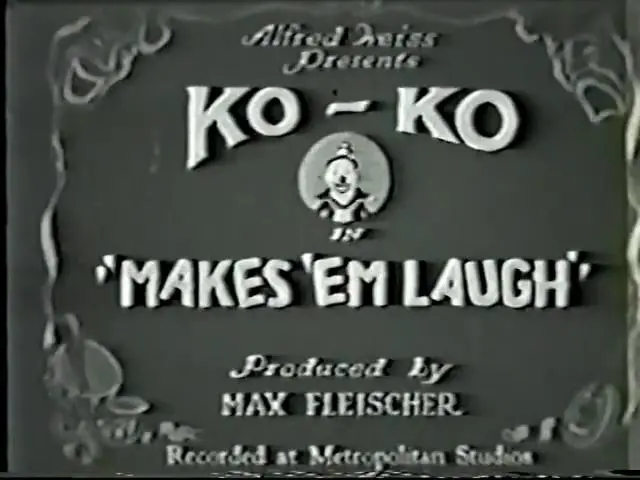
A definitive 6.4/10 rating for a film that redefined the boundaries of cult cinema. Ko-Ko Makes 'Em Laugh remains a cornerstone of transgressive art.
Is Ko-Ko Makes 'Em Laugh worth watching today? Short answer: yes, but with significant caveats. This early animated short, a product of Max Fleischer’s pioneering vision, stands as a fascinating historical document, a testament to the nascent days of the medium, and a surprisingly robust source of meta-humor. It is an absolute must-see for animation historians, cinephiles interested in the origins of film, and anyone who appreciates the foundational artistry of the Fleischer Studios. However, those accustomed to modern narrative structures, rapid pacing, or polished visual effects might find its quaint charm and slower rhythm a challenging adjustment.
It's not a film for the casual viewer seeking immediate gratification, nor is it designed for those who prefer their stories spoon-fed and their animation seamless. Instead, it speaks to a specific audience: the patient observer, the curious student, and the lover of raw, unfiltered creativity. Its value today is less about pure entertainment in the contemporary sense and more about its profound influence and the sheer inventive spirit it encapsulates.
Max Fleischer, a name synonymous with innovation in animation, etched his mark on cinematic history with his groundbreaking techniques and distinctive style. Before the polished sheen of Disney, there was the gritty, often surreal, and always inventive world of Fleischer Studios. Ko-Ko Makes 'Em Laugh is a prime example of this pioneering spirit, a short film that doesn't just entertain but actively engages with the very process of its own creation. It’s a bold, almost audacious move for a film of its era, showcasing a self-awareness that feels remarkably modern even a century later.
The film, like many early Ko-Ko cartoons, plays with the fourth wall, blurring the lines between the animated world and the real world of the animator. This wasn't just a gimmick; it was a philosophical statement on the nature of creation and the power of the artist. Ko-Ko, drawn into existence by Fleischer's own hand, becomes a character both beholden to and defiant of his creator, a dynamic that lends a surprising depth to what could otherwise be simple sight gags.
Let’s cut to the chase. This film works. But it’s flawed.
This film works because... it fearlessly experimented with the medium, showcasing a meta-narrative long before it became a common trope. The interaction between Ko-Ko and the animator’s hand, a signature Fleischer technique often achieved through rotoscoping, is not just visually striking but conceptually brilliant, inviting the audience into the very workshop of creation. This playful deconstruction of the animated illusion, as seen when Ko-Ko literally pulls props out of the inkwell or struggles against the lines being drawn around him, demonstrates a profound understanding of animation's unique power.
This film fails because... its pacing and narrative simplicity can feel jarringly slow to a contemporary audience. While its historical context is vital, judging it purely as a piece of entertainment in 2024, its episodic structure and lack of a strong emotional arc might leave some viewers disengaged. The humor, while inventive for its time, relies heavily on visual gags and the novelty of its meta-commentary, which might not universally translate to modern comedic sensibilities.
You should watch it if... you are an animation enthusiast, a student of film history, or someone who appreciates the raw, unbridled creativity of early cinema. It offers invaluable insight into the origins of character animation, the development of visual effects, and the audacious spirit of pioneers like Max Fleischer. It’s a journey back in time, offering a glimpse into a world where the rules of filmmaking were still being written, and every frame was an act of pure invention.
The animation in Ko-Ko Makes 'Em Laugh is, by modern standards, rudimentary, yet it possesses an undeniable charm and ingenuity. Max Fleischer, often credited as the film's primary creative force, leaned heavily on his patented rotoscoping technique. This method, involving tracing over live-action footage frame by frame, lent Ko-Ko a fluidity of movement that was revolutionary for its time, setting him apart from the more jerky, rubber-hose animation prevalent in other studios. When Ko-Ko shuffles across the stage or performs a quick dance, there's a naturalism to his motion that is still impressive.
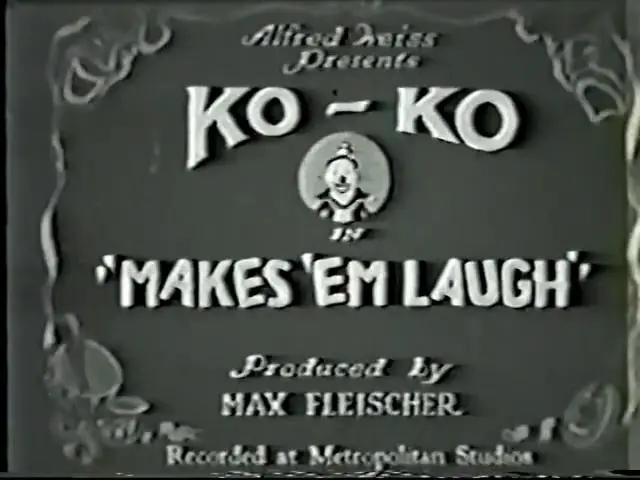
The direction, while perhaps not as complex as later animated features, is remarkably clever. Fleischer understood the power of the frame and the unique relationship between the drawn character and the world outside the frame. The moments where Ko-Ko interacts directly with the animator’s hand – being erased, redrawn, or having objects handed to him – are not just gags; they are profound explorations of the medium’s potential. This directorial choice elevates the short from mere cartoons to a self-aware piece of art. It’s a playful subversion of the audience’s expectations, a wink and a nod that says, “Yes, we know this is a drawing, and isn't that wonderful?”
Consider the scene, a hallmark of Fleischer's early work, where Ko-Ko attempts to escape the confines of the animation paper, only to be physically pushed back into the frame by the animator’s pen. This isn't just a clever visual; it’s a commentary on artistic control and the character’s struggle for agency. It's a moment of surprising philosophical depth wrapped in a simple, effective gag. This level of meta-commentary was virtually unheard of in its era, making Fleischer a true visionary in the nascent field of animation.
While there's no traditional 'acting' in the human sense, Ko-Ko the Clown delivers a performance entirely through his design and animation. He is an expressive inkblot, his simple form conveying a range of emotions from frustration to mischievous joy. His character design, a stark contrast of black and white, makes him instantly recognizable and memorable. Ko-Ko’s enduring appeal lies in his resilience and his playful defiance. He’s a character who understands his role but constantly pushes against its boundaries, always striving to entertain, even when the odds (or the animator) are against him.
The 'performance' is also in the timing. The subtle pauses, the exaggerated reactions, the way Ko-Ko looks directly at the audience or the animator, all contribute to his personality. It's a masterclass in how to imbue a simple drawing with life and charisma, a lesson that many contemporary animators could still learn from. The way Ko-Ko reacts to a failed joke, perhaps shrugging his shoulders or looking bewildered, is a testament to the animators' skill in conveying emotion without dialogue or complex facial expressions.
The pacing of Ko-Ko Makes 'Em Laugh is deliberately measured, reflecting the sensibilities of early silent cinema. There's no rush to get to the next plot point because, frankly, there isn't much of a plot. Instead, the film luxuriates in its individual gags, allowing each moment to breathe and unfold. This can feel slow to modern viewers accustomed to quick cuts and rapid-fire jokes. However, it also allows for a deeper appreciation of the animation itself, giving the audience time to observe the intricacies of each drawing and the cleverness of each visual trick.
The tone is overwhelmingly whimsical and playful, with an undercurrent of surrealism that was a hallmark of Fleischer’s work. There’s a distinct sense of mischief, a joyful anarchy that permeates the short. It’s not about high stakes or dramatic tension; it’s about the pure joy of creation and the simple pleasure of making people laugh through impossible feats. This lighthearted, experimental tone is what truly sets it apart from many of its contemporaries, which often relied on more straightforward slapstick.
Absolutely, but understand what you're getting into. Ko-Ko Makes 'Em Laugh is a vital piece of film history. It showcases groundbreaking animation techniques. Its meta-narrative was revolutionary. It offers a window into the origins of character animation. It's not a thrill ride. It's an experience in historical appreciation. For those who value cinematic legacy, it's essential viewing. For others, it might feel slow or archaic. Know your cinematic appetite before diving in.
Ko-Ko Makes 'Em Laugh is more than just an old cartoon; it's a living artifact, a vibrant piece of cinematic archaeology that continues to resonate with its audacious creativity. Max Fleischer’s vision for animation was one of endless possibility, a canvas where the rules of reality could be bent, broken, and redrawn at will. This short film perfectly encapsulates that ethos, presenting Ko-Ko not just as a character, but as a conceptual tool to explore the very nature of animation itself. It’s a film that demands a certain kind of engagement, a willingness to look past the surface-level simplicity and appreciate the profound ingenuity bubbling beneath. It’s an acquired taste, perhaps, but one that rewards the patient palate with a rich, unique flavor of early cinematic magic.
While it won't offer the emotional catharsis of a modern drama or the adrenaline rush of a blockbuster, it provides something arguably more valuable: a direct line to the birth of a medium, a glimpse into the minds of its pioneers, and a reminder that true innovation often comes from playing with the boundaries. It’s a foundational text for anyone serious about understanding animation history, offering insights that are still relevant today. Forget the polish of contemporary animation for a moment, and immerse yourself in the raw, unadulterated genius of a bygone era. You might just find yourself, like Ko-Ko's audience, laughing in delighted surprise. For more on early animation, consider exploring The Cat and the Fiddle or even the dramatic shift seen in Rebuilding Broken Lives for a different genre of historical film.
IMDb —
1914
Community
Log in to comment.