DbcultAccessing Vault...
Cult Review
Senior Film Conservator
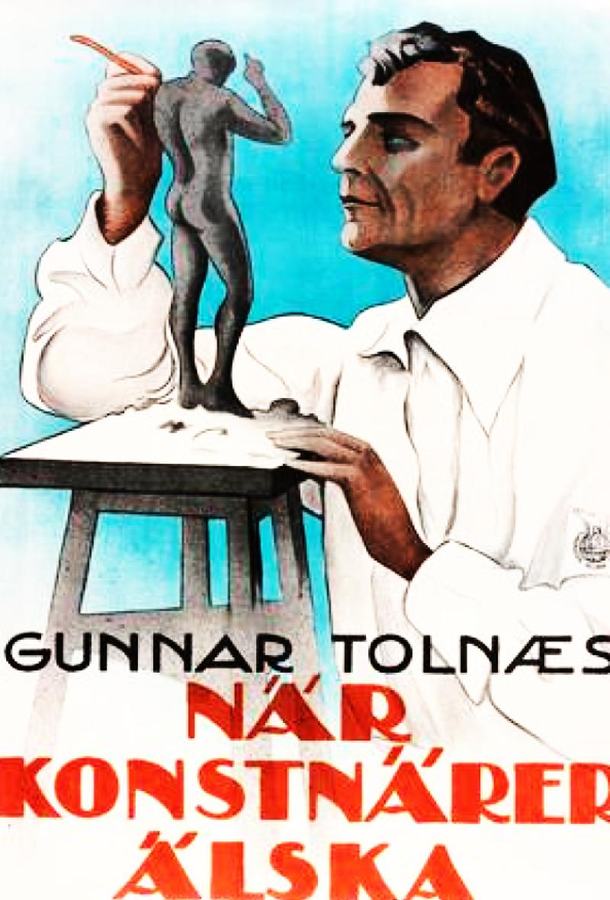
In the annals of silent cinema, where emotions were writ large across faces and narratives unfolded through the exquisite ballet of light and shadow, certain films emerge as timeless meditations on the human condition. Johanne Skram Knudsen's 1916 masterpiece, När konstnärer älska (When Artists Love), stands as a profoundly moving exploration of vanity, devotion, and the inexorable march of time. It's a film that, despite its century-old vintage, resonates with an astonishing contemporary relevance, delving into anxieties about beauty, aging, and the nature of artistic obsession that feel as fresh and raw today as they must have felt to audiences in the nascent years of cinema.
At its heart lies a deceptively simple premise: Bernhard, an artist consumed by his muse, the celebrated actress Thora, has poured his soul into her portrait. This artwork, now on public display, is not merely a likeness; it is a testament to his profound, unrequited affection. Yet, the narrative pivots not on the artist's longing, but on Thora's internal turmoil. Lili Beck, with a performance of remarkable subtlety and depth, embodies Thora, a woman acutely aware of her power, her beauty, and the ephemeral nature of her profession. The film's pivotal moment, elegantly understated yet devastatingly impactful, arrives when Thora, gazing into a mirror, discovers her first gray hair. This single strand, a harbinger of inevitable decay, shatters her composure, initiating a crisis of identity that forms the very backbone of the film.
The discovery of that first gray hair is more than a superficial concern; it is a profound existential shock. For an actress whose career and perhaps even her sense of self are inextricably linked to her youthful allure, it represents the precipice of decline. Thora’s world, built on applause and admiration, suddenly feels precarious. Is her life, her career, and indeed Bernhard’s deep affection, slipping away with each passing moment, each new wrinkle, each fading bloom of youth? This internal struggle is depicted with an intensity that transcends spoken dialogue, relying instead on Beck’s expressive eyes, her subtle gestures, and the masterful use of close-ups that draw the audience into her escalating anxiety. It's a narrative choice that elevates the film beyond a simple melodrama, transforming it into a poignant psychological study.
The contrast between Bernhard’s idealized portrait of Thora – a frozen moment of beauty and youth – and Thora’s own crumbling self-perception is stark and heartbreaking. The painting represents a static, unchanging ideal, while Thora herself is a living, breathing being subject to the relentless currents of time. This dichotomy forces us to consider the artist's role: is it to capture truth, or to perpetuate an idealized illusion? Bernhard, portrayed with earnest intensity by Gunnar Tolnæs, views Thora with an almost religious reverence, a devotion untainted by her perceived flaws. His love is for the essence of her, perhaps even the idealized version he has created on canvas, rather than the fleeting physicality that so torments her. This dynamic raises questions about the nature of love itself: can it truly transcend the superficial, or is it inevitably tied to the object's perceived perfection? The film doesn't offer easy answers, instead inviting contemplation on these complex facets of human emotion.
The portrait itself becomes a silent character, a focal point for the film's thematic explorations. It embodies Bernhard’s unwavering admiration, a fixed point of beauty in Thora’s increasingly turbulent inner world. The exhibition of this portrait is a public declaration of his feelings, a grand gesture that, ironically, deepens Thora’s crisis rather than assuaging it. She sees not a celebration, but a stark reminder of the youth she fears losing, and the expectations she feels she must uphold. This particular narrative thread, where art reflects and refracts personal anxieties, bears a fascinating kinship with other films that explore the artist-muse dynamic or the corrupting influence of societal judgment. One might draw parallels to the moral quandaries explored in Judge Not, where public perception and private failings collide, or even the intense focus on individual moral struggles seen in Sin, albeit Thora’s 'sin' here is the universal human fear of mortality and obsolescence.
Johanne Skram Knudsen’s screenplay is a marvel of economical storytelling, conveying profound emotional arcs with minimal intertitles. The narrative relies heavily on the visual language of silent film: the lingering glances, the subtle shifts in posture, the symbolic framing. The camera becomes an extension of Bernhard’s gaze, at times adoring, at others dispassionate, observing Thora's unraveling with a keen, almost clinical eye. Egil Eide, as a secondary character whose presence subtly underscores the main drama, contributes to the film’s rich tapestry, his reactions often mirroring the unspoken thoughts of the audience, adding another layer of depth to the unfolding human drama.
The visual aesthetic of När konstnärer älska is strikingly sophisticated for its era. The cinematography, though perhaps not as overtly experimental as some later silent films, is remarkably effective in establishing mood and character. Shadows play a crucial role, often enveloping Thora in moments of introspection, emphasizing her isolation and the darkness of her fears. Lighting is used to sculpt faces, highlighting the delicate features of Lili Beck and the earnest intensity of Gunnar Tolnæs, making their emotions almost tangible to the viewer. This careful attention to visual detail ensures that the film's emotional impact is not diminished by the absence of spoken dialogue, but rather enhanced by the necessity of visual communication.
The performances, particularly that of Lili Beck, are exemplary. She navigates the complex emotional landscape of Thora with a nuanced grace, conveying despair, vanity, fear, and a glimmer of hope without resorting to exaggerated theatrics. Her portrayal is a masterclass in silent acting, demonstrating how a flicker of the eyes or a trembling hand can convey volumes of unspoken thought. Gunnar Tolnæs, as Bernhard, provides a compelling counterpart, his quiet devotion a steady anchor against Thora’s tempestuous internal struggle. Their chemistry, though largely unexpressed in dialogue, is palpable, a testament to their skill and the director's ability to elicit such profound performances. The film’s strength lies in its ability to make these internal conflicts universally relatable, regardless of the period setting or the specific cultural context.
The thematic richness of När konstnärer älska extends beyond the personal anxieties of its protagonist. It delves into the very essence of artistic creation and the complex relationship between creator and muse. Is Bernhard’s love truly selfless, or is it inextricably linked to the beauty he perceives and captures? Does Thora’s vanity diminish her capacity for genuine affection, or is it merely a survival mechanism in a world that judges women by their appearance? These questions, posed through the delicate interplay of character and circumstance, invite the audience to reflect on their own perceptions of beauty, worth, and the transient nature of external validation.
The film also touches upon the societal pressures placed upon women, particularly those in the public eye. Thora's fear of aging is not merely a personal neurosis but a reflection of a broader cultural expectation that ties a woman's value to her youth and beauty. This aspect of the narrative could be fruitfully compared to the struggles of protagonists in films like Slave of Sin, where characters are often trapped by societal conventions or personal failings, or even the dramatic romantic entanglements in a story like Far from the Madding Crowd, where a strong female lead navigates love and independence against a backdrop of social scrutiny. While the settings and specific conflicts differ, the underlying current of a woman's struggle for agency and self-worth in a world often dictated by male gaze and societal standards remains a resonant theme.
Ultimately, När konstnärer älska is a testament to the power of silent cinema to convey profound human drama. It’s a film that speaks volumes without uttering a single word, relying instead on the universal language of emotion, gesture, and visual poetry. Johanne Skram Knudsen's direction, coupled with the compelling performances of its lead actors, crafts a narrative that is both intimate and expansive, a character study that transcends its historical context to speak to enduring human fears and desires. It’s a film that lingers long after the final frame, prompting reflection on the canvases we present to the world, the mirrors we gaze into, and the relentless, beautiful, and sometimes terrifying journey of life itself.
The film’s legacy lies not just in its artistic merit but also in its contribution to the evolving language of cinema. It showcases an early understanding of how film could explore psychological depth, moving beyond mere spectacle to delve into the intricate workings of the human mind. The portrayal of Thora's internal conflict, made manifest through external cues and expert cinematography, set a precedent for character-driven narratives that would become a hallmark of cinematic storytelling. It reminds us that even in its nascent form, cinema possessed an extraordinary capacity for empathy and introspection, capable of capturing the most delicate nuances of the human spirit.
For modern audiences, När konstnärer älska offers a window into the artistic and social sensibilities of the early 20th century, while simultaneously presenting themes that remain eternally relevant. The anxiety over aging, the quest for validation, the complexities of love and artistic inspiration—these are not confined to a specific era but are threads woven into the fabric of human experience. Watching this film is not just an exercise in historical appreciation; it is an encounter with a profound, beautifully rendered human story that continues to resonate with undeniable power. It is a cinematic gem, deserving of its place among the most compelling works of the silent era, and a testament to the enduring magic of film as a medium for exploring the timeless questions of existence.
The emotional weight carried by Lili Beck's performance is particularly noteworthy. Her ability to convey a spectrum of emotions – from the initial shock of discovery to the growing dread and eventual resignation or acceptance – without spoken words is a masterclass in physical acting. Every gesture, every facial expression is meticulously crafted, drawing the audience into Thora's inner world with an intimacy that few films, even with dialogue, manage to achieve. Gunnar Tolnæs, too, delivers a performance that speaks volumes through his quiet intensity and unwavering gaze, embodying the artist's devotion with compelling sincerity. Their interplay, a delicate dance of unexpressed desires and unspoken fears, forms the emotional core of the film, making it a truly unforgettable experience.
In conclusion, När konstnärer älska is more than just a historical artifact; it is a vibrant, living piece of art that continues to speak to the human condition with eloquence and grace. Its exploration of vanity, the ephemeral nature of beauty, the complexities of love, and the artist's gaze remains as potent and thought-provoking today as it was over a century ago. It stands as a powerful reminder of the enduring legacy of silent cinema and its capacity to tell deeply human stories that transcend the boundaries of time and language.

IMDb —
1924
Community
Log in to comment.