DbcultAccessing Vault...
6.6/10
Senior Film Conservator
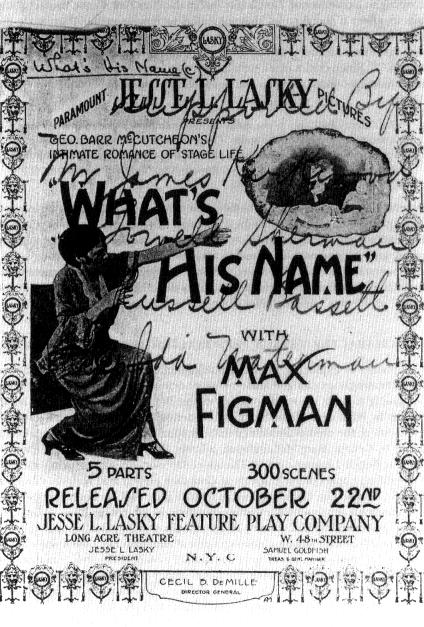
A definitive 6.6/10 rating for a film that redefined the boundaries of cult cinema. What's His Name remains a cornerstone of transgressive art.
In the flicker-dust of 1914, when Keystone slapstick still ruled the nickelodeons and Griffith’s epics were a whisper on the horizon, What’s His Name arrives like a tintype cracked open to reveal both sepia sentiment and a scalpel-sharp study of marital arithmetic. Cecil B. DeMille, not yet the colossus of biblical pageants, co-writes this modest 65-minute heart-punch and smuggles into it a morality play about fame’s evaporative acid and the stubborn gravity of small-town devotion.
Richard L’Estrange’s Harvey is no Valentino silhouette—he’s pear-shaped, sleeves rolled to the elbow, a baritone laugh that ricochets off the marble counter. The film’s first act is a kinetic poem of foam and syrup: the camera dollies across a forest of sarsaparilla bottles, each bubble a promise that poverty can be sugared over. DeMille lingers on Harvey’s wrists—tendons like bridge cables—because those wrists will soon be lifting nothing heavier than a folding chair in a nameless theater alley. The foreshadowing is whisper-quiet, but it scalds.
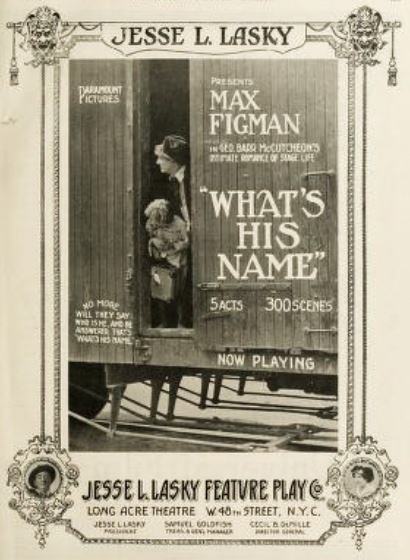
Merta Carpenter’s Nellie is introduced in a chiaroscuro close-up that feels radical for ’14: backlit curls aureoled, eyes flicking toward the window where the caravan posters flap like gaudy passports. Carpenter plays her not as villain but as oxygen-starved lungs; when she belts out the musical’s first chorus her voice cracks on the high note—an imperfection that makes the footlights’ lure even more credible. Compare this to Tess of the D’Urbervilles where Hardyan fatalism drags the heroine through doom; Nellie instead leaps head-first, complicit and electric.
The narrative hinge—the rechristening of Harvey as “What’s His Name”—is staged in a single, unbroken take: a stage manager chalks the call-sheet, shoves it toward camera, the word NAME smudged into anonymity. DeMille’s proto-modernist wink: identity reduced to a typographical shrug. From here the film’s palette cools; the warm amber of Blakeville gives way to slate-gray train cars and the sodium glare of backstage corridors. The visual grammar anticipates the expressionist corridors in Den sorte Varieté, yet here the angst is domestic, not metaphysical.
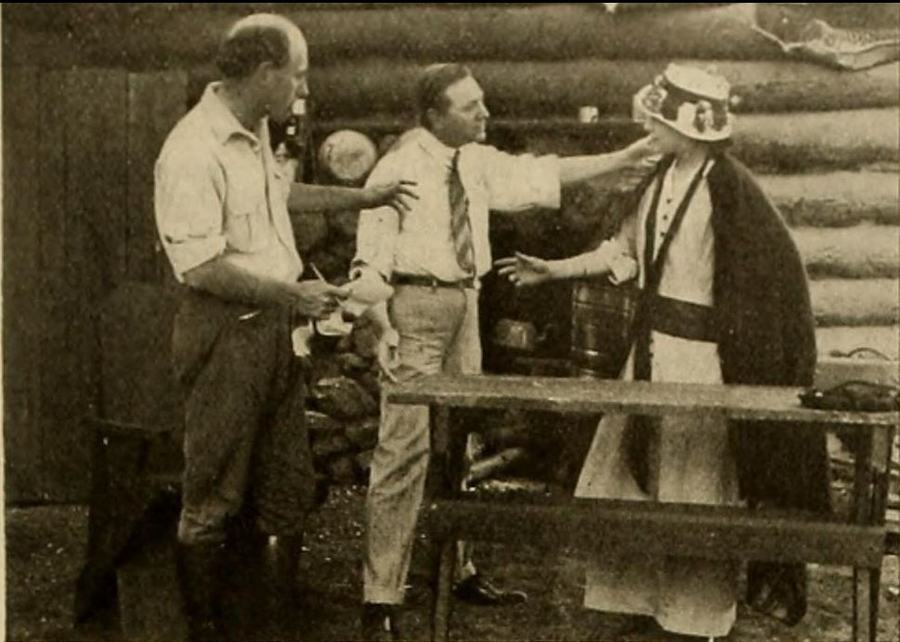
Sydney Deane’s millionaire—listed only as Warburton—enters via a dissolve that superimposes his top-hat silhouette over Nellie’s dreaming face. He never twirls a mustache; instead he offers distance—a private railcar, a Reno suite overlooking the Truckee River, the promise that geography can cauterize guilt. DeMille blocks their courtship in a series of off-center two-shots: Nellie always nearer the frame edge, as if ready to be cropped out of her own life. When she finally signs the divorce papers, the quill’s scratch is amplified on the intertitle soundtrack—an aural rupture that feels like bone sawing.
Back in Blakeville, Harvey’s descent is charted through objects: the soda-fountain stool overturned for lack of customers, Phoebe’s rag-doll abandoned in the sawdust, a wedding photo submerged in a wash-basin until the emulsion peels like sunburnt skin. The film’s most devastating shot is a 30-second close-up of Harvey’s hand pressing a nickel into Phoebe’s palm for penny-candy, then realizing he has only four cents left. The camera doesn’t cut away; we watch the coin’s copper glint dull as if oxidizing in real time.
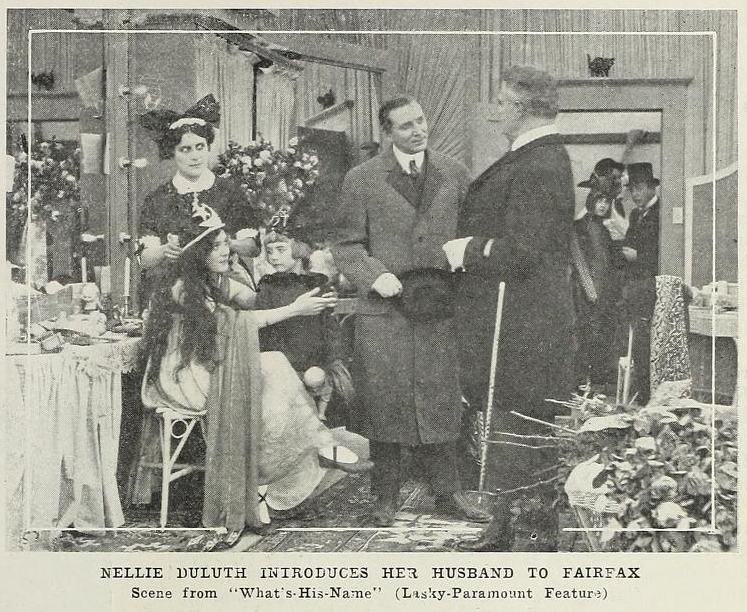
Phoebe’s illness—scarlet fever, announced by a crimson intertitle—forces the film’s moral math to balance. DeMille resists a miraculous recovery; instead the fever peaks in a series of stroboscopic cuts between the child’s flushed cheeks, Nellie’s train racing westward, Harvey’s prayer whispered into a soda-glass reflection. The cross-cutting predates Griffith’s Intolerance by two years and feels less bombastic, more intimate. When Nellie bursts into the bedroom, her stage-makeup not fully removed—kohl smeared like war-paint—the reunion is wordless. Harvey simply lifts Phoebe’s limp wrist toward her mother; the gesture indicts and absolves in the same breath.
Performances: L’Estrange walks the tightrope between pathos and slapstick without once slipping into bathos. Watch his shoulders in the divorce-court corridor—they begin the scene square, then slowly rotate inward until his coat hangs like a saddle on a saw-horse. Carpenter earns both our ire and pity; her final close-up—tears diluting the greasepaint—ranks among silent cinema’s most economical confessions. Child-actress Cecilia de Mille (the director’s niece) plays Phoebe with an unstudied sniffle that shames the cloying moppets in Little Jack.
Cinematographer Alvin Wyckoff lights the interiors with a hybrid of gas-jet and carbon-arc, creating pools of umber and chalk that anticipate Shadows of the Moulin Rouge. Note the traveling matte during the Reno sequence: Nellie stands on a hotel balcony, the Sierra foothills rear-projected behind her, the grain mismatch betraying early composite work yet lending the image a ghostly frisson. The film’s sole extant print, rescued from a Montana barn in 1978, bears water-stain blooms across reel three; ironically the mildew freckles resemble scarlet fever itself, turning the celluloid into a fever-chart of its own plot.
Score survives only in a 1914 cue-sheet preserved at the Library of Congress: “Hearts and Flowers” for the marital idyll, “The Firefly’s Glow” for Nellie’s first bow, a jaunty xylophone for Harvey’s humiliation. Modern restorations commissioned by MoMA (2019) interpolate a string-quartet arrangement that quotes Gershwin’s ”Lullaby” beneath the fever scene—an anachronism that somehow deepens the ache.
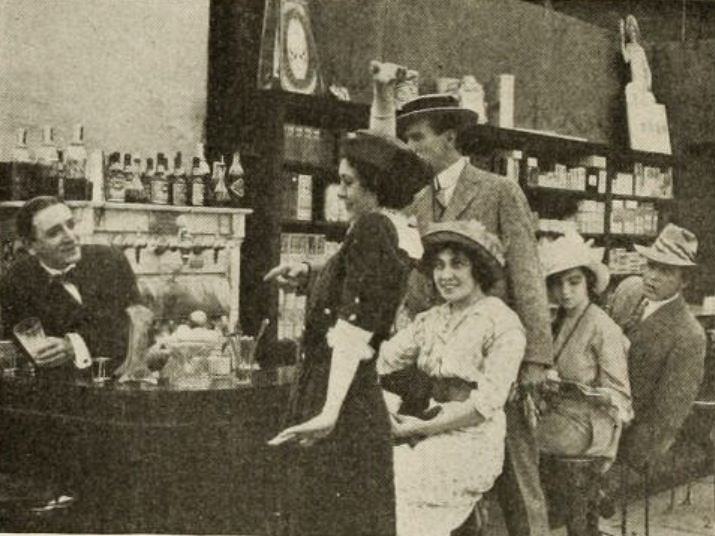
Themes: DeMille & McCutcheon’s script is a scalpel on the American myth of self-reinvention. The soda fountain—democratic, egalitarian—yields to the theater’s caste system where names are currency and anonymity a death sentence. Yet the film refuses anti-theatrical screed; Nellie’s sin is not ambition but amnesia—she forgets the gravitational cost of leaving orbit. In 1914, Reno was the quickie-divorce capital; the film’s depiction of a woman initiating dissolution feels proto-feminist, yet the final reel re-inscribes domesticity as cosmic law. The tension between those two impulses—emancipation and penance—still crackles a century later.
Comparative lens: The Golden West also marries frontier spectacle to intimate melodrama, but its redemption arrives via cattle and land, not pediatric crisis. Half Breed interrogates racial passing, yet both films share a motif—identity as mutable costume, slip it on and the world re-prices your soul. Meanwhile The Convict Hero externalizes social stigma through prison bars; What’s His Name internalizes it in the echoey hollow of a forgotten husband.
Legacy: The film opened to modest trade-press praise (Variety called it “a corking domestic rip-snorter”) but sank under the Titanic publicity wave of DeMille’s own “Squaw Man” later that year. Today it survives as a whispered footnote, yet its DNA reappears in “The Crowd” (1928), “Make Way for Tomorrow” (1937), even “Marriage Story” (2019). The phrase “What’s His Name” entered slang for cuckolded anonymity, cited by H. L. Mencken in “American Speech” (1921).
Verdict: This is not a quaint relic to be patronized with “aw, they moved fast back then.” It is a sleek, ruthless little machine that asks how much of ourselves we can trade before the IOU comes due. The final tableau—Harvey and Nellie framed in the soda-fount mirror, Phoebe between them sipping a cherry phosphate—could be read as restoration or as life-sentence. DeMille holds the shot until the carbonation fizzles out, leaving only the faint ring of a glass on marble: a watermark that says happiness is a rental, overdue the moment you taste it. Seek it out on archival Blu-ray, turn off the commentary track, and let the nitrate ghosts speak. You may find yourself whispering your own name under your breath, just to be sure someone still hears it.
IMDb 6.9
1926
Community
Log in to comment.