DbcultAccessing Vault...
Cult Review
Senior Film Conservator
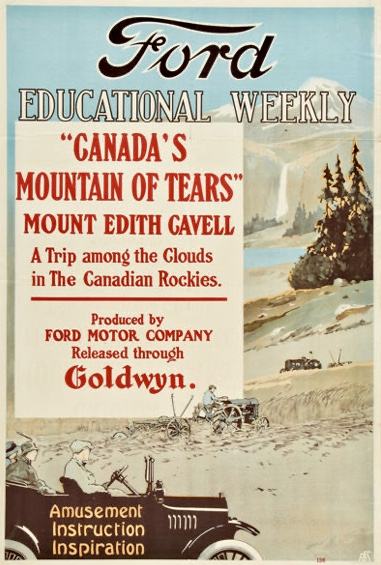
The rediscovery of Canada's Mountain of Tears feels less like a cinematic archival find and more like the unearthing of a long-buried fossil, still pulsating with a cold, rhythmic life. It is a work that defies the easy categorization often applied to early twentieth-century dramas, standing as a stark, monolithic testament to the era's capacity for psychological complexity and topographical obsession. Unlike the sentimentalism found in Rebecca of Sunnybrook Farm, this film plunges into the abyss of the human psyche, using the sheer verticality of the mountains to illustrate the staggering heights and depths of moral collapse.
From the opening frames, the cinematography establishes a visual language of claustrophobic grandeur. The camera lingers on the granite faces of the Rockies with a reverence that borders on the religious, yet the shadows cast across the scree slopes suggest something far more malevolent. This is a world where light is a precious, fleeting commodity, often swallowed by the encroaching mists that descend like a shroud over the ill-fated surveying party. The director utilizes long shots that render the human figures as mere specks—fleas on the hide of an ancient, slumbering beast—evoking a sense of insignificance that mirrors the thematic weight of the script.
One cannot help but draw parallels to the atmospheric dread found in The Gates of Doom. However, where that film relied on gothic artifice, Canada's Mountain of Tears finds its horror in the tangible, the frozen, and the immutable. The tactile nature of the production is overwhelming; one can almost feel the bite of the mountain air and the grit of the dust as the surveyors dig into the unstable earth. The production design avoids the staginess of contemporary works like The Warrens of Virginia, opting instead for a rugged, unpolished realism that enhances the visceral impact of the narrative.
The acting in this piece is a revelation of understated power. In an era often characterized by histrionic gestures and exaggerated facial expressions, the lead performance by the protagonist is a masterclass in internal conflict. His eyes, frequently caught in tight close-ups, reflect the shifting terrain of his conscience. As he makes the fateful decision to ignore the warnings of the local guides, we see the flicker of hubris being slowly extinguished by the dawning realization of his own folly. This performance carries an emotional weight comparable to the raw intensity seen in The Barker, yet it possesses a quiet, simmering quality that is entirely unique to this setting.
The supporting cast provides a chorus of desperation, each character representing a different facet of the colonial impulse. There is the idealistic young engineer, the grizzled laborer, and the indigenous guide whose silence speaks volumes more than the frantic dialogue cards of his counterparts. The tension between these archetypes is handled with a deft touch, avoiding the moralistic simplicity found in Her Husband's Honor. Instead, the film presents a murky, grey world where survival often necessitates the abandonment of one's principles.
Technically, the film is a marvel of early lighting techniques. The use of natural light, often filtered through dense pine canopies or reflected off blinding snowfields, creates a chiaroscuro effect that heightens the drama. The nighttime scenes, lit by flickering campfires and lanterns, evoke a sense of primal fear—the light struggling to hold back the infinite darkness of the wilderness. This visual duality serves as a perfect metaphor for the film's central conflict: the struggle of human reason against the chaotic forces of nature. This thematic resonance is echoed in the haunting imagery of Die Silhouette des Teufels, where shadows act as harbingers of inevitable doom.
The pacing of the film is deliberate, almost agonizingly so. It builds momentum not through rapid editing, but through the accumulation of small, devastating details. A fraying rope, a coughing fit, a distant rumble—these elements coalesce into a symphony of impending disaster. By the time the climax arrives, the audience is as exhausted and broken as the characters on screen. The final sequence, depicting the mountain's 'tears'—the landslide that buries the camp—is a triumph of practical effects. The sheer scale of the destruction is captured with a terrifying clarity that makes the stylized catastrophes of modern cinema look hollow by comparison.
Reflecting on the film's place in the cinematic canon, it is impossible not to compare its bleak outlook to Ashes of Hope. Both films deal with the crushing of aspirations, yet Canada's Mountain of Tears offers no catharsis, no silver lining. It is a work of profound ontological despair, suggesting that our attempts to conquer the earth are not only futile but inherently destructive. Even the more lighthearted elements of early cinema, like the wit of Piccadilly Jim, feel like they belong to a different universe entirely. This film is more closely aligned with the grim meditations on mortality found in After Death.
The film also touches upon themes of national identity and the cost of progress. It serves as a critique of the 'Pro Patria' sentiment (not unlike the film Pro Patria) by highlighting the human bodies that are paved over in the name of empire-building. The 'tears' of the mountain are the only mourning these forgotten men will ever receive. In its depiction of confinement and the loss of liberty, it shares a spiritual DNA with the Hungarian drama Rablélek, though the prison here is one made of rock and ice rather than iron bars.
To watch Canada's Mountain of Tears is to witness a collision between the nineteenth-century romantic view of nature and the twentieth-century's industrial cynicism. It is a film that demands much from its viewers, requiring an immersion into its slow, suffocating atmosphere. The lack of a conventional happy ending may have alienated audiences of its time, much like the challenging narratives of Not My Sister or the intricate mysteries of The Hidden Hand, but today it stands as a precursor to the existentialist cinema that would follow decades later.
The restoration of this work is a vital act of cultural preservation. It allows us to see the roots of the 'mountain film' genre, stripped of the later nationalist propaganda that would infect it. It is as pure an expression of cinematic tragedy as one is likely to find from this period. Like the cryptic allure of Il gioiello di Khama or the dramatic tension of Der Eid des Stephan Huller - II, this film leaves an indelible mark on the viewer's consciousness. It is a haunting, beautiful, and utterly merciless piece of art that reminds us of the fragility of our ambitions when measured against the geological clock. To ignore this film is to ignore a pivotal chapter in the history of visual storytelling—a chapter written in tears, stone, and the silence of the Canadian peaks.
IMDb —
1920
Community
Log in to comment.