Stepping back into the hallowed, flickering glow of early cinema, one encounters Nattens datter II, a Danish silent film that, even a century later, retains an astonishing capacity to captivate and intrigue. This sequel, a testament to the enduring appeal of its enigmatic protagonist, plunges us deeper into a world where shadows dance with ambition and deception is the most potent weapon. Richard Lund's screenplay, a tightly woven tapestry of suspense and psychological maneuvering, showcases an era when narratives, devoid of spoken dialogue, relied entirely on visual acuity and the nuanced performances of its players to convey complex emotional landscapes and intricate plot developments. It's a masterclass in silent storytelling, a thrilling journey into the heart of a burgeoning metropolis where crime and counter-crime are played out with a dramatic flair that feels both antiquated and remarkably prescient. The film, a product of a vibrant period in European filmmaking, stands as a testament to the power of pure visual narrative, challenging audiences to engage with its intricate plot on a purely observational level, a skill often lost in today's more overtly expository cinema.
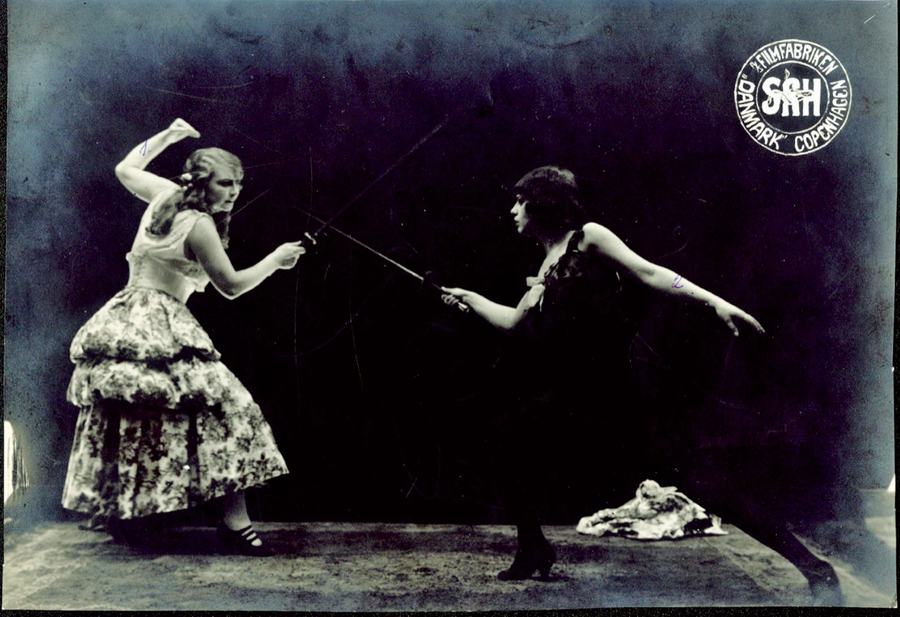
At its core, Nattens datter II unfolds as a sophisticated cat-and-mouse game, spearheaded by a character whose very moniker, the 'Daughter of Darkness,' evokes a sense of alluring peril. This unnamed, audacious adventuress, brought to life with compelling intensity by Lise Wantzin, is no damsel in distress; rather, she is an architect of her own destiny, a woman of formidable intellect and cunning. Her latest, most ambitious target is William Robinson, portrayed with a compelling blend of suave menace and misplaced confidence by Alfred Arnbak. Robinson is not merely a common thief; he is the urban legend, the epitome of the 'sophisticated and successful criminal,' a man whose operations are as meticulously planned as they are ruthlessly executed. The film’s opening gambit establishes this dynamic instantly: the Daughter, with a calculated brilliance, infiltrates Robinson’s orbit, not through brute force or overt confrontation, but through an exquisite act of theatrical subterfuge. She presents herself as an innocent, a wide-eyed seeker of 'fun and action,' a persona so diametrically opposed to her true nature that it becomes her most effective disguise. This feigned naiveté, a shimmering veil of vulnerability, is the bait she casts, and Robinson, blinded by his own hubris and perhaps a flicker of genuine attraction, swallows it whole. The sheer audacity of her plan, predicated on psychological manipulation rather than physical prowess, marks her as a character far ahead of her time, a true disruptor in a cinematic landscape often dominated by more straightforward heroes and villains.
The brilliance of Lund’s narrative lies in its refusal to paint characters in monochromatic shades. The Daughter of Darkness, while undoubtedly operating outside the strictures of conventional morality, possesses a certain anti-heroic charm. Her motives, though veiled, hint at something beyond mere self-interest, perhaps a desire for justice, or merely the thrill of outwitting the seemingly invincible. Robinson, for his part, is not a caricature of evil. Arnbak imbues him with a nuanced intelligence, a man who commands respect even as he orchestrates nefarious deeds. His downfall, therefore, becomes less about the triumph of good over evil and more about the clash of two equally formidable wills. The moment he brings her into his home, the very sanctum where he is meticulously preparing his next grand heist, the tension becomes palpable. The audience, privy to the Daughter’s true intentions, watches with bated breath as she navigates this dangerous terrain, her every glance, every subtle gesture, a calculated move in a high-stakes chess match. This intricate dance of deception and discovery elevates the film beyond a simple crime thriller, transforming it into a psychological drama where the battle of wits is as thrilling as any physical confrontation. It's a narrative that understands the power of implication, allowing the audience to fill in the blanks, making them complicit in the Daughter's audacious scheme.
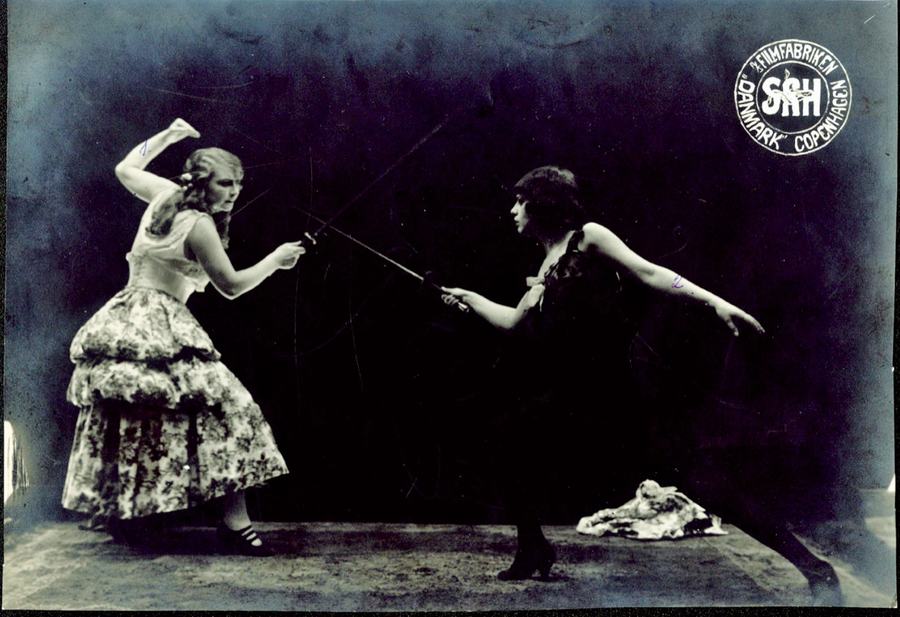
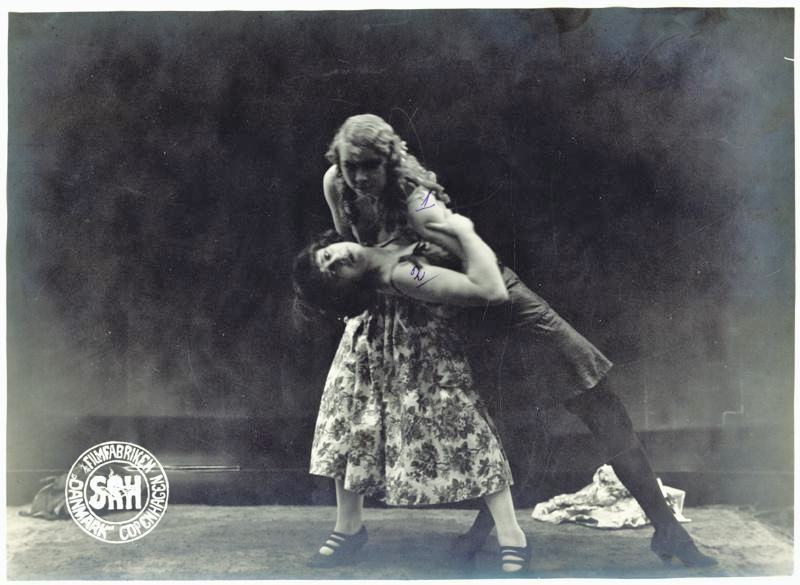
Lise Wantzin’s performance as the Daughter is nothing short of magnetic. In an era where exaggerated expressions often compensated for the lack of dialogue, Wantzin masterfully employs a more restrained yet profoundly expressive acting style. Her eyes, often framed in shadow or illuminated by a single lamp, convey multitudes – calculation, amusement, and an underlying sense of purpose. She embodies the femme fatale archetype, yet with a refreshing agency that sets her apart. She is not merely an object of desire or a tool for male characters' demise; she is the driving force, the orchestrator. This portrayal resonates with the strong female leads found in other contemporary European productions, though perhaps with a more pronounced sense of self-determination than some. Wantzin's ability to convey complex emotional states and strategic thought through subtle shifts in posture, a slight curl of the lip, or a knowing glance is truly remarkable. It’s a performance that speaks volumes without uttering a single word, a testament to the depth of her talent and the sophistication of silent film acting. Alfred Arnbak’s Robinson is a perfect foil, his confident demeanor slowly eroding under the Daughter’s subtle pressure. Arnbak's portrayal is equally compelling, depicting a man of immense power who is nonetheless vulnerable to a carefully crafted illusion. The supporting cast, including Anna Müller, Emilie Sannom, and Peter S. Andersen, contribute effectively to the film's atmosphere, each playing their part in the elaborate web spun by the central figures. Their reactions, their silent observations, add layers of realism and depth to the unfolding drama, making the world of Nattens datter II feel vibrant and lived-in, a bustling urban tapestry.
Richard Lund’s direction is marked by an impressive command of visual storytelling. The cinematography, though perhaps rudimentary by today's standards, is incredibly effective in establishing mood and advancing the plot. Lund utilizes close-ups to emphasize the emotional states and strategic thoughts of his characters, a technique that was still evolving in the early 20th century. The use of light and shadow is particularly noteworthy, creating a chiaroscuro effect that enhances the film’s noirish undertones. Shadows cling to corners, obscuring intentions and hinting at hidden dangers, perfectly complementing the theme of deception. The staging of the scenes, particularly within Robinson’s lavish, yet ultimately vulnerable, abode, is meticulous. Every prop, every piece of furniture, seems to serve a purpose, either as a potential clue, a barrier, or an instrument of the impending crime. The pacing is deliberate, allowing the tension to build organically, rather than relying on rapid-fire edits. This measured approach ensures that every revelation, every twist, lands with maximum impact. Comparing this deliberate pacing to the more action-oriented thrillers that would follow, or even to a historical epic like Famous Battles of Napoleon, highlights the distinct narrative rhythm preferred in psychological thrillers of this era. Lund understands that true suspense often comes from what is implied, what is withheld, rather than what is overtly shown, a lesson that many modern filmmakers could still learn from.
The thematic richness of Nattens datter II extends beyond mere criminal enterprise. It delves into questions of identity, the performative nature of self, and the societal roles assigned to women. The Daughter of Darkness challenges conventional notions of femininity by actively subverting expectations. She uses her perceived innocence as a weapon, manipulating a patriarchal world that often underestimates women. This resonates with the subversive potential seen in other silent era films, where strong female characters, though sometimes constrained by societal norms, often found ways to exert their will. One might even draw a parallel to the complex portrayal of female agency found in films like Die Lieblingsfrau des Maharadscha, though the Daughter’s methods are far more direct and confrontational. The film also subtly explores the allure of danger and the human fascination with transgression. Robinson, despite his criminal pursuits, is portrayed with a certain charisma, making his eventual comeuppance feel less like a moralistic triumph and more like an inevitable consequence of two formidable forces colliding. The film cleverly uses the 'innocent girl' trope only to dismantle it, revealing a character of profound resilience and sharp intellect, perhaps even a proto-feminist icon who refuses to be defined by the limitations of her era. This makes her a far more compelling figure than many of her contemporaries, whose narratives often revolved around romance or domesticity, much like the thematic concerns potentially explored in Life's Shop Window.
From a historical perspective, Nattens datter II stands as a significant artifact of Danish silent cinema, showcasing the sophisticated narrative capabilities of the era. It exemplifies the global reach and diverse storytelling traditions that flourished before the advent of sound transformed the medium. The film’s influence, while perhaps not as widely recognized as some Hollywood blockbusters of the period, contributed to the evolving language of cinematic suspense and character development. It demonstrates how effective drama could be crafted without dialogue, relying instead on visual cues, physical acting, and clever editing. The careful construction of suspense, where the audience is always one step ahead of the antagonist, yet still gripped by the unfolding events, is a technique that remains effective in contemporary thrillers. It reminds us that fundamental principles of engaging storytelling are timeless, transcending technological limitations. The intricate plotting and the focus on psychological tension could be seen as an early precursor to later noir films, laying groundwork for the genre's stylistic conventions. The Danish film industry, during this 'golden age' of silent cinema, was a powerhouse of innovation, and films like Nattens datter II illustrate the high artistic standards and narrative ambition that characterized its output, standing proudly alongside other European cinematic achievements like Fides in its commitment to complex characterizations and gripping plots.
The performances, particularly that of Lise Wantzin, are a compelling argument for the expressive power of silent film acting. Wantzin manages to convey a deep internal life for her character, making the Daughter of Darkness feel complex and multifaceted rather than a mere plot device. Her physical grace and intelligent gaze are central to the film’s effectiveness. The nuances of her facial expressions, from a subtle smirk to a feigned look of alarm, are meticulously crafted to serve the narrative's deceptive core. Similarly, Alfred Arnbak's portrayal of William Robinson avoids caricature, presenting a formidable adversary whose intelligence is almost a match for the Daughter's. Arnbak's physicality and the way he carries himself speak volumes about Robinson's authority and self-assurance, which makes his eventual vulnerability all the more impactful. The chemistry, or rather, the palpable tension between them, is expertly crafted, making their encounters crackle with unspoken meaning. This kind of nuanced character work, often overlooked in broader discussions of silent cinema, is what truly elevates films like Nattens datter II beyond mere historical curiosities into works of enduring artistic merit. It’s a testament to Richard Lund's skill as a writer and director that he could extract such subtle yet powerful performances from his ensemble, ensuring that every gesture, every fleeting expression, contributed to the film's dramatic weight. The interplay between the main characters is as intricate as any dialogue-heavy contemporary film, relying instead on a visual language that is both universal and deeply personal.
In an age dominated by CGI spectacles and rapid-fire dialogue, revisiting Nattens datter II offers a refreshing reminder of cinema's foundational strengths. It's a film that demands active engagement from its audience, inviting them to interpret gestures, expressions, and visual metaphors to piece together the full emotional and narrative tapestry. This active participation fosters a unique connection with the story and its characters. The film’s enduring appeal lies in its sophisticated plot, its compelling characters, and its masterful execution of suspense. It proves that a gripping narrative doesn't require sound or color to be profoundly impactful. Instead, it leverages the universal language of human emotion and visual storytelling to create an experience that transcends its historical context. Much like the intricate narrative webs of films such as The Broken Law or the adventurous spirit of Reporter Jimmie Intervenes, Nattens datter II showcases the vibrant and diverse landscape of early 20th-century cinema. It stands as a powerful argument for the enduring artistic value of silent film, not just as a historical precursor, but as a legitimate and compelling art form in its own right, capable of delivering thrills and profound character studies without uttering a single audible word. The intricate planning of the Daughter's scheme, for instance, could be seen as a cinematic puzzle, similar to the intellectual challenges presented in other early crime narratives, inviting viewers to unravel the mystery alongside the protagonist.
Ultimately, Nattens datter II is more than just a sequel; it’s a standalone triumph of silent-era filmmaking. It’s a film that resonates because of its timeless themes of deception, power, and the battle of wits between two formidable individuals. For enthusiasts of classic cinema, or anyone curious about the roots of the modern thriller, this film offers a rich and rewarding viewing experience. It’s a powerful demonstration of how compelling storytelling can be, even without the technological advancements we now take for granted. The 'Daughter of Darkness' remains an icon of cunning and resilience, her silent machinations echoing through the annals of film history, a testament to the enduring power of a well-crafted narrative and a truly captivating performance. It’s a film that continues to speak volumes, long after the cameras stopped rolling and the projector lights dimmed, leaving an indelible mark on the landscape of cinematic artistry. Its legacy is not just as a silent film, but as a pivotal piece in the evolution of the crime genre, demonstrating that true suspense and character depth are not dependent on dialogue but on the universal language of visual expression and human drama. It is a film that rewards repeated viewings, each time revealing new layers of its cunning plot and the brilliant performances at its heart.