DbcultAccessing Vault...
Cult Review
Senior Film Conservator

To revisit 'Das wandernde Auge' is to embark upon a journey into the nascent anxieties of the 20th century, a time when technological advancements promised utopia yet simultaneously whispered of dystopian futures. William Kahn and Octav von Klodnicki's screenplay, a marvel of prescience for its era, constructs a narrative that feels remarkably contemporary, even over a century later. This is not merely a film; it is a profound philosophical inquiry disguised as a thrilling drama, challenging its audience to confront the ethical quagmires inherent in unchecked innovation. The thematic resonance of surveillance, privacy, and moral decay, woven with such intricate detail, elevates 'Das wandernde Auge' beyond a mere historical curiosity, positioning it as a timeless commentary on the human condition.
The central conceit revolves around Professor Albinus, portrayed with a captivating blend of scholarly detachment and burgeoning despair by Heinrich Peer. His character is the quintessential tragic intellectual, a man whose genius inadvertently unleashes a Pandora's Box upon the world. Peer's performance, subtle yet powerful, communicates Albinus's internal conflict without the aid of dialogue, relying solely on expression and posture. We witness his initial pride in 'The Cyclops,' an optical device of unparalleled capability, gradually give way to horror as he comprehends the monstrous implications of his creation. This arc is fundamental to the film's emotional core, providing a poignant counterpoint to the escalating external chaos. Albinus is not a villain, but a victim of his own brilliance, a stark reminder that invention without foresight can be a perilous endeavor.
Contrasting Albinus's ethical quandaries is Dr. Elara, brought to life with chilling precision by Gertrud Kanitz. Kanitz imbues Elara with an icy ambition that is both alluring and terrifying. She is the embodiment of technological amorality, seeing 'The Cyclops' not as a tool for progress, but as a weapon for personal aggrandizement. Her transformation from a seemingly dedicated assistant to a ruthless orchestrator of voyeuristic schemes is depicted with a disturbing naturalism, making her descent into ethical depravity all the more impactful. Elara's actions serve as the primary catalyst for the narrative's tension, pushing the boundaries of what is acceptable and forcing the audience to grapple with the consequences of unchecked power. Her character is a masterful exploration of how ambition can corrupt even the most brilliant minds, a theme that resonates deeply even today.
Hans Ahrens, as the intrepid journalist Leo, offers a much-needed moral anchor in this swirling vortex of technological hubris. Leo's relentless pursuit of truth, his unwavering commitment to uncovering the mystery of the city's disappearances, provides the narrative with its driving force. Ahrens portrays Leo with a youthful vigor and an earnestness that makes him instantly sympathetic. His journey, fraught with peril and deception, is a testament to the enduring power of investigative journalism, even in the face of overwhelming odds. The audience finds themselves rooting for Leo, hoping he can expose the shadowy forces at play before they consume the very fabric of society. His character arc is one of discovery and increasing urgency, drawing the viewer deeper into the film's intricate plot.
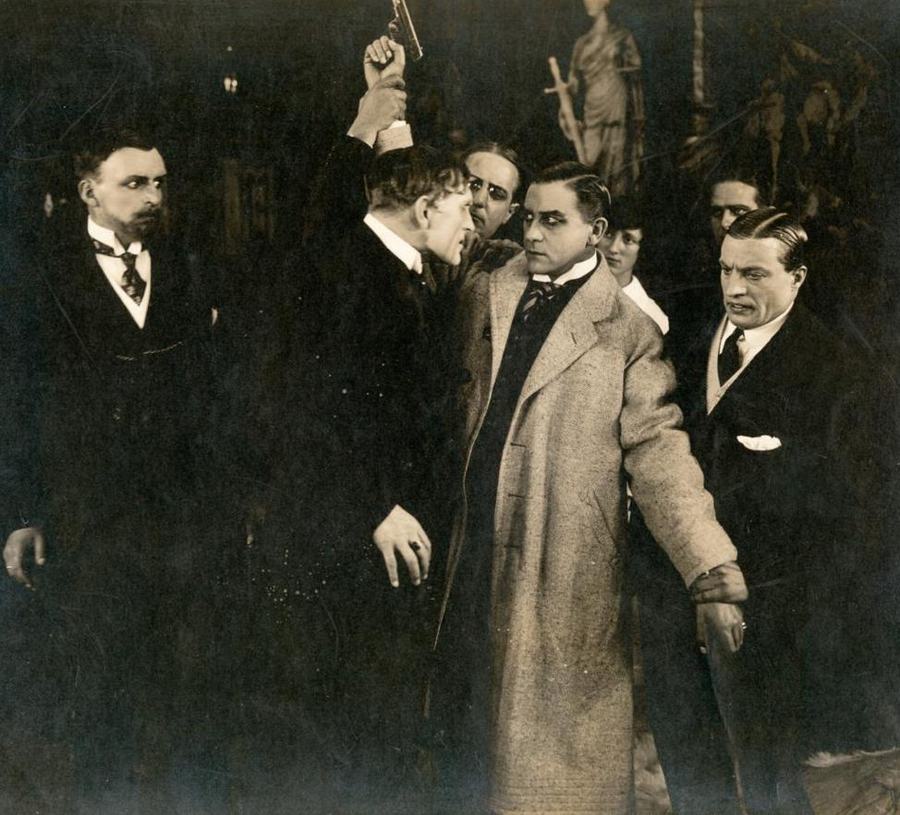
Richard Kirsch, as the enigmatic Mr. Silas Thorne, completes this quartet of compelling characters. Thorne is the embodiment of corporate greed and clandestine manipulation, a figure who lurks in the shadows, pulling strings and exploiting vulnerabilities. Kirsch's portrayal is understated yet menacing, conveying a sense of pervasive threat without resorting to overt villainy. He represents the external forces that seek to weaponize Albinus's invention, adding another layer of complexity to the film's exploration of power dynamics. The interplay between these four central figures forms a rich tapestry of human motivations, creating a narrative that is both intellectually stimulating and emotionally engaging. The film's brilliance lies in its ability to present these diverse perspectives, allowing the audience to ponder the multifaceted nature of good and evil.
'Das wandernde Auge' is a testament to the power of early cinema to explore complex ideas. The film's narrative structure, though silent, is remarkably sophisticated, building suspense through visual storytelling and the careful juxtaposition of scenes. The pacing is deliberate, allowing the audience to absorb the gravity of each revelation, yet it never drags, maintaining a constant undercurrent of tension. The use of close-ups to convey emotion, particularly in Peer's portrayal of Albinus's despair and Kanitz's expressions of cunning, is particularly effective, demonstrating a mastery of cinematic language that was still in its infancy. This meticulous approach to storytelling ensures that the film's weighty themes are communicated with clarity and impact.
One cannot discuss 'Das wandernde Auge' without acknowledging its profound contribution to the nascent genre of science fiction and social commentary. Long before the term 'Big Brother' entered the lexicon, Kahn and Klodnicki envisioned a world where privacy could be shattered by a single technological breakthrough. This foresight is startling. While films like Life Without Soul (1915) delved into the creation of artificial life, 'Das wandernde Auge' tackled the equally terrifying prospect of human observation at an unprecedented scale. It's a precursor to countless thrillers and dramas that would later explore similar themes, from the Cold War paranoia of the mid-20th century to the digital surveillance concerns of today. Its influence, though perhaps not overtly acknowledged in every subsequent work, is undeniably present in the very fabric of how we perceive technology's double-edged sword.
The cinematography, though limited by the technology of its time, is remarkably evocative. The film employs stark contrasts between light and shadow to underscore its thematic elements. The dimly lit laboratories of Albinus, initially spaces of intellectual purity, gradually become claustrophobic chambers of moral compromise. The bustling cityscapes, captured with a raw authenticity, provide a backdrop against which the silent drama unfolds, emphasizing the vulnerability of individuals within a vast, indifferent metropolis. The visual motif of the 'wandering eye' itself, often represented by the camera's omniscient gaze, becomes a character in its own right, a constant, unsettling presence that permeates every frame. This visual language is crucial in conveying the film's sense of pervasive unease and the erosion of personal space.
The set design, while perhaps not as elaborate as later German Expressionist works, is functional and atmospheric. Albinus's laboratory, filled with intricate contraptions and glowing dials, effectively conveys the cutting-edge nature of his research. The opulent interiors of the city's elite, contrasted with the more modest surroundings of Leo, subtly highlight the societal divides that Elara exploits through her surveillance. Each setting is carefully chosen to enhance the narrative, creating a believable world in which these extraordinary events can unfold. The attention to detail in these visual elements ensures that the audience remains fully immersed in the film's compelling universe.
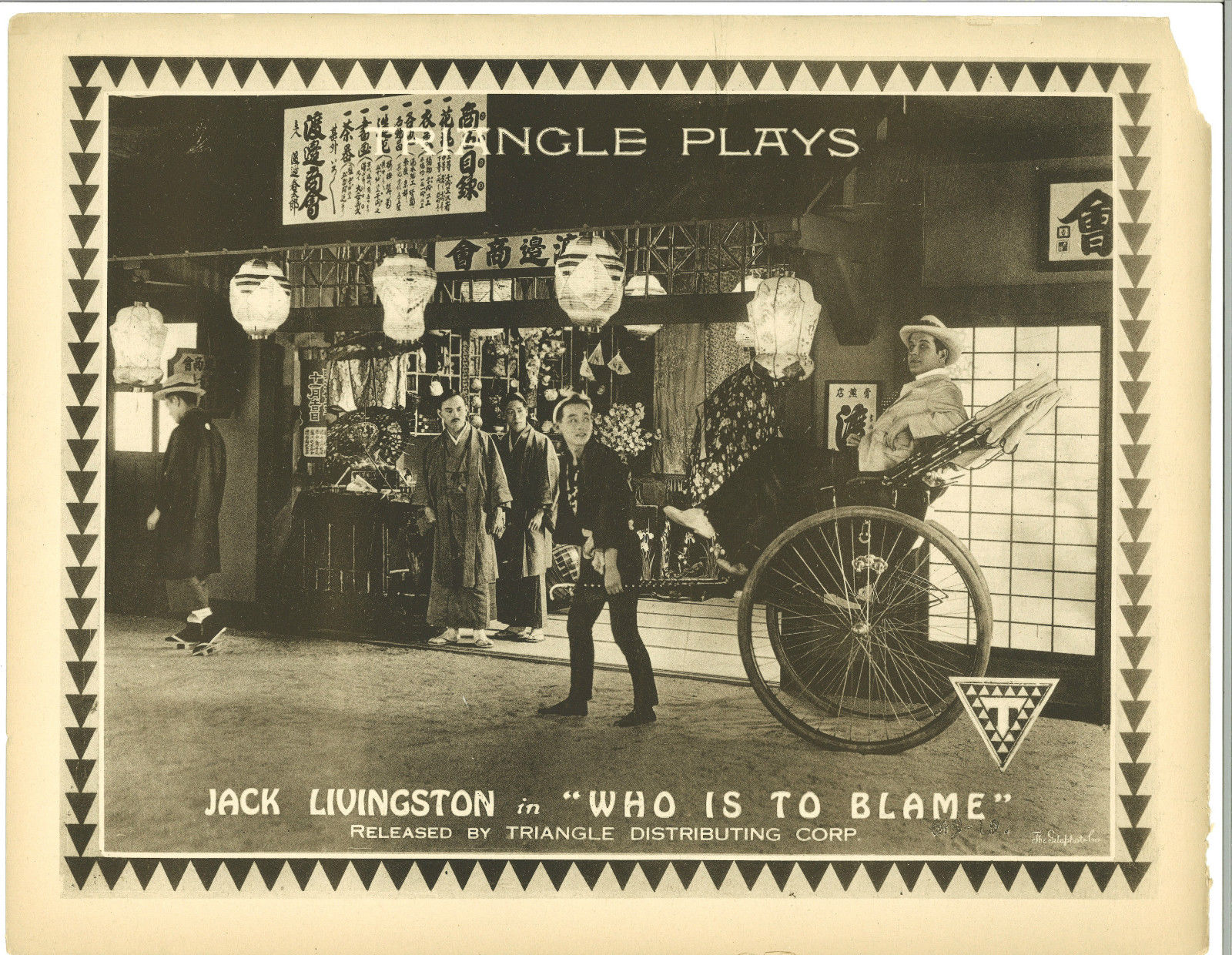
When considering 'Das wandernde Auge' within the broader context of early cinema, its unique position becomes even clearer. While films like Sylvi (1913) and Kampen om barnet (1913) explored domestic dramas and social issues with considerable depth, they rarely ventured into the speculative, ethical territory that Kahn and Klodnicki so boldly embraced. The film's willingness to confront the darker side of human ingenuity sets it apart, positioning it as a more intellectually challenging piece than many of its contemporaries. Even the more action-oriented serials like The Hazards of Helen (1914), while thrilling, operated on a different narrative plane, focusing on immediate danger rather than philosophical dilemmas.
The film's exploration of moral corruption and the erosion of personal integrity finds echoes in later, more overt melodramas such as Oltre l'amore (1914) or Woman and Wife (1914), but 'Das wanderande Auge' distinguishes itself by grounding these personal failings in a technological context. It posits that the true villain isn't just human frailty, but the instruments we create that amplify our worst impulses. This distinction is crucial, transforming the film from a simple tale of good versus evil into a more nuanced examination of systemic vulnerabilities. The narrative doesn't just show bad people doing bad things; it shows how powerful tools can corrupt even the well-intentioned, and how easily they can be hijacked by the unscrupulous. This layered approach to villainy makes the film's message particularly potent and enduring.
Comparisons can also be drawn to films that delve into the psychological toll of ambition or societal pressure. While Leben heisst kämpfen (1914) or A vasgyáros (1914) might touch upon the struggles of individuals within rigid social structures, 'Das wandernde Auge' introduces a technological element that fundamentally alters the power dynamic. It's not just about class or personal conflict; it's about the very nature of perception and control. The film's unique blend of scientific speculation and social critique places it in a category all its own, demonstrating a remarkable intellectual courage for its time. It’s a film that asks profound questions, rather than simply presenting a dramatic resolution, inviting continued reflection long after the final frame.
'Das wandernde Auge' is more than just a historical artifact; it is a vital piece of cinematic history that continues to resonate with contemporary audiences. Its exploration of surveillance, privacy, and the ethical responsibility of technological advancement remains profoundly relevant in an age dominated by digital footprints and omnipresent cameras. The film serves as a cautionary tale, a stark reminder that the tools we create can just as easily enslave us as they can liberate us. The silent era, often dismissed as simplistic, here proves its capacity for profound social commentary, delivered with an artistry that transcends the limitations of its medium. It's a film that demands to be seen, studied, and discussed, not merely as a relic, but as a living, breathing commentary on the eternal dance between human ambition and ethical boundaries.
The genius of Kahn and Klodnicki lies in their ability to craft a narrative that, despite its fantastical premise, feels grounded in a very real human fear: the fear of being watched, judged, and ultimately controlled. The performances, particularly by Peer and Kanitz, elevate the material beyond mere melodrama, imbuing their characters with a complexity that allows for multiple interpretations. The film's visual style, its deliberate pacing, and its unwavering commitment to its central themes all contribute to a cinematic experience that is both intellectually stimulating and emotionally gripping. It challenges us to consider our own relationship with technology, asking whether we are its masters or its unwitting servants. In a world increasingly defined by the gaze of the 'wandering eye,' this film remains an indispensable guide, a prescient warning from the past that speaks volumes to our present and future.
Even when compared to other genre-bending works of the era, such as the romantic intrigue of Hearts and the Highway (1915) or the period drama of The Incomparable Mistress Bellairs (1914), 'Das wandernde Auge' carves out a unique niche. It doesn't rely on historical spectacle or grand romantic gestures; instead, it delves into the more subtle, yet equally profound, drama of ideas. This intellectual rigor is what gives the film its lasting power and ensures its place as a significant, albeit often overlooked, achievement in early cinema. It's a film that proves that even without spoken dialogue, the most complex and pressing questions of humanity can be powerfully articulated through the universal language of film.
The film's conclusion, though perhaps open to interpretation, leaves the audience with a profound sense of unease. There are no easy answers, no simple resolutions. Instead, we are left to ponder the fragility of privacy and the ever-present threat of technological overreach. This ambiguity is one of the film's greatest strengths, forcing viewers to confront the uncomfortable realities it presents. It encourages introspection, prompting us to question the societal structures that allow such power to accumulate and be abused. 'Das wandernde Auge' is not just a film about a specific invention; it is a timeless meditation on the delicate balance between progress and peril, a cinematic echo that continues to reverberate through the annals of time, urging us to remain vigilant against the unblinking gaze.
IMDb —
1917
Community
Log in to comment.