DbcultAccessing Vault...
6.1/10
Senior Film Conservator
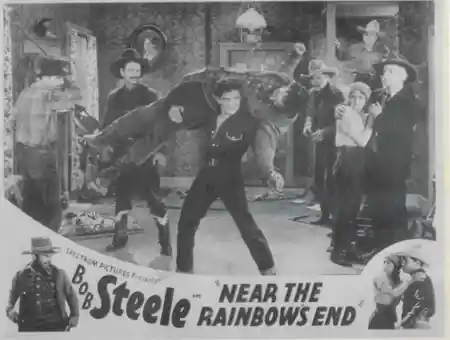
A definitive 6.1/10 rating for a film that redefined the boundaries of cult cinema. Near the Rainbow's End remains a cornerstone of transgressive art.
Okay, so this one, Near the Rainbow's End, it's very much of its time. If you're not already into old Westerns from the early sound era, the kind where the good guys wear light hats and the bad guys twirl their mustaches, then this might be a tough sit. But for folks who enjoy seeing these old stories play out, it's a pretty straightforward ride. Everyone else? You'll probably be checking your watch, wondering when someone's going to invent color film. 🤠
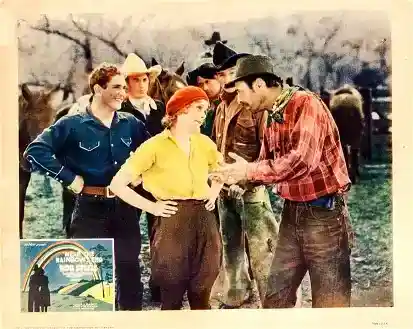
The basic setup is classic: good ol' cattleman Tom Bledsoe (played by Bob Steele) against Wilson, who's a sheep man, and his shady partner Rankins. Right off the bat, you just *know* Rankins is trouble. He's got that sort of sneering look, all shifty eyes.
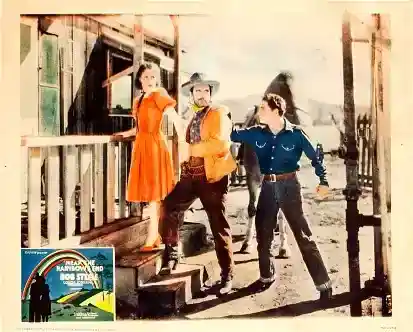
Wilson, played by Lafe McKee, seems like a decent enough fellow. He's got this honest face, you can tell he's just trying to make a living, even if his sheep are annoying the cattle folks. When he balks at Rankins' dirtbag schemes, well, it goes exactly how you expect. Rankins just offs him, then blames poor Tom Bledsoe. Standard villain playbook stuff, really.
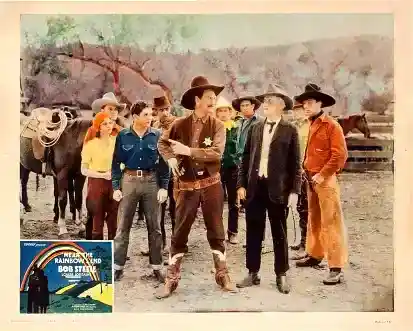
But hey, there's a witness! Someone saw the whole thing, which means our hero has a way out, eventually. You spend a good chunk of the movie just waiting for that shoe to drop.
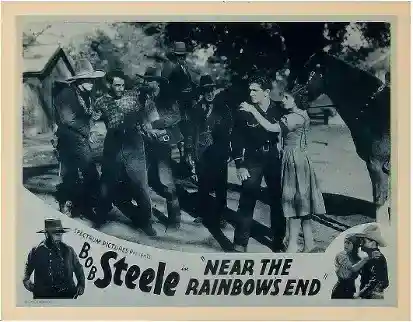
You can really tell they're working with what they have. One moment, a close-up on a face, then a wide shot where the landscape feels almost too big for the tiny figures in it. The sound, too. It's got that old crackle. Makes you feel like you're really watching history unfold, slightly imperfectly. It's endearing.
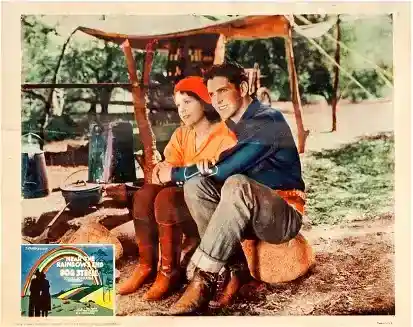
The pacing is pretty brisk, for a film of this era. They don't waste a lot of time on deep character studies. It's more about moving the plot from 'innocent man framed' to 'innocent man clears his name.' The side characters, like the sheriff played by Al Ferguson, are mostly there to react or chase after somebody.
One little thing I noticed: the way some of the actors deliver their lines. It's very… direct. Like they're reading it straight off the page for the first time. It adds to the raw, unpolished charm. Makes it feel less like a performance and more like a document.
It's not going to win any awards for originality, even for 1930. But for a quick dip into classic Western tropes, with a clear line between good and evil, it gets the job done. It's a reminder of how these stories were built, piece by simple piece. Don't expect fireworks, but you get a decent horseback chase or two. And a clear ending. You know, the kind where the bad guy gets what's coming to him. Always satisfying. ✨
If you've seen other early Westerns like The Smilin' Kid or The Indians Are Coming, you'll know exactly what you're getting into here. It's that familiar comfort food for old movie buffs.
IMDb —
1919
Community
Log in to comment.