DbcultAccessing Vault...
Cult Review
Senior Film Conservator
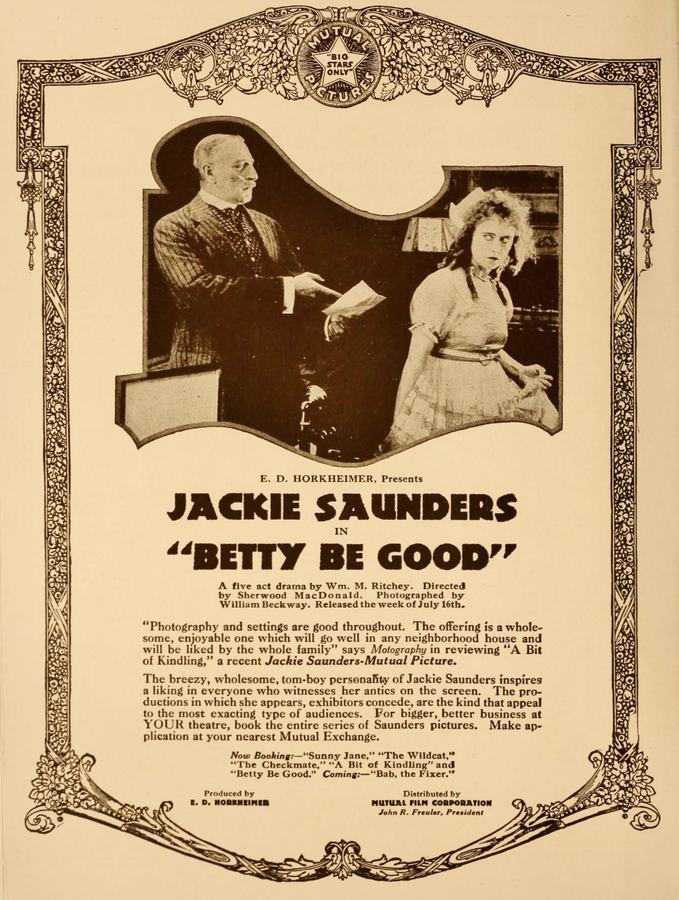
The silent era, a crucible of cinematic experimentation and nascent storytelling, often yielded treasures that, despite their age, resonate with an endearing simplicity and surprising depth. Among these, Will M. Ritchey's 'Betty Be Good' emerges as a vibrant testament to the period's capacity for crafting narratives that blend effervescent romance with societal critique. This 1917 production, starring the charismatic Jackie Saunders as the titular Betty, is more than a mere historical curiosity; it is a lively exploration of youthful rebellion, the intricate dance of class and politics, and the enduring power of love to bridge seemingly insurmountable divides. Its narrative, while adhering to certain conventions of the time, unfurls with a refreshing energy, inviting audiences to delight in its playful mischief and earnest sentiment.
At its heart, the film is a character study of Betty Brownlee, a young woman whose vivacious spirit and mischievous inclination are a constant source of both exasperation and reluctant affection for her retired capitalist father, Jonathan. Betty is no shrinking violet; she is a force of nature, a 'tomboy' as the film's synopsis describes her, who chafes under the strictures of her privileged upbringing. Her pranks are not malicious but rather expressions of a boundless energy and a yearning for agency in a world that often sought to confine women to more docile roles. Jackie Saunders imbues Betty with an infectious charm, her expressive eyes and animated gestures conveying a wealth of emotion without the need for spoken dialogue. Saunders’ performance is a masterclass in silent film acting, her every movement articulating Betty’s rebellious heart and underlying sweetness. She embodies the spirit of a woman determined to forge her own path, even if that path is paved with minor infractions and a healthy disregard for patriarchal authority.
Betty’s character is particularly compelling when viewed through the lens of early 20th-century feminism. While not overtly political, her defiance of her father’s constant refrain of "Betty Be Good" speaks volumes about a burgeoning desire for female independence. She is a precursor to the flappers of the roaring twenties, a young woman pushing against the boundaries of expectation. Her weariness of being lectured on her 'tomboy achievements' is a subtle but potent statement, highlighting the societal pressure on women to conform. This spirit of playful defiance sets her apart and makes her an instantly engaging protagonist. Her actions, though impulsive, are driven by a desire for excitement and a rejection of the mundane, a sentiment that resonates even today. One might draw a faint parallel to the rebellious spirit seen in characters from films like Gloriana, where strong female leads often navigate societal constraints with a certain verve and determination, though 'Betty Be Good' leans more into comedic escapism than dramatic social commentary.
Beyond Betty's personal journey, the film weaves a fascinating tapestry of political intrigue. Jonathan Brownlee, portrayed by Albert Ellis with a blend of paternal exasperation and business acumen, finds himself embroiled in a bitter political feud with Mayor Peter Madison (Leslie T. Peacocke). This rivalry forms the backdrop against which Betty's escapades unfold, creating a fertile ground for dramatic irony and romantic entanglement. Brownlee’s conviction of the mayor’s 'crookedness' fuels his quest for incriminating evidence, a quest that inadvertently becomes entwined with his daughter’s frolics. This political dimension, while not as deeply explored as the romantic one, adds a layer of complexity to the narrative, reflecting the societal anxieties and power struggles of the era.
Enter Jimmy Madison, the mayor’s son, played by Arthur Shirley. Jimmy is not merely a romantic lead; he is an embodiment of civic duty and moral rectitude, albeit in a disguised form. His decision to masquerade as a uniformed policeman to expose grafters within the force is a classic trope of the period, one that allows for both dramatic tension and comedic misunderstanding. Shirley portrays Jimmy with a quiet dignity and a burgeoning sense of purpose, making his undercover mission believable and his eventual connection with Betty all the more compelling. The irony of Jimmy arresting Betty, entirely unaware of her identity or her familial connection to his father's political rival, is a stroke of narrative genius that elevates the film beyond a simple romantic comedy. This 'mistaken identity' device, while common in early cinema, is executed with particular charm here, fostering the perfect conditions for an unexpected romance to blossom.
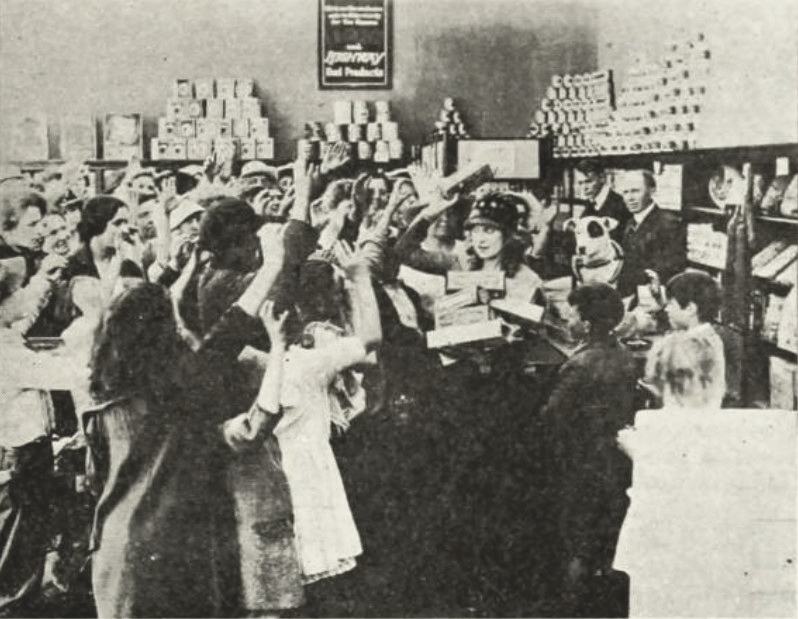
The pivotal moment arrives when Betty, in one of her impulsive jaunts, drives off with her father's car, unknowingly carrying the very documents Brownlee believes will expose Mayor Madison. Jimmy's subsequent arrest of Betty for 'stealing' the car and the papers sets the stage for their burgeoning romance. The initial antagonism, born of circumstance and misunderstanding, quickly melts into mutual attraction. The chemistry between Saunders and Shirley is palpable, conveyed through nuanced glances and subtle physical interactions that speak volumes without a single intertitle. Their falling in love, despite the immediate circumstances of her arrest and their families' political enmity, is portrayed with a delightful sincerity that is a hallmark of successful silent-era romance. It's a testament to the power of human connection transcending artificial barriers, a theme that remains perennially appealing.
The narrative arc skillfully navigates the dual threads of political intrigue and personal romance. The resolution of the political conflict – Brownlee’s suspicions being unfounded and the two patriarchs eventually shaking hands – is handled with an efficient elegance. It underscores a message of reconciliation and the triumph of truth, while simultaneously clearing the path for Jimmy to reveal his true identity to Betty. This denouement is satisfying, tying up the various plot strands neatly and delivering the promised happy ending. The film avoids lingering on the darker aspects of political corruption, choosing instead to focus on the lighter, more optimistic resolution, a characteristic often found in the feel-good cinema of its time, much like the charming simplicity of Chimmie Fadden Out West, which similarly prioritizes character-driven warmth over complex societal critiques.
Will M. Ritchey’s direction is marked by a clear understanding of silent film grammar. The pacing is brisk, the camera work functional yet effective, ensuring the narrative flows smoothly and maintains audience engagement. The use of intertitles is judicious, providing necessary exposition and dialogue without overwhelming the visual storytelling. The film’s production design, while not extravagant, effectively conveys the setting of a prosperous early 20th-century household and the bustling city. The car chase sequences, though rudimentary by modern standards, would have offered a thrill to contemporary audiences, showcasing the burgeoning excitement of cinematic motion. The entire ensemble cast, including Mollie McConnell and Mignon Le Brun in supporting roles, contributes to the film's vibrant atmosphere, each actor playing their part with conviction and contributing to the overall comedic and dramatic texture.
One cannot discuss 'Betty Be Good' without acknowledging its place within the broader context of silent cinema. It represents a particular brand of filmmaking that prioritized entertainment, moral uplift, and accessible narratives. While it may not possess the grandiosity of epics like East Lynne or the stark dramatic intensity of some European imports, its strength lies in its unpretentious charm and its ability to deliver a heartwarming story. It’s a film that, despite its age, feels remarkably fresh in its depiction of youthful exuberance and the often-comical misunderstandings that can arise from societal expectations and hidden identities. The underlying optimism and belief in eventual harmony, even amidst conflict, is a pervasive theme, not unlike the redemptive arcs found in films such as The Actress' Redemption, though 'Betty Be Good' approaches it with a lighter, more comedic touch.
In conclusion, 'Betty Be Good' is a delightful exemplar of silent-era romantic comedy, skillfully blending elements of farce, political minor intrigue, and genuine affection. Its enduring appeal lies in its spirited protagonist, the engaging performances of its lead actors, and its charmingly optimistic narrative. It serves as a reminder that even in the nascent days of cinema, filmmakers were adept at crafting stories that captured the human spirit in all its mischievous, romantic, and ultimately hopeful forms. It is a film that invites us to smile, to believe in the power of true love, and to appreciate the simple joy of a well-told story. For enthusiasts of early cinema, or anyone seeking a dose of unadulterated cinematic charm, 'Betty Be Good' remains a compelling watch, offering a window into a bygone era of storytelling that still manages to captivate and entertain with its timeless themes and energetic execution. It’s a subtle yet significant piece within the mosaic of early American cinema, affirming the universal appeal of a good-hearted romp with a satisfyingly romantic conclusion. The film's ability to transcend its period limitations and deliver a coherent, emotionally resonant experience is a testament to the fundamental principles of storytelling that continue to guide cinema today. It’s a joyous cinematic artifact, celebrating freedom, love, and the delightful chaos that often accompanies both.
IMDb 6.6
1936
Community
Log in to comment.