DbcultAccessing Vault...
Cult Review
Senior Film Conservator
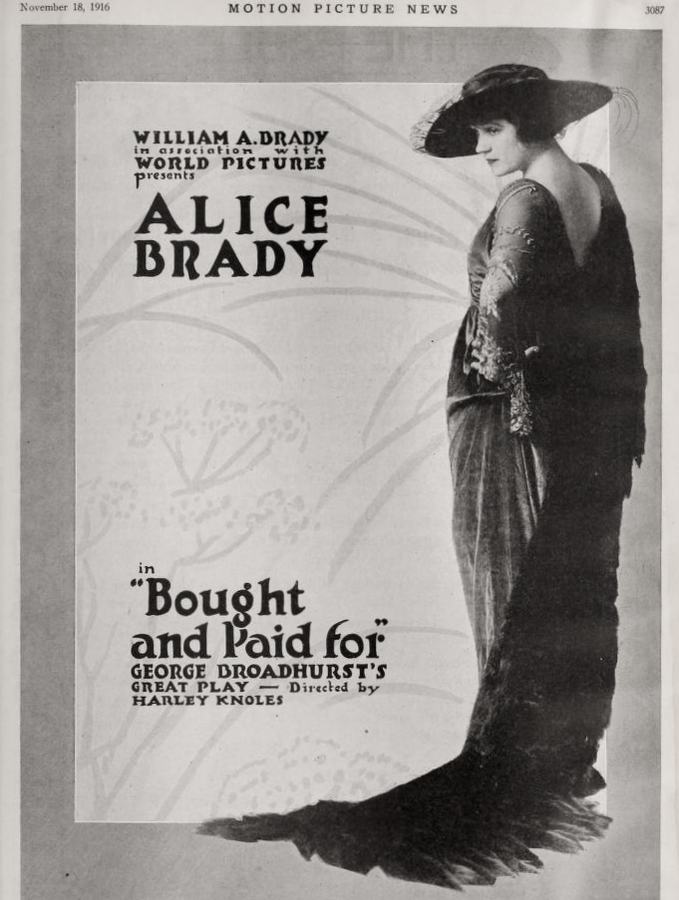
A wordless scream echoes louder than a thousand talkie tirades in this 1922 pearl, now so scarce that even archivists trade rumors like contraband cigarettes.
Picture Manhattan as a colossal cash register: every skyscraper a chrome key, every tenement a sprung spring. Into this clanging apparatus steps Virginia, played by Alice Brady with the brittle radiance of a chandelier one swing away from shatter. She is introduced counting house-lights instead of footlights, measuring applause in carats. Marriage, for her, is not sacrament but merger; the altar, a mahogany conference table.
Robert—Montagu Love channeling every Wall Street satyr who ever vomited on a polo field—offers a dowry of ennui and ethanol. His sobriety is a silk veil; his intoxication, the iron anvil beneath. When he cups Virginia’s face, the gesture feels less like tenderness than like a man appraising the glaze on a freshly acquired Ming vase.
Frances Marion’s intertitles—whip-smart, diamond-cut—flash like semaphore from a sinking ship: “You wanted a palace. I never promised it wouldn’t be gilded in handcuffs.” Each card lands with the sting of a broker’s stamp on pink paper.
Mid-film, Virginia’s escape unfurls in a montage worthy of the later, more flamboyant Love Never Dies yet grounded in prosaic dread: a train whistle, a suitcase clasp, the sudden hush of a corridor with only her footprints in the pile. The camera doesn’t chase her; it lingers on Robert’s polished floor reflecting an empty glass that topples in slow motion—capital’s last slow-motion toast.
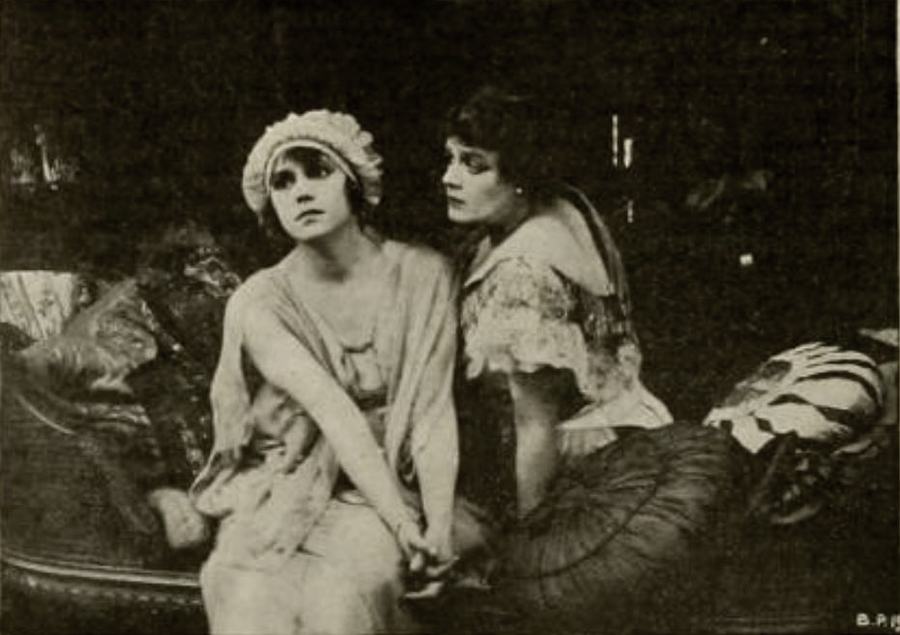
Brady’s Virginia oscillates between porcelain poise and hairline fractures visible only in extreme close-up, a precursor to the micro-expressions essayed in The Unknown. She calculates every smile’s ROI, letting dimples depreciate only when off-duty from matrimony. Montagu Love, by contrast, inflates like a bullfrog in a gin-cup, his shoulders expanding to fill negative space the way monopolies swallow competition. Note the scene where he slurs “You’re bought and paid for”: the word for detonates like a bad check, its echo bouncing off panelled walls.
Frank Conlan’s meddling brother-in-law is less Cupid than commodities trader, arranging emotional arbitrage. Conlan’s eyes carry the weary twinkle of a man who has seen every ledger cooked yet still bets on love’s long odds—a spiritual cousin to the gambler in Hell’s Hinges, only wearing spats instead of spurs.
Director George Broadhurst, better known for boulevard comedies, here adopts expressionist shadows like a banker slipping into a speakeasy. Note the repeated motif of doorknobs: brass globes that gleam like oversized coins, deciding who may exit the vault of matrimony. Virginia’s boudoir is a nest of zebra stripes—each stripe a bar, each bar a clause in an invisible prenup. When she finally slams that door, the screen irises in a perfect zero, a coin-slot closing on a spent nickel.
Compare this domestic prison to the swampy fatalism of Dust or the continental decadence of Jeanne Doré; the claustrophobia here is metropolitan, all chrome and contract, not vines and quicksand.
Because the film is silent, the creak of wealth must be implied: the wet clack of a champagne cork, the hush of a butler’s gloves, the faint scratch of a fountain pen murdering freedom. Contemporary audiences reportedly smelled the new bills Robert flashes—studio ushers spritzed atomized glycerin and ink to perfume the air. Such gimmicks feel less P.T. Barnum and more Gesamtkunstwerk, predating the olfactory experiments of Half a Hero by three decades.
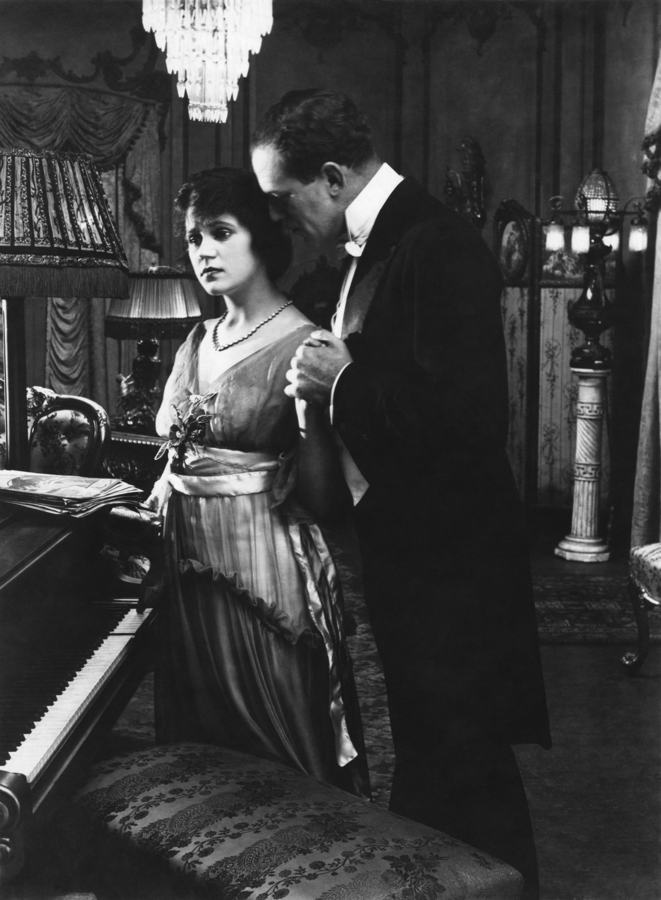
What singes the screen is the film’s inversion: usually the patriarch buys, the woman sells; here Virginia initiates the transaction yet still drowns in the fine print. Her tragedy is liquidity—she can cash out but never cash in on herself. The screenplay, adapted by Marion from Broadhurst’s stage hit, trims the original’s moralistic epilogue; instead, it leaves Virginia stranded between solvency and soul, a limbo more chilling than any hymn.
Critics of the era, high on post-war modernity, hailed the plot as “a ticker-tape divorce.” Yet a hundred years later, with marriage markets digitized into swipe-right portfolios, the film feels prophetic. Every OnlyFans subscription, every hypergamy meme, reenacts its core transaction: affection bundled, securitized, then short-sold at the first hiccup of toxicity.
Like so many silents, entire reels vanished in the 1957 Fox vault fire, leaving only a 47-minute MoMA print that jitters like a junkie. The climax—reportedly a rain-soaked pier reconciliation—survives only in a glass-slide lobby card: Virginia and Robert silhouetted against a lighthouse beam, their clasped hands forming an inadvertent stock-ticker’s upward arrow. Historians debate whether the missing footage softened the story’s Marxist bite or sharpened it to a shiv. Either way, absence becomes aesthetic, a lacuna where viewers project their own unpaid emotional overtime.
Modern festivals commission new accompaniments: toy pianos, detuned banjos, glitch-hop loops. The best—by Serbian composer Ana Đurić—uses contact-miked credit card swipes as percussion, each swipe syncing with Robert’s slaps of ownership. When Virginia finally speaks the intertitle “I return your ring—and your receipts,” the score erupts into a cacophony of declined-payment beeps, the sound of insolvency made anthem.
Place Bought and Paid For beside The Supreme Temptation and you see two flirtations with moral bankruptcy; pair it with The Concealed Truth for contrasting studies in feminine duplicity. Only Frou Frou matches its froth-to-fang ratio, though that film chooses lace where this one brandishes ledgers.
The picture survives as both artifact and indictment. Its scratches are scars; its missing frames, ghosts of deleted clauses. To watch it is to audit your own contracts of affection, to ask who holds your marker, who comps your drinks, who collects when the music stops. In an age where algorithms auction our attention before breakfast, Bought and Paid For whispers that every heart has a price—yet the tragedy begins the moment we let someone else set it.
Verdict: 9/10—A priceless relic of cinema’s first great stock-market crash of the soul.
IMDb —
1926
Community
Log in to comment.