DbcultAccessing Vault...
Cult Review
Senior Film Conservator
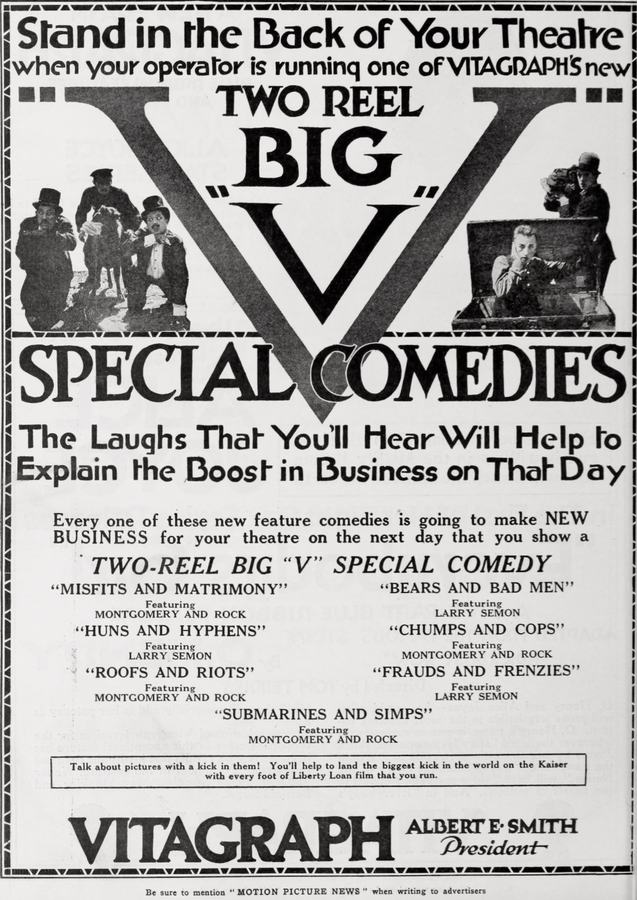
In the vibrant tapestry of early 20th-century cinema, where narrative conventions were still coalescing and the very language of film was being invented, silent comedies often served as laboratories for physical humor and escalating absurdity. Among these, Earl Montgomery and Joe Rock's collaborative effort, 'Chumps and Cops', stands as a fascinating exemplar of the era's boundless energy and inventive spirit. Far from a mere relic, this film offers a spirited romp through the burgeoning world of Hollywood, underpinned by a relentless pursuit of both romantic conquest and professional recognition, all filtered through a lens of delightful, often chaotic, slapstick.
The narrative of 'Chumps and Cops' commences with a quintessential silent-era tableau: a bustling beach, replete with bathers, sun-seekers, and the inevitable spark of nascent romance. Here, we are introduced to our two protagonists, Monty and Rock, portrayed by the film's own writers and stars, Earl Montgomery and Joe Rock, respectively. Their initial dynamic is immediately established as one of congenial rivalry, a friendly competition that quickly escalates when their affections simultaneously alight upon a single, captivating young woman. This seemingly innocuous romantic triangle becomes the catalyst for the entire ensuing escapade, demonstrating how even the simplest human desires could ignite the most elaborate cinematic chaos in the hands of skilled comedic craftsmen. The initial skirmishes, likely involving exaggerated gestures and comical near-misses, lay the groundwork for the physical comedy that will define their journey.
Desperate to resolve their amorous impasse, Monty and Rock make the fateful decision to seek arbitration, turning to a figure emblematic of the era's burgeoning entertainment industry: a movie press agent. This character, a master of manipulation and public image, immediately injects a layer of cynical realism into the otherwise lighthearted proceedings. Rather than offering genuine assistance, he swiftly asserts a proprietary claim over the object of their affection, revealing her not as an independent individual, but as a contracted asset of his film company. This moment deftly satirizes the commodification of talent and beauty within the nascent star system, a theme that, even today, resonates with surprising acuity. It's a sharp, unvarnished glimpse into the business behind the glamour, contrasting sharply with the earnest, if misguided, romanticism of our heroes. The girl, reduced to a pawn in a larger game, underscores the often-unseen power dynamics at play in the industry.
The press agent, ever the opportunist, then ensnares Monty and Rock in an even more ludicrous scheme: appointing them as judges for the local baby parade, a major social event designed to captivate the public imagination. His ulterior motive is clear: he dictates precisely which infant should be awarded the prize, irrespective of merit or popular sentiment. This sequence is a masterclass in situational irony and comedic subversion of authority. Our protagonists, already out of their depth in matters of the heart, are now thrust into a position of public responsibility, only to be forced into an act of blatant corruption. The ensuing scene at the parade, undoubtedly a spectacle of adorable infants and proud parents, quickly devolves into chaos when Monty and Rock, following their instructions, award the prize to the agent's chosen baby, much to the chagrin of the crowd and in direct defiance of the public's clear favorite. This act of judicial malfeasance ignites a furious pursuit, transforming the festive parade into a frantic chase sequence, a hallmark of silent comedy. The escalating pandemonium, with the enraged populace hot on their heels, highlights the thin line between public adoration and public outrage, a delicate balance often exploited for comedic effect in films like Some Cave Man, where primal instincts often dictate social interactions, albeit in a more literal sense.
In their desperate flight from the indignant crowd, Monty and Rock eventually confront the press agent and the actress once more, still clinging to the hope of a romantic resolution. Their earnest query – 'Who wins the girl?' – is met with a devastatingly cynical reply. The agent, with a flourish that underscores his ultimate power, declares that the girl is to be handed over to a policeman. This twist, while comedic in its abruptness and anti-climactic nature for our heroes, serves as a poignant, if lighthearted, comment on fate, authority, and the often-unpredictable outcomes of romantic pursuits in the face of external forces. It’s a moment designed to deflate the protagonists' aspirations entirely, forcing them to re-evaluate their strategies. The girl, once a prize, is now an administrative transfer, showcasing the inherent absurdity that often underpins the human condition in these comedies. This moment of defeat, however, is not the end, but rather a pivot point, redirecting their energies from romantic pursuit to professional infiltration.
Undeterred by their romantic setback and the ongoing threat of public retribution, Monty and Rock pivot their focus, setting their sights on the very movie company that now employs their erstwhile love interest. Their new objective: to gain entry and, perhaps, make their mark. This shift initiates a hilarious series of attempts at infiltration, each one relying on increasingly elaborate and transparent disguises. The comedic genius here lies in the persistent failure of their efforts, despite their often-earnest execution. They are repeatedly barred, their flimsy veneers of respectability or authority easily seen through by vigilant studio personnel. This repetitive gag, a staple of silent comedy, builds humor through rhythm and escalation. We witness their creative, if ultimately flawed, attempts to circumvent obstacles, showcasing their resourcefulness even in the face of repeated defeat. The audience delights in anticipating their next, inevitably doomed, disguise, and the ensuing visual gags as they are unceremoniously ejected. This relentless pursuit of entry, mirroring the tenacity of characters in films like My Partner who are driven by a singular goal, albeit with vastly different stakes and outcomes.
A brief respite from their failed infiltration attempts comes when they overhear a director calling for two messengers. Seizing the opportunity, Monty and Rock quickly don yet another set of disguises, only to arrive, predictably, too late. This near-miss further emphasizes their plight as perpetually unlucky but persistently hopeful protagonists. However, fate, in its own comedic fashion, intervenes. They intercept a telegram, and in a moment of audacious curiosity (or perhaps desperation), they read its contents, discovering that two French comedians are being detained. This revelation sparks their most ambitious and ultimately successful impersonation yet. Donning appropriate attire and adopting exaggerated foreign mannerisms, they arrive at the studio, where they are, for the first time, greeted with genuine ceremony and deference. This sequence is a comedic high point, as the duo basks in undeserved adulation, their charade teetering on the brink of exposure. The humor derives from the audience's privileged knowledge of their deception, creating a delicious tension as we await the inevitable reveal. The juxtaposition of their previous failures with this sudden, albeit temporary, success is a testament to the film's clever plotting and understanding of comedic pacing.
The comedic climax arrives with the untimely, yet perfectly timed, appearance of the two real French actors. The meticulously crafted charade of Monty and Rock shatters instantly, plunging the studio into utter confusion. This moment triggers a glorious, extended sequence of chasing, a hallmark of silent-era physical comedy. Our protagonists, now exposed, employ every trick in the book – and invent a few new ones – to elude their furious pursuers. This is where the physical prowess and comedic timing of Montgomery and Rock truly shine. Their repertoire of jumps, tumbles, evasions, and acrobatic maneuvers transforms the studio into a playground of kinetic energy. The chase is not merely a means to an end; it is the comedy itself, a ballet of controlled chaos that showcases their mastery of visual gags and slapstick. It’s a scene that exemplifies the unbridled joy and ingenuity of silent film, where narrative often took a backseat to the sheer spectacle of physical performance. The relentless pace and inventive escapes are reminiscent of the high-energy sequences found in other classic silent films, though 'Chumps and Cops' manages to infuse its chase with a unique blend of desperation and playful defiance.
In a delightful twist of poetic justice, the very spectacle of their desperate evasion inadvertently becomes their salvation. Amidst the pandemonium, a discerning studio manager observes their spontaneous, unbridled physical wit, recognizing not mere chaos, but raw comedic talent. What began as a pursuit born of romantic rivalry and escalated into a series of failed deceptions culminates in an unexpected professional opportunity. The manager, impressed by their agility, timing, and inherent knack for physical comedy, offers them a contract to act in comedies. This resolution is both ironic and deeply satisfying. Monty and Rock, who had so desperately tried to infiltrate the industry through guile and subterfuge, finally achieve their goal not through their schemes, but through the genuine, if accidental, demonstration of their innate abilities. Their acceptance of the contract marks a triumphant, albeit circuitous, entry into the very world that had so vexingly eluded them. It’s a classic comedic arc: the bumbling protagonists, through a series of misadventures, stumble into success, proving that sometimes, the most authentic path to achievement is found not in careful planning, but in embracing the chaos of the moment. This narrative journey, while lighthearted, offers a playful commentary on the unpredictable nature of success and the often-serendipitous path to discovering one's true calling, a stark contrast to the dramatic, often tragic, choices faced by characters in films like His Brother's Wife or Halálítélet.
'Chumps and Cops' is more than just a series of gags; it's a testament to the comedic partnership of Earl Montgomery and Joe Rock, who not only performed but also penned the screenplay. Their collaborative genius is evident in the film's intricate plotting, which, despite its inherent silliness, maintains a logical progression of escalating stakes and consequences. Montgomery and Rock possessed a unique synergy, each complementing the other's comedic style. Montgomery often played the more earnest, slightly dim-witted foil, while Rock exuded a more mischievous, resourceful energy. Together, they created a dynamic duo whose antics resonated with audiences of the time and continue to charm modern viewers. Their physical comedy, precise and well-executed, speaks volumes without the need for dialogue, relying entirely on exaggerated expressions, expertly timed falls, and ingenious visual gags. The film’s pacing, a crucial element in silent cinema, is relentless, propelling the audience from one outrageous situation to the next without a moment's pause. This relentless energy is a hallmark of the era's best comedies, ensuring that the audience remains captivated by the sheer spectacle of human folly and ingenuity.
In its essence, 'Chumps and Cops' is a joyous celebration of the silent film era's capacity for pure entertainment. It showcases the raw talent of its creators and stars, their ability to craft a compelling, humorous narrative without spoken words. The film's themes, though presented through a comedic lens, touch upon universal human experiences: the pursuit of love, the struggle for recognition, the allure of deception, and the unpredictable nature of fate. While some films of the period, such as Kildare of Storm or As Men Love, explored deeper dramatic territories, 'Chumps and Cops' firmly plants itself in the realm of unadulterated escapism, proving that laughter is indeed a timeless language. It's a delightful reminder of a bygone cinematic age, where ingenuity, physical prowess, and a healthy dose of slapstick were the bedrock of popular entertainment. The film serves as a valuable historical document, illustrating the techniques and tropes that defined the genre, and solidifying the place of Montgomery and Rock as significant, if sometimes overlooked, contributors to the legacy of silent comedy. Its enduring charm lies in its simplicity, its relentless energy, and its unwavering commitment to eliciting genuine, hearty laughter from its audience. It's a cinematic experience that transcends its historical context, offering a timeless glimpse into the heart of comedic artistry.

IMDb —
1914
Community
Log in to comment.