DbcultAccessing Vault...
Cult Review
Senior Film Conservator

The cinematic landscape of the early 20th century often grappled with grand themes, but few ventured into the abyss of human despair with the raw, unvarnished intensity of Neglected Women. This 1924 production, a collaboration between writers Alfred Sutro and Louis Stevens, transcends its seemingly straightforward plot to deliver a potent, if somewhat bleak, commentary on the destructive nature of obsession and the often-mocking hand of fate. It's a film that resonates not with overt melodrama, but with a quiet, creeping sense of dread that culminates in a truly gut-wrenching irony.
At its core lies the tragic figure of Major Finch, portrayed with a compelling, almost visceral intensity by Simeon Stuart. Stuart’s performance, particularly striking for the silent era, relies on a nuanced physicality and expressive facial work that conveys a man slowly but surely consumed by his singular, ruinous pursuit. We witness his transformation from a figure of perhaps misguided but earnest ambition to a gaunt, haunted shell, his eyes reflecting the desolate landscape he has chosen as his personal battleground. The arid stretches of India, with their unforgiving sun and endless horizons, are not merely a backdrop but an active participant in Finch’s psychological torment, mirroring the barrenness he perceives in his own endeavors. The imagery of a dry oil well becomes a powerful metaphor for his own draining spirit, his life force evaporating with each failed attempt to strike black gold.
The narrative, deftly crafted by Alfred Sutro and Louis Stevens, builds an almost unbearable tension. They understand that true tragedy isn't just about loss, but about the relentless, grinding process of losing hope. Finch’s desperate gamble isn't merely financial; it's an existential one. Every drill, every excavation, every expert opinion that confirms the well's aridity chips away at his very being, leaving him increasingly isolated in his delusion. This meticulous depiction of a man's descent into a self-made hell is where Neglected Women truly distinguishes itself. It eschews the broader, more sensationalist strokes often found in contemporary dramas, opting instead for a more internal, psychological horror.

The supporting cast, while not always central to Finch’s inner turmoil, provides crucial dimensions to the unfolding drama. Seena Owen, for instance, in her role, brings a certain pathos, perhaps embodying the 'neglected women' of the title – those whose lives are overshadowed or directly impacted by the obsessions of the men around them. Her presence, subtle yet significant, often serves as a counterpoint to Finch's escalating madness, a fragile tether to a world of reason and human connection that he progressively severs. Lawford Davidson, Hugh Dempster, and Thurston Hall, among others like Joan Morgan, Eva Moore, Cameron Carr, and Harvey Braban, contribute to the film’s atmosphere, portraying the various facets of colonial society, from skeptical colleagues to concerned family members, all helplessly observing Finch's inexorable slide. Their reactions, often conveyed through subtle gestures and expressions characteristic of the silent film era, amplify the tragedy, making Finch’s isolation even more pronounced.
The film’s climax is a masterclass in dramatic irony, a narrative device perfected in literature but rarely rendered with such devastating effectiveness on screen. Finch, utterly broken, having exhausted all resources and all hope, takes his own life in an act of ultimate despair. The immediate aftermath, however, reveals the earth's cruel joke: the oil, for which he sacrificed everything, finally gushes forth. This moment isn't just a plot twist; it’s a profound philosophical statement on the arbitrary nature of success and failure, and the tragic chasm between human perception and objective reality. It forces the audience to confront the futility of human striving when pitted against forces beyond our control, a theme echoed in other cinematic works that explore the fine line between genius and madness, or ambition and self-destruction.
In terms of its thematic resonance, Neglected Women can be fruitfully compared to other films of its era that delved into the darker corners of the human psyche. One might draw parallels with the intense psychological study present in The Wolf Man (1923), not in genre, but in its meticulous portrayal of a character grappling with an inner demon or a relentless, consuming force. Both films present protagonists pushed to their limits, their internal struggles externalized through their actions and circumstances. Similarly, the notion of a grand, perhaps misguided, scheme leading to personal ruin might evoke memories of The Misleading Lady or even The Man from Mexico, though those often lean into comedic or adventurous territory, whereas Neglected Women remains firmly rooted in stark tragedy. The profound psychological unraveling depicted in Neglected Women also resonates with the stark moral quandaries presented in films like The Evil Thereof or Her Reckoning, where characters grapple with the devastating consequences of their choices. Both narratives eschew simplistic morality, plunging into the murkier waters of human fallibility.
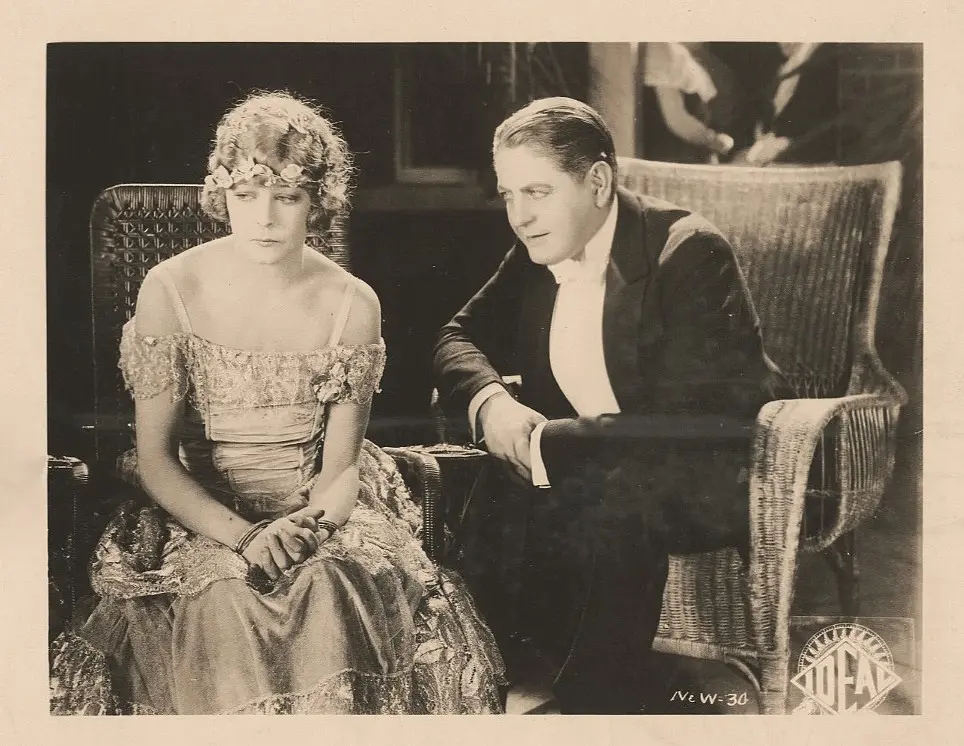
The film’s title itself, Neglected Women, adds another layer of interpretation. While Finch's story dominates, one could argue that the 'neglected women' are not just literal characters within the narrative whose needs and emotional well-being are overlooked by his obsession, but also a broader commentary on the societal costs of unchecked male ambition. The pursuit of wealth, power, or a singular vision often leaves a trail of collateral damage, and the film subtly hints at the silent suffering of those left in the shadow of such grand, ultimately self-destructive endeavors. This broader societal critique elevates the film beyond a mere character study, imbuing it with a lingering sense of social commentary that was often present in the more thoughtful productions of the silent era.
Visually, the film, under the guidance of its unnamed director (as was common in many early productions where writers and producers often held more public prominence), likely employed the nascent cinematic techniques of its time to convey atmosphere and emotion. The starkness of the Indian setting, the close-ups on Stuart’s anguished face, and the dramatic staging of the well itself would have been crucial in communicating the story without dialogue. The contrast between the initial hope and the eventual desolation would have been keenly felt through lighting and set design, emphasizing Finch’s isolation against the vast, indifferent landscape. One can imagine the visual impact of the final scene, the sudden eruption of oil, perhaps with a dramatic cut to Finch’s lifeless body, a powerful juxtaposition that would have left audiences stunned.
The enduring power of Neglected Women lies in its refusal to offer easy answers or comforting resolutions. It is a raw, unflinching look at the human condition, at the allure of a desperate gamble, and the profound tragedy that can arise when ambition blinds one to all else. The story of Major Finch serves as a cautionary fable, a stark reminder that sometimes, the greatest treasures are found not in the earth, but in the connections we foster and the sanity we preserve. Its impact, though perhaps understated in the grand tapestry of film history, remains significant for its fearless exploration of despair and its potent, ironic conclusion. It stands as a testament to the fact that even in an era often characterized by simpler narratives, filmmakers were capable of plumbing the depths of human experience with profound emotional intelligence. The film's psychological intensity and tragic denouement might find a thematic cousin in the explosive personal dramas seen in The Volcano, where internal pressures erupt with devastating consequences. Both films understand that the most destructive forces often reside within, building to a cataclysmic release.
Ultimately, Neglected Women is a cinematic artifact that deserves rediscovery, a poignant and powerful narrative that transcends its silent origins to speak volumes about the human spirit's capacity for both immense hope and devastating self-destruction. Its narrative economy, combined with its profound thematic depth, secures its place as a compelling, albeit somber, entry in the annals of early cinema. It’s a film that lingers in the mind, prompting reflection on the cruel whims of fortune and the often-unseen sacrifices made in the relentless pursuit of an elusive dream.

IMDb —
1927
Community
Log in to comment.