DbcultAccessing Vault...
Cult Review
Senior Film Conservator
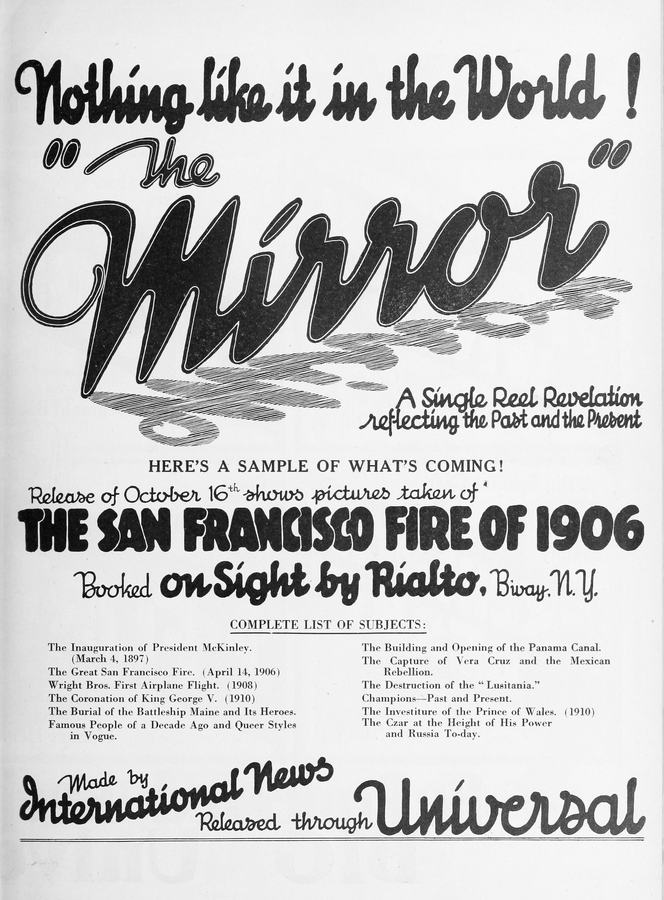
In the annals of early cinema, few works resonate with the raw, unvarnished power of historical documentation quite like "Mirror No. 2. San Francisco Fire." This isn't merely a film; it's a profound temporal artifact, a visual echo chamber that allows us to peer directly into the heart of one of America's most devastating urban catastrophes. It bypasses the theatrical pretense common to many of its contemporaries, opting instead for a stark, almost journalistic approach that, paradoxically, lends it an immense, enduring dramatic weight. The film begins not with a fade-in or a carefully constructed scene, but with the brutal immediacy of newspaper headlines from April 1906, an almost shocking prelude that thrusts the viewer without ceremony into the unfolding disaster. This foundational choice immediately sets a tone of gravitas and authenticity, anchoring the ensuing visuals in verifiable historical fact, a stark contrast to the fictional narratives that dominated the screens of the era, such as the intricate plots found in The Soul of Buddha or The Black Box.
What unfolds next is a harrowing visual chronicle, often cited as the "first great disaster to be recorded in motion pictures." We are transported to a landscape of unimaginable destruction: a city reduced to a skeletal remains, where ruins stretch as far as the eye can see. The sheer scale of the devastation is breathtaking, even through the grainy lens of early cinematography. Buildings are mere husks, streets are choked with rubble, and a pervasive sense of desolation hangs heavy in the air. This isn't staged; it's the raw, unmediated aftermath, captured with an unflinching gaze that speaks volumes about the early filmmakers' commitment to documenting reality. The camera, in its nascent form, becomes a witness, an impartial observer of human tragedy on an epic scale.
Amidst the widespread destruction, the film captures the desperate, methodical work of dynamiting squads. These teams, an almost ant-like presence against the backdrop of monumental ruin, are seen toiling tirelessly, attempting to create firebreaks in a desperate, often futile, effort to check the inexorable spread of the flames. Their actions, though perhaps not always successful in the grand scheme of the conflagration, represent the immediate, visceral human response to an overwhelming natural disaster. It’s a testament to the sheer will to survive and to fight back against an indifferent, destructive force. The visual rhythm here is one of grim determination, a stark counterpoint to the chaotic inferno that had preceded it. It’s a moment of profound human agency in the face of absolute chaos, a theme that resonates even today when we consider how communities respond to crises.
A particularly striking detail, almost an aside, yet deeply significant, is the noticeable absence of motor cars on the devastated streets. The film explicitly draws attention to this, highlighting a lone automobile that serves as a stark contrast to the bustling, traffic-choked arteries of our present-day metropolises. This subtle observation isn't just a historical footnote; it’s a powerful temporal marker, reminding us of the profound shift in urban life and transportation that would occur over the subsequent decades. It underscores the film's unique position as a bridge between two eras, a snapshot of a world teetering on the cusp of modernity, yet still deeply rooted in the past. This visual detail, often overlooked, speaks volumes about the societal context of the time, painting a picture of a city less reliant on personal vehicles, a world that moved at a different pace, even in catastrophe.
The human element is not forgotten amidst the architectural devastation. The film poignantly captures refugees, displaced from their homes, now quartered in the public parks. These scenes are devoid of dramatic embellishment; they are simply people, enduring, waiting, their lives irrevocably altered. Their presence in what were once recreational spaces speaks to the sheer scale of homelessness and displacement, a quiet testament to the immense personal toll of the disaster. This understated portrayal of human suffering and resilience is far more impactful than any overt melodrama. It taps into a universal understanding of loss and the indomitable human spirit to endure. These fleeting glimpses of everyday people grappling with extraordinary circumstances provide a crucial emotional anchor to the otherwise monumental scope of the destruction.
Then, a flicker of hope. A few days later, the film captures the almost miraculous sight of the first streetcar to be operated in the stricken city. This isn't just a functional detail; it's a powerful symbol of nascent recovery, a tangible promise of the restoration of order. The film explicitly notes it as "a good scene, and particularly true to life," underscoring its significance not just as an event, but as a harbinger of normalcy. The clatter and rumble of the streetcar, cutting through the eerie silence of the ruins, represents the city's first hesitant breath, a defiant assertion of life and continuity against the backdrop of death and destruction. It’s a moment of collective sigh, a visual manifestation of the turning tide, signaling that San Francisco, though wounded, was far from defeated. This scene, more than any other, encapsulates the spirit of resilience that defines the city's history.
What truly elevates "Mirror No. 2. San Francisco Fire" beyond a mere historical record is its innovative structural conceit: the constant, compelling juxtaposition of the city then and now. Throughout the entire reel, scenes of the devastated 1906 landscape are interspersed with vibrant, contemporary footage of San Francisco. This isn't a linear narrative; it's a dialogue across time, a visual conversation between past trauma and present triumph. This technique, remarkably sophisticated for its era, transforms the film into a meditation on urban renewal, memory, and the relentless march of progress. It allows the viewer to actively participate in understanding the scale of the reconstruction, making the abstract concept of rebuilding a city into a tangible, breathtaking reality. While other films of the period, like The Story of the Kelly Gang, explored historical events through narrative, "Mirror No. 2" leveraged the very fabric of time to tell its story, creating a unique cinematic experience.
The contrast is often breathtaking. Following the grim, ground-level views of the ruins, we are suddenly treated to sweeping aerial perspectives of present-day San Francisco. The camera soars over a vibrant, thriving metropolis, a testament to human ingenuity and perseverance. This shift in perspective is not just a visual flourish; it's a powerful rhetorical device, underscoring the completeness of the city's recovery. The scars of 1906 are invisible from this vantage point, replaced by the glittering modernity of a reborn city. This aerial grandeur stands in stark opposition to the claustrophobic despair of the earlier footage, creating a powerful emotional arc without a single spoken word.
Further reinforcing this temporal dialogue, the film meticulously contrasts specific landmarks. The bustling shopping district of today is placed directly against the same street as it appeared in its 1906 desolation. The skeletal remains of the City Hall on Nob Hill, a poignant symbol of governmental collapse, precede magnificent views of the beautiful, grand structure that stands on the very same site today. This direct comparison is incredibly effective, allowing the viewer to witness the phoenix-like rise of the city's iconic institutions. It's a powerful demonstration of how communities rebuild not just structures, but also their civic identity and pride. The visual parallelism is striking, almost poetic, in its depiction of architectural resurrection. Such detailed comparisons are rarely seen in early cinema, making this film a pioneering work in its use of visual rhetoric.
Market Street, San Francisco's historic spine, receives particular attention in this comparative study. We see its choked, rubble-strewn expanse in 1906, a testament to its central role in the city's commerce and its vulnerability to catastrophe. This is then immediately contrasted with its vibrant, teeming present-day incarnation, a thoroughfare bustling with life, commerce, and the relentless energy of a modern city. The transformation is almost unfathomable, a testament to decades of tireless effort and investment. The film culminates with a general panoramic view of the city in 1906, a sweeping vista of desolation, which is then dramatically followed by contemporary air views of the city today. This final, grand juxtaposition serves as a powerful capstone, encapsulating the entire narrative of destruction, resilience, and rebirth in one majestic visual statement.
"Mirror No. 2. San Francisco Fire" is more than just a historical document; it's a profound statement on the nature of urban existence, the fragility of civilization, and the indomitable spirit of human endeavor. It uses the nascent power of cinema not for escapism, but for education and reflection, offering a stark, unforgettable lesson in history. Its innovative comparative structure was truly ahead of its time, demonstrating a sophisticated understanding of visual storytelling that would influence documentary filmmaking for generations. While films like The Unattainable focused on personal dramas, "Mirror No. 2" captured the collective drama of an entire city, making it a unique and invaluable artifact. It reminds us that even from the ashes, beauty and progress can emerge, a timeless message conveyed with remarkable clarity and power through the lens of a century-old camera.
The film's impact extends beyond its historical content. As an early example of non-fiction filmmaking, it set a precedent for how cinema could be used to document and interpret real-world events. Its deliberate choice to juxtapose past and present offers a model for understanding change over time, a technique that remains relevant in contemporary media. The lack of a formal narrative, in the traditional sense, pushes the viewer to engage with the visuals on a deeper, more analytical level, forcing a confrontation with the stark realities of disaster and the slow, arduous process of recovery. This approach stands in contrast to the often more sensational or melodramatic storytelling prevalent in many early films, such as Notoriety or The Vengeance of Durand, positioning "Mirror No. 2" as a work of remarkable sobriety and truthfulness.
Ultimately, "Mirror No. 2. San Francisco Fire" is a testament to the enduring power of place and the human spirit. It captures not just the destruction of a city, but its defiant, phoenix-like resurgence. The film's brilliance lies in its ability to evoke both profound empathy for the victims of the past and immense admiration for the resilience that led to the present-day metropolis. It’s a compelling cinematic journey that transcends its humble origins, offering a timeless meditation on catastrophe, memory, and the extraordinary capacity of humanity to rebuild, to adapt, and to flourish even after the most devastating of trials. Its legacy is etched not just in the historical record, but in the very fabric of documentary cinema, serving as a powerful reminder of what film can achieve when it turns its gaze unflinchingly toward reality. The sheer ambition of its scope, from the micro-details of dynamiting crews to the macro-perspective of aerial cityscapes, is a marvel, especially considering the technological limitations of its time. It’s a film that demands to be seen, studied, and appreciated for its pioneering spirit and its profound humanistic message.
This film does not aim to entertain in the conventional sense, but rather to inform, to provoke thought, and to create a connection across generations. It’s a stark reminder of how much has changed, and yet, how much of the human condition remains constant. The struggles of the refugees, the efforts of the recovery teams, and the symbolic return of the streetcar are all universal narratives of survival and hope. "Mirror No. 2" stands as a monumental achievement in early filmmaking, not just for its subject matter, but for its innovative approach to visual storytelling, cementing its place as an indispensable piece of cinematic history and a poignant tribute to a city's enduring spirit. It offers a counter-narrative to the often lighter fare of the era, such as Nutt Stuff or Honeymoon Ranch, by grounding its audience in a momentous, shared human experience. Its impact is not fleeting; it echoes through the decades, a powerful visual testament to a defining moment in American history and a profound exploration of resilience.

IMDb —
1925
Community
Log in to comment.