DbcultAccessing Vault...
6.8/10
Senior Film Conservator
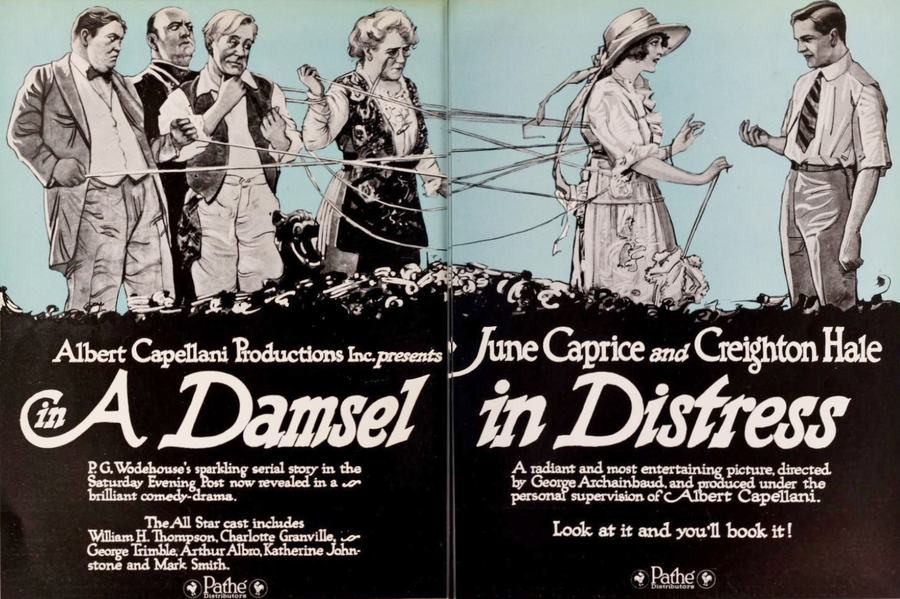
A definitive 6.8/10 rating for a film that redefined the boundaries of cult cinema. A Damsel in Distress remains a cornerstone of transgressive art.
The year 1919 stood as a temporal bridge between the raw experimentation of early cinema and the sophisticated visual storytelling that would define the roaring twenties. Amidst this transition, the adaptation of A Damsel in Distress emerged as a fascinating specimen of how literary levity could be translated into the wordless medium of silent film. While modern audiences might associate the title with the 1937 Fred Astaire musical, this earlier iteration captures a specific, unvarnished charm that leans heavily on the structural irony inherent in P.G. Wodehouse’s writing. Unlike the heavier dramas of the era, such as Morphium, which delved into the darker recesses of the human psyche, this production prioritizes a light-footed social satire that remains surprisingly agile.
June Caprice, portraying Maud March, delivers a performance that oscillates between the ethereal grace expected of a silent film star and a grounded, almost modern sense of agency. In an era where female characters were often relegated to the role of passive victims—a trope explored with much more gravity in Adele—Caprice’s Maud is a catalyst of her own destiny. Her flight to New York is not merely a romantic pursuit; it is a tactical evasion of the domestic prison curated by Aunt Carolyn. Charlotte Granville’s portrayal of the aunt provides the necessary friction, embodying the rigid Victorian leftovers that Wodehouse so loved to lampoon. The conflict here is less about the 'distress' of the title and more about the 'damsel' taking control of the narrative, a theme that echoes the domestic complexities found in The Marriage of Kitty.
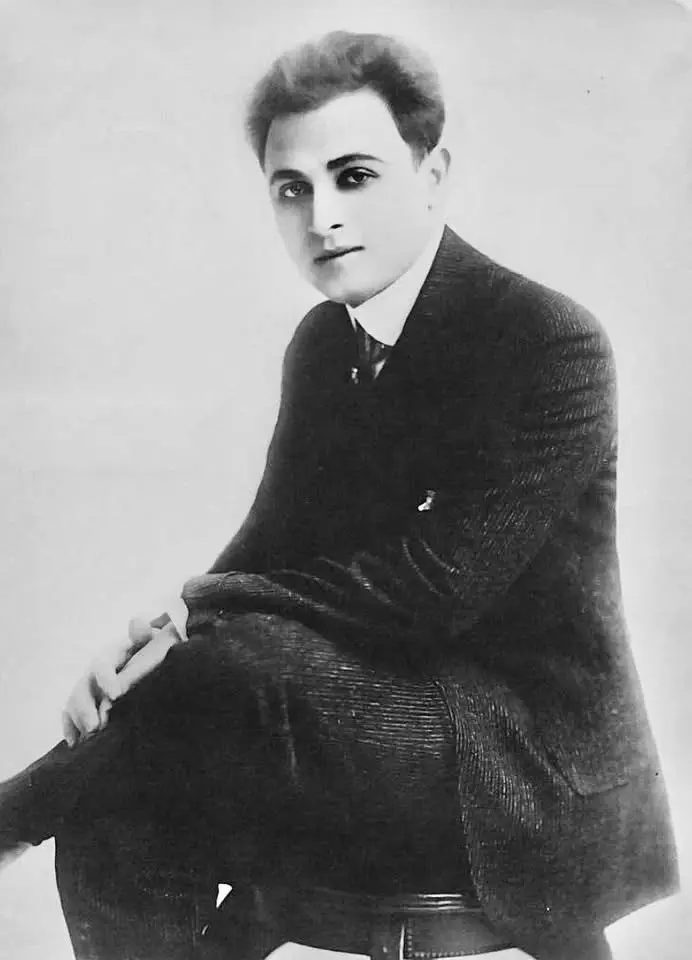
The pivotal encounter between Maud and George Bevan (played by the capable Creighton Hale) inside a New York taxi serves as the film’s heartbeat. It is a sequence that relies on the tight framing and the frantic energy of the city, contrasting sharply with the pastoral stasis of the March estate. This 'meet-cute'—a term not yet coined but perfectly executed—utilizes the cramped quarters of the vehicle to force an intimacy that feels both accidental and inevitable. While films like The City of Failing Light used the urban environment to highlight despair, director George Terwilliger uses it as a playground for romantic serendipity. Hale’s Bevan is not the typical dashing hero; he is a composer, a man of art and intellect, which aligns him with the shifting masculine ideals of the post-war period.
Perhaps the most daring aspect of the film, and the one that most faithfully preserves Wodehouse’s cynical humor, is the revelation of Geoffrey. In the standard cinematic grammar of the 1910s, the long-lost sweetheart was usually a figure of perfection, a beacon of hope for the protagonist as seen in the more sentimental Forget-Me-Not. However, A Damsel in Distress takes a sharp left turn. When Geoffrey finally appears, he is 'fat and ugly'—a visual shorthand for the decay of memory and the folly of nostalgia. This moment of disillusionment is handled with a comedic deftness that prevents the film from sliding into tragedy. It is a pragmatic realization: the past is a foreign country, and people change, often for the worse. This narrative choice elevates the film above the standard fluff of The Fibbers, providing a bite that remains sharp even a century later.
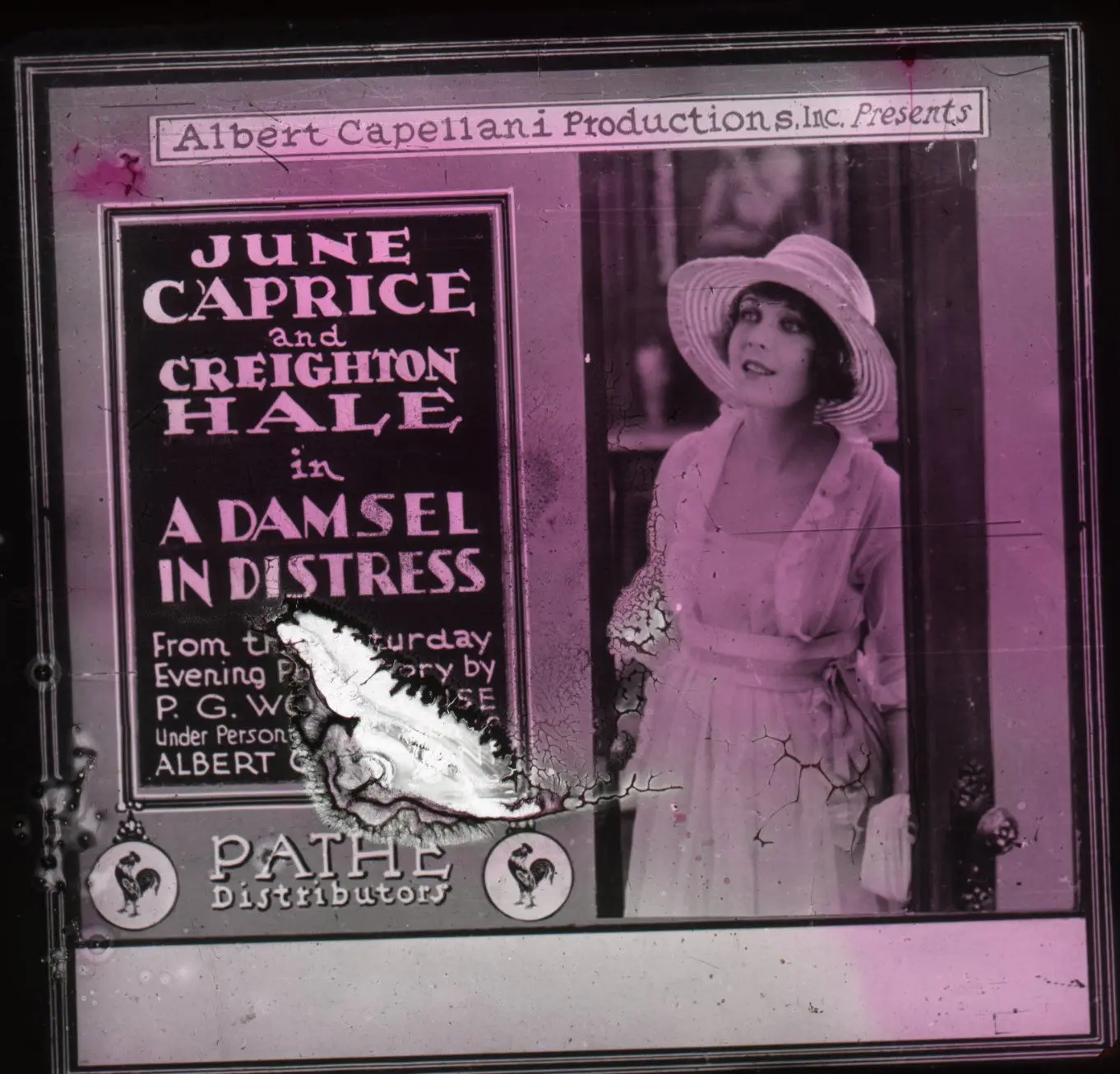
Technically, the film employs a rhythm that mirrors the quick-fire dialogue of its source material, despite the lack of sound. The intertitles are judiciously placed, capturing the essence of Wodehouse’s wit without overwhelming the visual flow. The cinematography by George Peters captures the stark differences between the high-society interiors and the bustling New York exteriors. There is a sense of movement here that is often missing from the more static theatrical adaptations of the time. Compare this to the somewhat more staged feel of A Vermont Romance, and one can see the burgeoning sophistication of the medium. The use of light in the New York sequences suggests a world of possibility, a sea blue horizon of freedom that contrasts with the dark, heavy shadows of the March household.
When placed alongside other contemporary works, the unique positioning of A Damsel in Distress becomes even more apparent. While The Fires of Youth dealt with the friction between generations through a more moralistic lens, Wodehouse’s story approaches the same conflict with a wink and a nudge. It lacks the overt political messaging of Guarding Old Glory or the intense melodrama of Elnémult harangok. Instead, it occupies a space of pure escapism that nonetheless manages to critique the absurdity of class distinctions. The character of Percy, the brother-turned-chaperon, is a particularly effective comedic engine, embodying the 'grouch' archetype found in The Grouch, but with an added layer of familial incompetence that makes his failure to stop Maud all the more satisfying.

Ultimately, the 1919 A Damsel in Distress is a testament to the durability of a well-constructed plot. It avoids the pitfalls of the 'addiction' narratives like The Craving or the heavy-handed moralizing of Three Weeks. Instead, it offers a refreshing look at romance as a byproduct of chaos rather than a scripted destiny. The chemistry between June Caprice and Creighton Hale provides a blueprint for the screwball comedies that would dominate the 1930s. It is a film that understands the value of a well-timed exit and the sheer comedic power of a disappointed expectation. For those tracking the evolution of the romantic comedy, this film is an essential mile marker, proving that even in the silent era, a sharp wit could speak volumes.
In the broader context of 1910s cinema, where many films have been lost to time or neglect, this adaptation remains a vibrant example of transatlantic storytelling. It bridges the gap between British literary sensibilities and American cinematic dynamism, creating a hybrid that feels remarkably fresh. Whether one is a fan of Wodehouse or a student of silent film, the journey of Maud March from the clutches of her aunt to the arms of George Bevan is a trip well worth taking, offering a masterclass in how to subvert tropes while still delivering a satisfying, crowd-pleasing resolution.
IMDb 6.3
1926
Community
Log in to comment.