DbcultAccessing Vault...
6.6/10
Senior Film Conservator
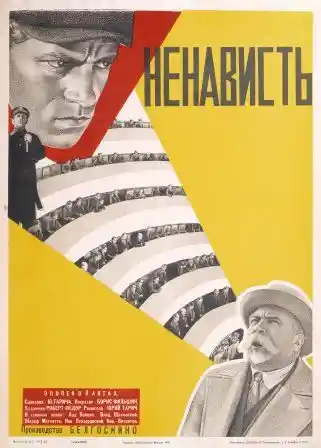
A definitive 6.6/10 rating for a film that redefined the boundaries of cult cinema. Nenavist remains a cornerstone of transgressive art.
Alright, so "Nenavist." Is it worth a watch today? Well, that depends *a lot* on what you're looking for. If you're into old-school, really focused political dramas that don't mess around, then yeah, maybe give it a go. It's a historical piece, feels like a window into a very specific moment.
But if you want fast action, complex characters, or something that feels 'modern' in any sense, you'll probably bounce off it pretty quick. It's definitely not for casual Friday night viewing. More of a deep dive into cinema history. 🧐
The movie wastes no time, dropping you straight into an oil field strike in the early 1930s. It’s all very gritty, black and white, and you can practically feel the dust and tension.
The story's core is this struggle between the striking workers and the Romanian oil owners. These owners are pulling serious strings, bribing a Polish deputy, Staszewski, to shut down any worker demands. It’s pretty clear from the jump who the good guys and bad guys are here. No real grey areas.
This Staszewski fellow, played by Benedikt Nord, is interesting. He's not exactly a cartoon villain, but his whole vibe is just... *slick*. You can almost see the money changing hands in his eyes. 😬
There's this moment when the film shows the workers gathered, almost silent, just standing together. It’s a powerful shot. It really gets across a sense of quiet, stubborn defiance. Like, you don't need big speeches when everyone's just *there*.
Things escalate fast. The oil fields get transferred to the Polish military department. This shift feels sudden, almost jarring. One minute it's a labor dispute, the next it’s a matter of national security. It’s a pretty stark illustration of how power works.
Staszewski, of course, is right in the middle of it again, now bribed by the War Minister. This guy really gets around. You can almost feel the movie trying to make you *really* dislike him.
Then the military comes in. With gas bombs. The scene where the troops move in and the gas starts to deploy... it’s not flashy, but it’s pretty brutal. You see the chaos, the panic, even if it’s not graphically violent in a modern way. The *idea* of it is enough.
The camera lingers on the faces of the workers during this. You don't just see fear, but a deep, burning anger. It’s not just a suppression; it’s a betrayal that solidifies their resolve. Ada Voytsik, in particular, does a lot with just a look.
The film isn’t subtle about its message. Not even a little bit. It makes it abundantly clear that the military industrial complex gets its oil, and the deputies of the Diet approve more armaments. All while ignoring the communist protests, naturally.
This movie feels less like a nuanced story and more like a **blunt instrument** to deliver a political point. It’s very much a product of its time and place, when cinema was often used as a direct tool for social commentary or, well, propaganda.
The pacing, for its part, is a bit of a slow burn. It takes its time establishing the injustice, maybe a little *too* much time in some stretches. There are moments that feel almost documentary-like, just showing the *process* of oppression unfold.
The ending itself is pretty stark. No neat bows or resolutions for the workers. Just the grim outcome of the power play. It just kinda… ends, leaving you with the heavy weight of what just happened. It's a bit of a gut punch, really. And I'm pretty sure that was the exact point.
"Nenavist" is a specific kind of film for a specific kind of viewer. It's not pretty, it's not subtle, but it's a piece of history. If you're game for that, you might find it strangely compelling. Otherwise, you can probably give this old-timer a pass. 🎞️

IMDb 5.6
1932
Community
Log in to comment.