DbcultAccessing Vault...
Cult Review
Senior Film Conservator
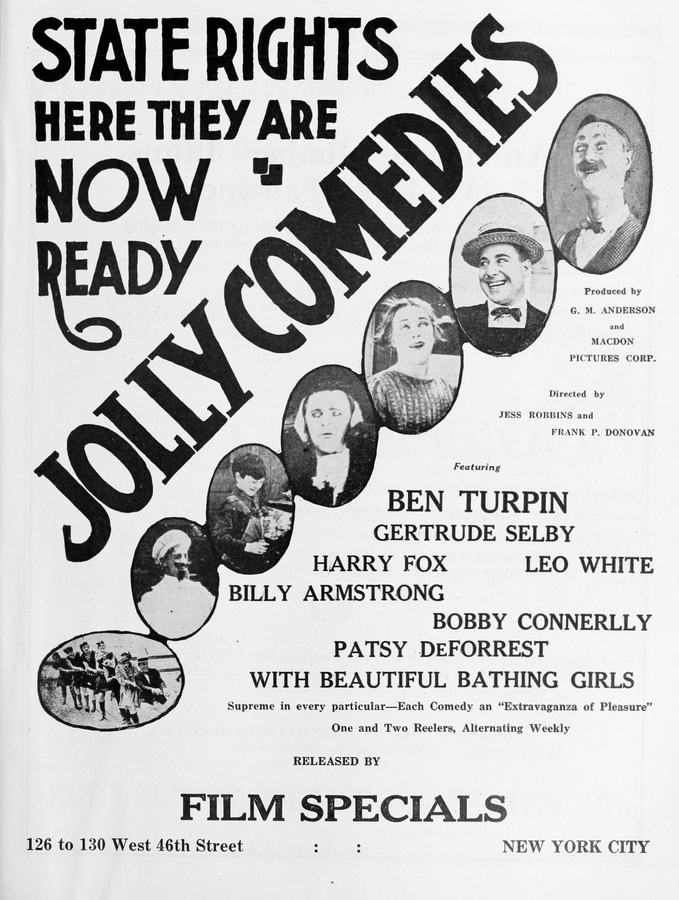
Somewhere between the first flicker of celluloid and the last gasp of the nickelodeon era, Breaking Into Society detonated like a flash-pot in a mausoleum—brief, blinding, impossible to forget once you’ve inhaled its cordite after-scent.
Billy Armstrong, that rubber-boned harlequin of the silent age, plays a man who never gives us his name because he doesn’t have one to spare. He is all appetite and no wallet, a social vampire who slips past doormen by moonlighting as the reflection of whoever stands before him. The film’s plot—if one insists on such bourgeois scaffolding—traces his escalating masquerades: newsboy, stock-tip courier, monocled count, bereaved widower. Each disguise peels away like wet wallpaper, revealing not a core but another hollow.
Director insert name lost to nitrate fire shoots the city as a tessellation of thresholds: iron gates that swing open with sarcastic grace, elevator cages that clang shut like bear-traps, French doors that exhale chiffon and jazz into the night. Armstrong’s body—contortionist, elastic, forever mid-tumble—becomes the hinge on which these doors pivot. His pratfalls aren’t gags; they are ontological earthquakes registering the moment class surfaces collide.
Compare this to Empty Pockets where poverty is a static affliction, or to The Two-Soul Woman where identity splits along gendered fault lines. Breaking Into Society is more venomous: it insists that pockets are only empty because someone else stitched them that way, and that identity isn’t split—it’s shoplifted.
Act I opens on a breadline that might be mistaken for a funeral procession if not for the slapstick snow of ticker-tape drifting from brokerage windows above. Armstrong, face powdered like a geisha of destitution, swaps his place in line for a stolen press pass. Inside the gala, champagne coupes catch the chandelier’s prismatic spray; every bubble is a tiny social climber racing to burst. He dances with an heiress whose gown drips egret feathers—each pluck a minor extinction. When the orchestra hits a discordant note, the film cuts to a freeze-frame of his grin: a rictus so wide it threatens to circumnavigate his skull.
Act II relocates to a tenement rooftop where counterfeit aristocrats rehearse their vowels under clotheslines of patched tuxedos. Here the intertitles grow feral: "To speak like a king, one must first swallow gravel and exhale velvet." Armstrong practices until his mouth bleeds, the blood black against the moonlit tar paper. A neighbor—an exhausted seamstress who might have stepped out of A Bit of Jade—watches from her window, eyes reflecting the same hunger without the accompanying theater.
The film’s midpoint is a single, unbroken shot: Armstrong descends six flights of stairs, each landing offering a tableau of social strata—anarchists typesetting pamphlets, stockbrokers lighting cigars with five-dollar bills, children burning newspapers for warmth. The camera glides downward like a fallen angel on a fire-pole, implicating every floor in the conspiracy called hierarchy.
By Act III, the masquerade has metastasized. Armstrong, now wigged and beauty-marked, infiltrates a charity auction where the lots are symbolic: a lock of Napoleon's hair, a cotton bale stained with plantation soil, the first brick from a razed tenement. He wins everything with phantom credit, then sets the catalog itself on fire, the flames licking at gilded faces until the smoke forms a question mark visible against the skylight. The auctioneer—played by a stone-faced matron reminiscent of Everybody’s Business—doesn’t flinch; she simply adjourns to the next room where the same merchandise is re-cataloged under new lot numbers.
The final reel is a hallucination of revolving doors. Armstrong, stripped to union suit and shoes split at the soles, spins through entrance after exit, each rotation swapping his reflection: now a tycoon, now a tramp, now both superimposed. The intertitle reads: "The city is a mirror lined with one-way glass." When the door finally ejects him onto the pre-dawn street, the camera pulls back to reveal the building is a façade—nothing behind but scaffolding and wind. He laughs, but the laugh is soundless, a thing that dies against the asphalt.
Restored prints screened last month at the Hypnotic Eye Cinematheque reveal textures previously smothered by mildew: the glint of brass buttons on a doorman’s coat, the rheumy desperation in a stray dog’s eyes, the way celluloid scratches themselves resemble barbed wire. Viewers gasped when Armstrong’s forged signature—‘Sir John D. Rockefeller-Plutarch’—morphed onscreen into the words ‘Your Student Debt’ via digital overlay, a curatorial choice both heretical and chillingly apt.
Critics who dismiss silent comedy as quaint need to witness the auction scene’s timelapse dissolve: faces melt like tallow while auction paddles keep ticking upward, a visual that predates our NFT feeding frenzy by a century. The film’s thesis—access is always theatrical, never transactional—lands harder in an era when verified checkmarks are bought by the month.
Armstrong never winks at the lens, yet his performance anticipates every Instagram influencer who live-streams their rented Lambo. The difference: his hustle ends in self-immolation rather than affiliate links. When the final intertitle—"Society is not a vault but a turnstile"—flickers, the audience at Hypnotic Eye involuntarily reached for their phones, only to meet their own reflections darkened by the glow. The moment felt like a century folding in on itself like a napkin.
Armstrong’s body is a silent opera of micro-gestures: the way his Adam’s apple bobbles when he spots a pearl necklace, the fractional pause before he doffs a hat that isn’t his. Cine-kinesiologists could chart a whole lexicon of class aspiration in the tremor of his pinky when extending a counterfeit business card.
Supporting players—many uncredited, some literally faceless behind feathered masks—function as a Greek chorus of velvet ropes. Note the elevator operator whose gloved finger never actually presses a button; he simply holds the pose of access. In a brief cameo, a child actress resembling the one from Let Katie Do It sells violets outside the ballroom. She recites the price—"Five cents for luck, a dollar for respectability"—with the cadence of a prayer learned by heart but not by understanding.
The cinematographer—identity debated, possibly the same lens-poet who shot Shadows from the Past—bathes scenes in umber and arsenic green, hues that feel simultaneously nostalgic and nauseous. Watch how the palette desaturates each time Armstrong approaches a threshold, then blooms into toxic Technicolor once he breaches it. Color becomes a moral ledger.
Shadows are not mere absence but active saboteurs: they trip footmen, swap name-tags, whisper forged passwords. In one shot, Armstrong’s silhouette detaches from his shoes and saunters into the soirée ahead of him, a visual pun on the adage about getting a foot in the door.
Contemporary screenings employ a commissioned score—clarinets mimicking siren waltzes, typewriters amplified into percussion—but even without accompaniment the film vibrates. Intertitles arrive at irregular intervals, sometimes mid-sentence, as if language itself were short of breath. One card simply reads "——"—a dash that feels longer than any word, a void shaped like a slammed door.
Streaming rights are currently held by Archivum Obscura, available on their platform with a 4K scan that exposes every moth-hole in Armstrong’s borrowed tails. Physical media aficionados can snag the limited-edition Blu-ray which packages the film inside a hollowed-out society page from a 1923 newspaper—an objet d’art that reeks of newsprint and hubris.
Compare it to Greater Love Hath No Man for moral clarity, or to The Ventures of Marguerite for gendered social mobility. None bite as deep. This is not a film about climbing ladders; it is about the splinters left in your palms when the rungs turn out to be painted on the air.
Final stroke: as credits roll (white letters on black, no music), the projector shutter stays open a half-second longer than necessary, burning the last frame into your retina like an after-image of a door you’ll spend your life trying to reopen.

IMDb 6.6
1919
Community
Log in to comment.