DbcultAccessing Vault...
Cult Review
Senior Film Conservator
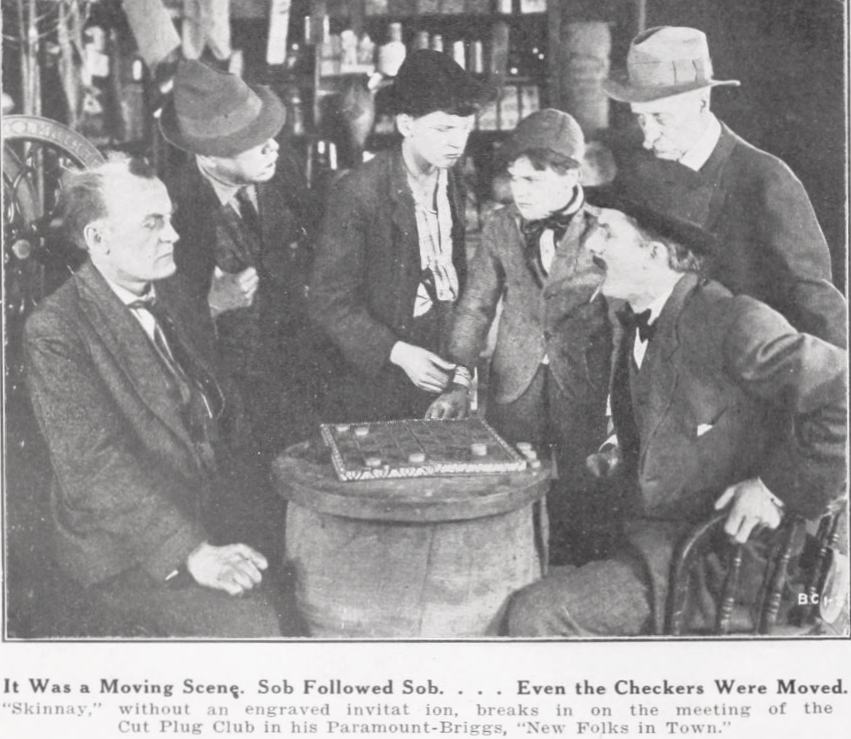
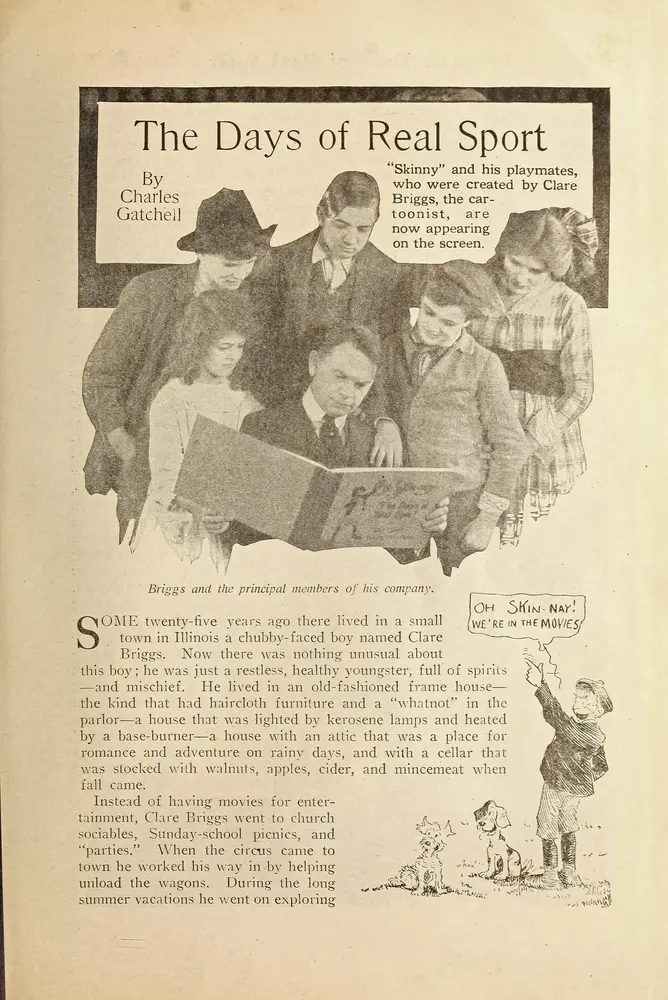
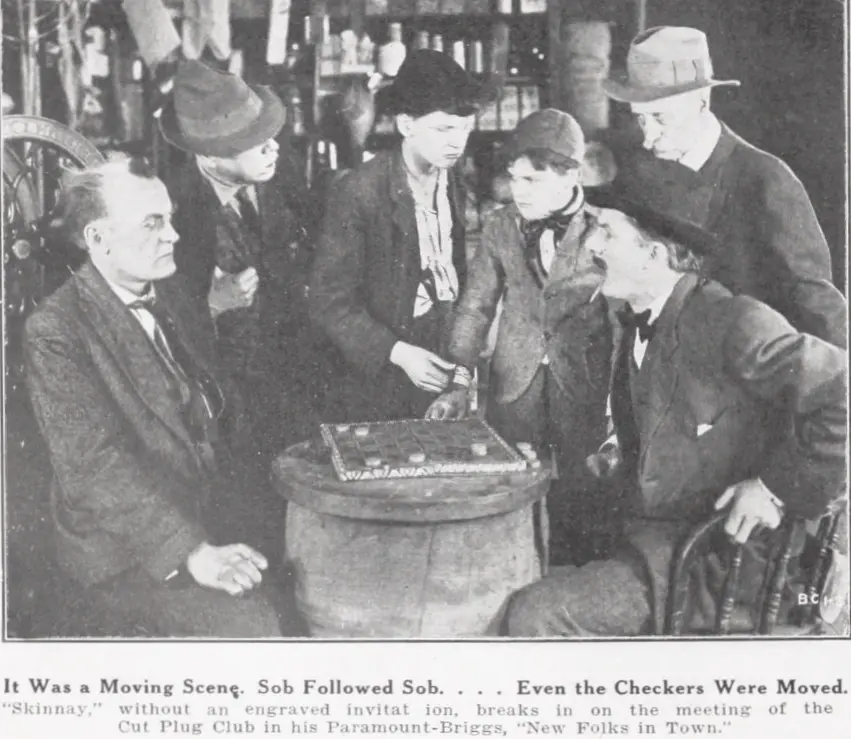
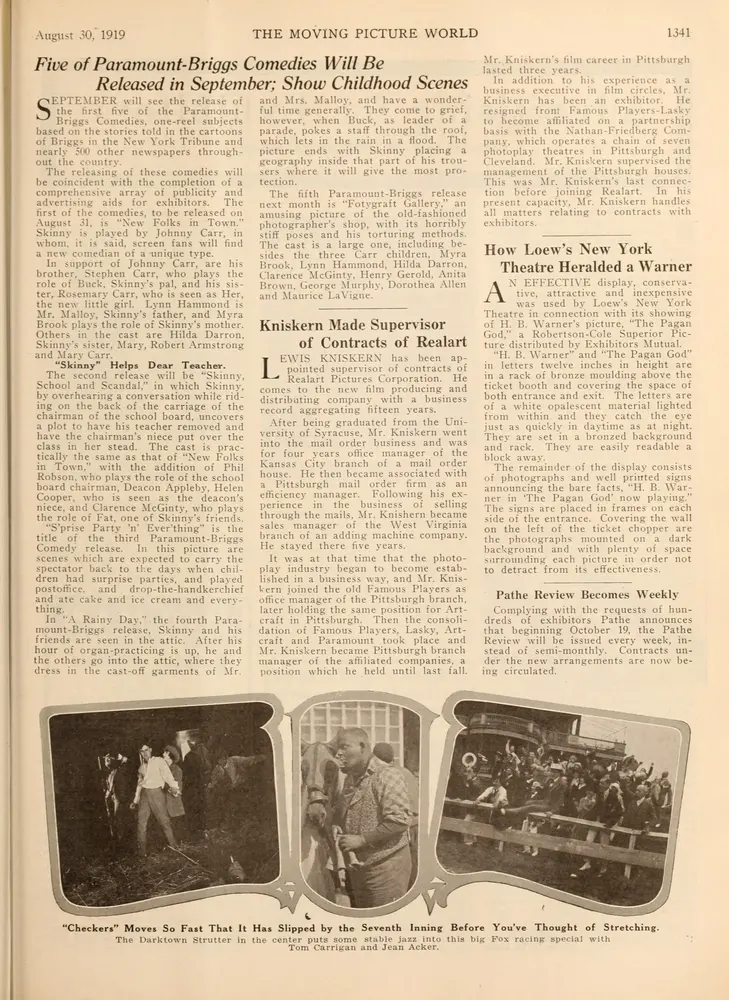
History often forgets that the most profound cinematic revolutions didn't always happen on the grand battlefields of Spartacus or amidst the high-octane drama of On the Fighting Line. Sometimes, the revolution was televised—or rather, projected—through the lens of a suburban window. New Folks in Town, a 1919 gem based on the observational genius of cartoonist Clare A. Briggs, is a startlingly modern examination of social friction. It eschews the broad slapstick found in Tillie's Tomato Surprise for something far more delicate: the anatomy of a neighborhood.
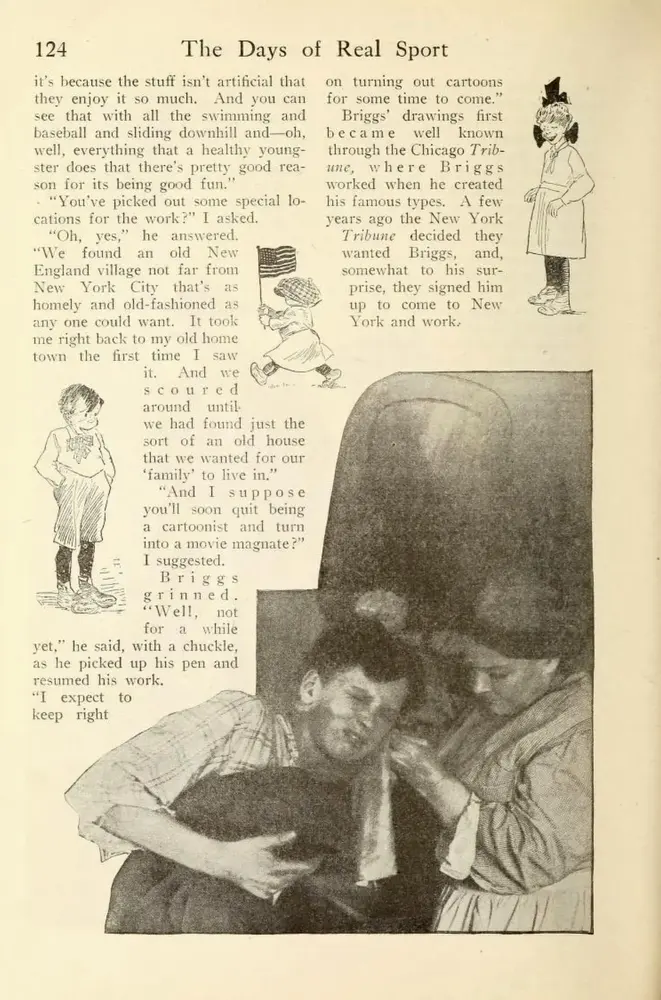
To understand the structural integrity of this film, one must first acknowledge the shadow of Clare A. Briggs. Briggs wasn't merely a writer; he was a cartographer of the American psyche. His work on the 'New Folks in Town' comic strip provided a skeleton of wit that the film fleshes out with surprising cinematic muscle. Unlike the heavy-handed moralizing seen in Love's Toll, Briggs’ narrative here is nimble, dancing between the domestic anxieties of the Carr family and the judgmental gaze of their new peers. There is a specific rhythm to the storytelling that feels less like a series of scenes and more like a sequence of lived moments, captured with a voyeuristic precision that predates the French New Wave's obsession with the everyday.
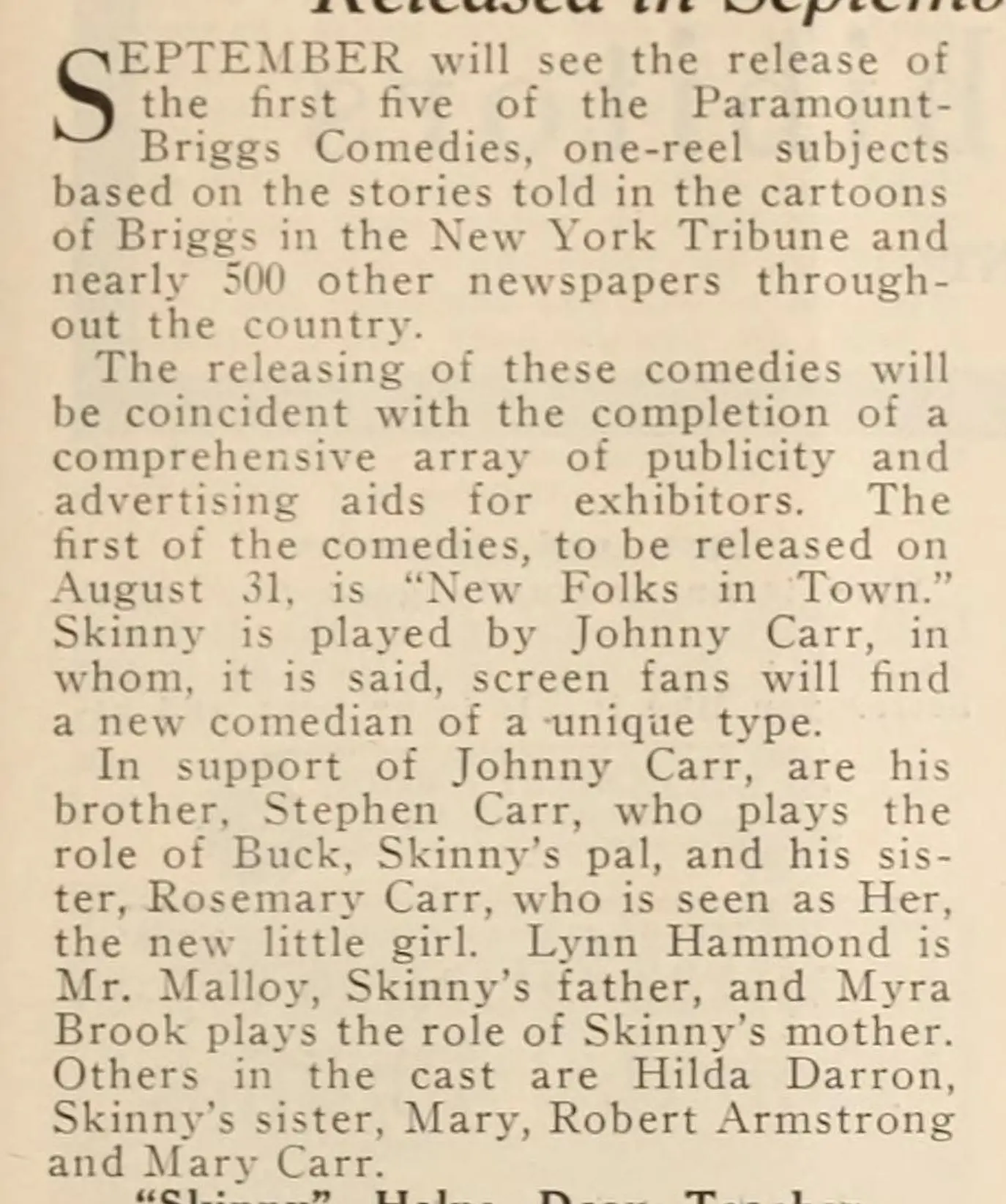
The casting of the Carr family—Rosemary, John, Mary, and Stephen—is a stroke of brilliance that lends the film a level of verisimilitude rarely seen in the 1910s. There is an organic chemistry here that cannot be manufactured. Rosemary Carr, in particular, delivers a performance of quiet desperation and burgeoning hope that rivals the emotive depth of Blue-Eyed Mary. She doesn't rely on the theatrical gesticulations common to the era; instead, her performance is found in the way she adjusts a hat or the slight hesitation before knocking on a neighbor's door. John Carr provides a sturdy, if somewhat oblivious, paternal anchor, representing the post-war optimism that drove the expansion of the American suburb.
"The film operates in the interstitial spaces between social classes. It isn't just about moving houses; it's about the terrifying fluidity of identity when one is stripped of their familiar surroundings and forced to perform for a new audience."
Visually, the film is a fascinating study in mise-en-scène. The director uses the physical space of the new house as a character in its own right. We see the echoing hallways of the empty home as a metaphor for the Carrs' social isolation. As they fill the house with furniture, the frames become more cluttered, mirroring the increasing complexity of their social entanglements. This visual progression is far more sophisticated than the static tableaux found in The Golden God. The cinematography captures the harsh sunlight of the morning move-in and the long, conspiratorial shadows of the evening porch-gossip sessions with a clarity that feels almost digital in its crispness.
The editing, too, deserves commendation. There is a cross-cutting sequence between the Carrs unpacking their modest belongings and the neighbors discussing them over tea that is edited with a biting irony. It creates a dialogue between the two groups without them ever sharing the same physical space, a technique that highlights the psychological distance between the 'new folks' and the 'old guard.' This level of narrative efficiency is something that even more ambitious projects like The Trail of the Shadow struggle to maintain.
While New Folks in Town is ostensibly a comedy, it carries a weight of social critique that is surprisingly sharp. It tackles the concept of the 'American Dream' not as a grand achievement, but as a series of small, exhausting hurdles. The film asks: what does it cost to belong? We see the Carrs sacrificing their personal eccentricities to fit into the cookie-cutter expectations of their neighborhood. This theme of self-erasure is handled with more nuance here than in the overt melodrama of Man's Desire or the stylistic gloom of Die rollende Kugel.
The supporting cast, including Lynn Hammond and Hilda Darron, perfectly encapsulate the various archetypes of suburban gatekeeping. Hammond plays the self-appointed neighborhood matriarch with a chillingly polite frostiness, while Darron represents the younger generation's curiosity, which is constantly being stifled by the cynicism of their elders. Their interactions with the Carrs create a friction that is both hilarious and deeply uncomfortable, reminiscent of the social awkwardness explored in Excuse Me, though with a much more grounded sensibility.
When placed alongside contemporary works like The Egg Crate Wallop, the sophistication of New Folks in Town becomes even more apparent. While the former relies on physical comedy and rural tropes, the latter leans into the psychological complexities of urban sprawl. It shares a certain DNA with A Wild Girl of the Sierras in its exploration of the outsider, but it swaps the rugged wilderness for the equally dangerous terrain of the manicured cul-de-sac. Even when compared to international offerings like Blondes Gift or En defensa propia, this film stands out for its uniquely American obsession with the 'front' we present to the world.
The film also touches upon the secrecy inherent in domestic life. Much like Secret Marriage, it suggests that every household has a skeleton in the closet, and the terror of being the 'new folks' is the fear that your skeleton will be the first one discovered. This tension is maintained throughout the film’s brisk runtime, ensuring that the audience is as invested in the Carrs' social survival as they are in their financial one.
Technically, the film utilizes lighting to distinguish between the safety of the interior and the exposure of the exterior. The 'world outside' is often overexposed, bright, and threatening, while the 'world inside' is rendered in soft, warm tones. This binary creates a visual safe haven for the characters, making the moments when they must step onto the porch feel genuinely high-stakes. The use of intertitles is also notably sparse and witty, often serving as a sarcastic commentary on the action rather than a mere explanation of it. This elevates the film from a simple silent comedy to a sophisticated piece of visual literature.
The pacing is another area where the film excels. It avoids the sagging middle act that plagues many features of this era. Instead, it builds a steady momentum of social encounters, each one slightly more complex than the last, leading to a climax that is satisfyingly human rather than explosively cinematic. It understands that in the world of the suburb, a snub at a dinner party is more devastating than a thousand-mile chase.
Ultimately, New Folks in Town is a film that demands rediscovery. It is a precursor to the great social satires of the mid-century, providing a roadmap for how to find drama in the mundane. The Carr family represents us all—the perpetual outsiders trying to find a place where the grass is green and the neighbors are kind. In an era of cinematic giants, this small, intimate portrait of relocation remains one of the most honest depictions of the human condition ever committed to nitrate. It is a testament to the power of observational storytelling and a reminder that the most interesting stories are often the ones happening right next door.
As we look back at the cinematic landscape of 1919, it is easy to be distracted by the grand spectacles. But if you look closer, past the epic battles and the tragic romances, you will find the Carrs, still unpacking their boxes, still hoping for a friendly wave, and still reminding us that being the 'new folks' is a universal, if temporary, state of grace.
IMDb 5.8
1930
Community
Log in to comment.