DbcultAccessing Vault...
6.2/10
Senior Film Conservator
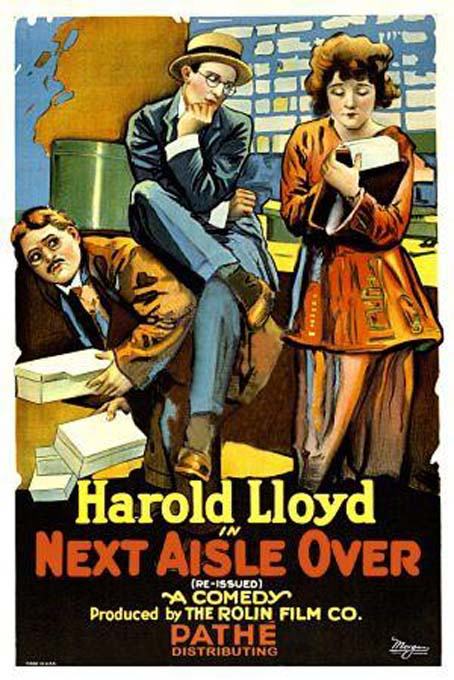
A definitive 6.2/10 rating for a film that redefined the boundaries of cult cinema. Next Aisle Over remains a cornerstone of transgressive art.
In the pantheon of silent cinema, 1919 stands as a threshold year, a moment when the primitive slapstick of the nickelodeon era began to crystallize into the sophisticated narrative comedies of the 1920s. Next Aisle Over is a quintessential artifact of this transition. It captures Harold Lloyd at a point of profound creative metamorphosis, shedding the derivative skin of 'Lonesome Luke' to fully embrace the 'Glasses' character—a figure who represented the aspirations, anxieties, and relentless optimism of the American middle class. Unlike the aristocratic detachment seen in some contemporaneous dramas like The Woman in the Case, Lloyd’s work here is grounded in the gritty, tactile reality of the workplace.
The film opens with a deceptive simplicity. Lloyd is a shoe salesman, a role that demands a certain performative grace amidst the indignity of serving a demanding public. The department store setting is not merely a backdrop; it is a living, breathing character, a labyrinth of consumerist desire that reflects the burgeoning industrialization of the post-WWI era. The way Lloyd interacts with the merchandise—the frantic sorting of boxes, the tactile comedy of fitting a shoe—mirrors the rhythmic intensity of a factory line, yet it is infused with a whimsical humanity that prevents it from becoming a bleak social commentary.
To understand the brilliance of Next Aisle Over, one must dissect the structural integrity of its humor. H.M. Walker’s writing provides a scaffold of wit, but the execution relies entirely on Lloyd’s athletic precision. There is a specific sequence involving a staircase that rivals the spatial complexity of modern action cinema. In contrast to the static framing found in June Friday, the camera here is an active participant in the chaos. The choreography is not merely about falling; it is about the *attempt* to remain upright in a world that is constantly tilting.
The supporting cast, featuring the likes of 'Snub' Pollard and the luminous Bebe Daniels, creates a vibrant ensemble that enriches the central conceit. Daniels, in particular, offers more than just a romantic prize; she is the emotional anchor that justifies Lloyd’s frantic energy. Their chemistry is palpable, a spark of genuine connection in an environment defined by transactional relationships. While films like Souls in Bondage sought to explore the depths of human suffering through heavy-handed allegory, Lloyd and director Hal Roach find profound truths in the lightness of a shared glance across a crowded counter.
The second act of the film introduces a narrative pivot that would become a staple of the Lloyd formula: the sudden intrusion of high-stakes peril into a domestic setting. The kidnapping plot is handled with a surprising lack of irony. It serves as the crucible in which the protagonist’s character is forged. No longer just a salesman trying to impress a girl, he becomes a protector. This shift from the mundane to the heroic is handled with a narrative dexterity that was quite rare for 1919 shorts. It lacks the somber pacing of The Master of the House, opting instead for a propulsive velocity that keeps the viewer in a state of constant engagement.
The villainy in Next Aisle Over is broad and theatrical, yet it provides the necessary friction to propel the story toward its climax. The rescue mission is a tour de force of physical comedy, involving a series of stunts that highlight Lloyd’s willingness to risk life and limb for the sake of the frame. This commitment to physical realism—the sense that the protagonist is genuinely in danger—is what separates Lloyd from his peers. While a film like High Speed might rely on the thrill of the chase, Lloyd finds thrill in the obstacle, in the friction between the human body and the mechanical world.
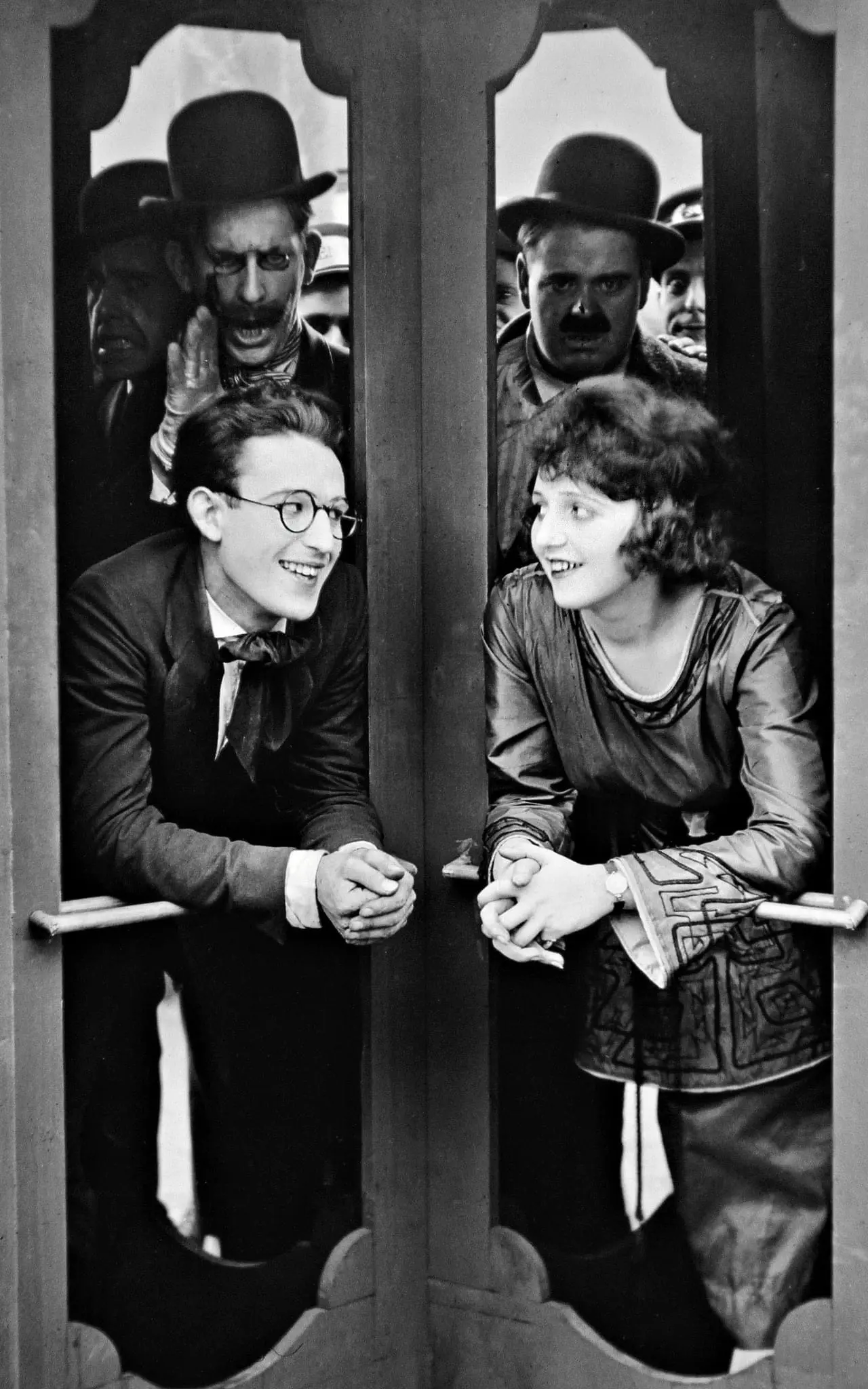
Visually, the film is a fascinating document of early 20th-century retail culture. The set design of the department store is meticulous, capturing the gilded opulence and the hidden squalor of the stockrooms. The lighting, though primitive by modern standards, effectively uses the large windows of the store to create a sense of naturalism that was often missing from the more stage-bound productions of the time, such as Wedlock. There is a depth to the frames here; the background is often as busy as the foreground, suggesting a world that exists beyond the immediate concerns of the protagonist.
The use of intertitles by H.M. Walker deserves special mention. They are not merely functional; they are punchlines in their own right, adding a layer of verbal sophistication to the visual mayhem. This dual-track approach to storytelling—where the text and the image are in constant dialogue—is a hallmark of the Roach studio’s output. It’s a far cry from the more earnest, perhaps even stilted, dialogue found in The Silence Sellers. In Next Aisle Over, the humor is holistic, emerging from the situation, the character, and the linguistic flair of the titles.
When placing Next Aisle Over alongside its contemporaries, its modernity becomes even more apparent. While Puppy Love explored the innocence of youth with a sugary sentimentality, Lloyd’s film is cynical enough to recognize the harshness of the urban environment. It shares some of the satirical DNA found in Oh, the Women!, yet it avoids the misogynistic tropes of the era by giving Bebe Daniels a character of agency and wit. Even when compared to the international output of the time, such as the German Engelein or the Russian I pesn ostalas nedopetoy, the American slapstick tradition represented here feels uniquely vibrant and unpretentious.
The film also touches upon themes of social mobility. Harold’s character is a man on the make, a quintessential American archetype who believes that through sheer force of will (and a few well-placed gags), he can ascend the social ladder. This thematic subtext is what gives the film its lasting power. It isn’t just about a man in a department store; it’s about the struggle to maintain one’s identity in an increasingly impersonal world. This is a theme that resonates through other works of the period like In the Balance and The Love Route, but Lloyd presents it with a levity that makes the pill easier to swallow.
The cinematography in Next Aisle Over, while restricted by the technology of 1919, shows a remarkable understanding of visual rhythm. The editing is sharp, cutting on motion in a way that maximizes the impact of every tumble and chase. This level of technical proficiency was the result of the rigorous production schedules at the Roach studio, where films were churned out with industrial efficiency but also with a craftsman’s attention to detail. This is evident when comparing the film to the somewhat more languid pacing of The Heart of a Hero or the stagey aesthetics of Odette.
Ultimately, Next Aisle Over is more than just a historical curiosity. It is a vibrant, hilarious, and surprisingly suspenseful piece of cinema that continues to reward viewers over a century later. It captures a moment in time when the movies were discovering their own power to move, to thrill, and to make us laugh at the absurdity of our own modern lives. Harold Lloyd’s performance remains a masterclass in physical characterization, proving that even in the most crowded department store, a single individual can still stand out—provided they have the right pair of glasses and a penchant for trouble.
As the protagonist navigates the final chase, weaving through the fabric of the city with the same agility he used to navigate the shoe department, we see the blueprint for the great action comedies of the future. The film ends not just with a romantic union, but with a sense of triumph over the chaotic forces of modernity. It is a small masterpiece of the short form, a testament to the enduring genius of the Hal Roach/Harold Lloyd partnership and a foundational text in the history of screen comedy.
IMDb 5.1
1934
Community
Log in to comment.