DbcultAccessing Vault...
Cult Review
Senior Film Conservator
In the annals of cinematic history, few figures shine as brightly and yet remain as criminally underappreciated as Elvira Notari. A true pioneer, Notari was not merely a director but a complete auteur, a storyteller who captured the vibrant, often tumultuous, soul of Naples with an unvarnished authenticity rarely seen in her era. Her 1919 masterwork, 'Nfama!, stands as a testament to her profound understanding of human nature, her astute observation of societal dynamics, and her unparalleled ability to translate raw emotion onto the silver screen.
The film plunges us headfirst into a world where reputation, honor, and passionate love are inextricably linked, often with devastating consequences. At its core is the tempestuous relationship between Tore and Margaretella, brought to life with visceral intensity by the performances of Rosè Angione and her male counterpart. Tore, consumed by a possessive fervor that borders on the suffocating, confronts Margaretella with an accusation that cuts to the very heart of their existence: her 'nfama. This Neapolitan term, defying simple translation, encapsulates a complex web of perceived disrepute, scandal, or public dishonor. It's not merely a moral failing but a social stain, an affront to the collective pride that dictates interaction in their tightly knit community. Tore's declaration, "If you continue to be such a 'nfama it is better for me to die," is far more than a lover's dramatic outburst; it is a profound articulation of the societal pressures that shape individual destinies, a chilling prophecy of the tragedy to come.
Notari's genius lies in her ability to ground this high melodrama in the gritty realism of Neapolitan life. Unlike the often-stylized productions emanating from other European film centers, Notari’s camera was intimately acquainted with the streets, the markets, the taverns—places where life unfolded in all its unscripted, boisterous glory. This commitment to authenticity imbues 'Nfama! with a texture that feels both immediate and timeless. The initial scenes, before the inevitable explosion, meticulously build the tension, allowing us to witness the slow erosion of trust and the escalating paranoia that grips Tore. Margaretella, portrayed with a compelling blend of defiance and vulnerability by Angione, navigates this minefield of expectations, her every gesture scrutinized, her every interaction potentially misconstrued.
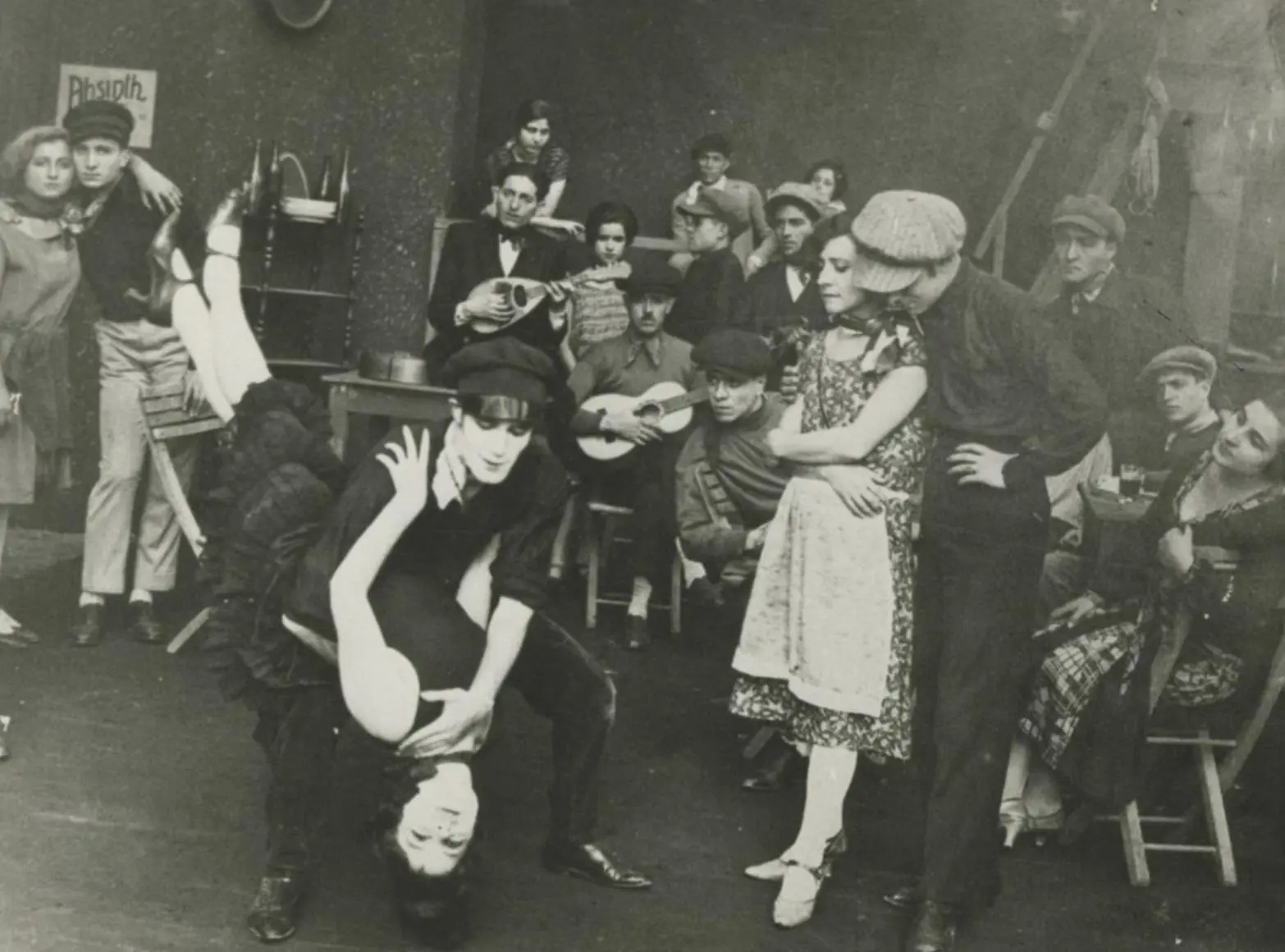
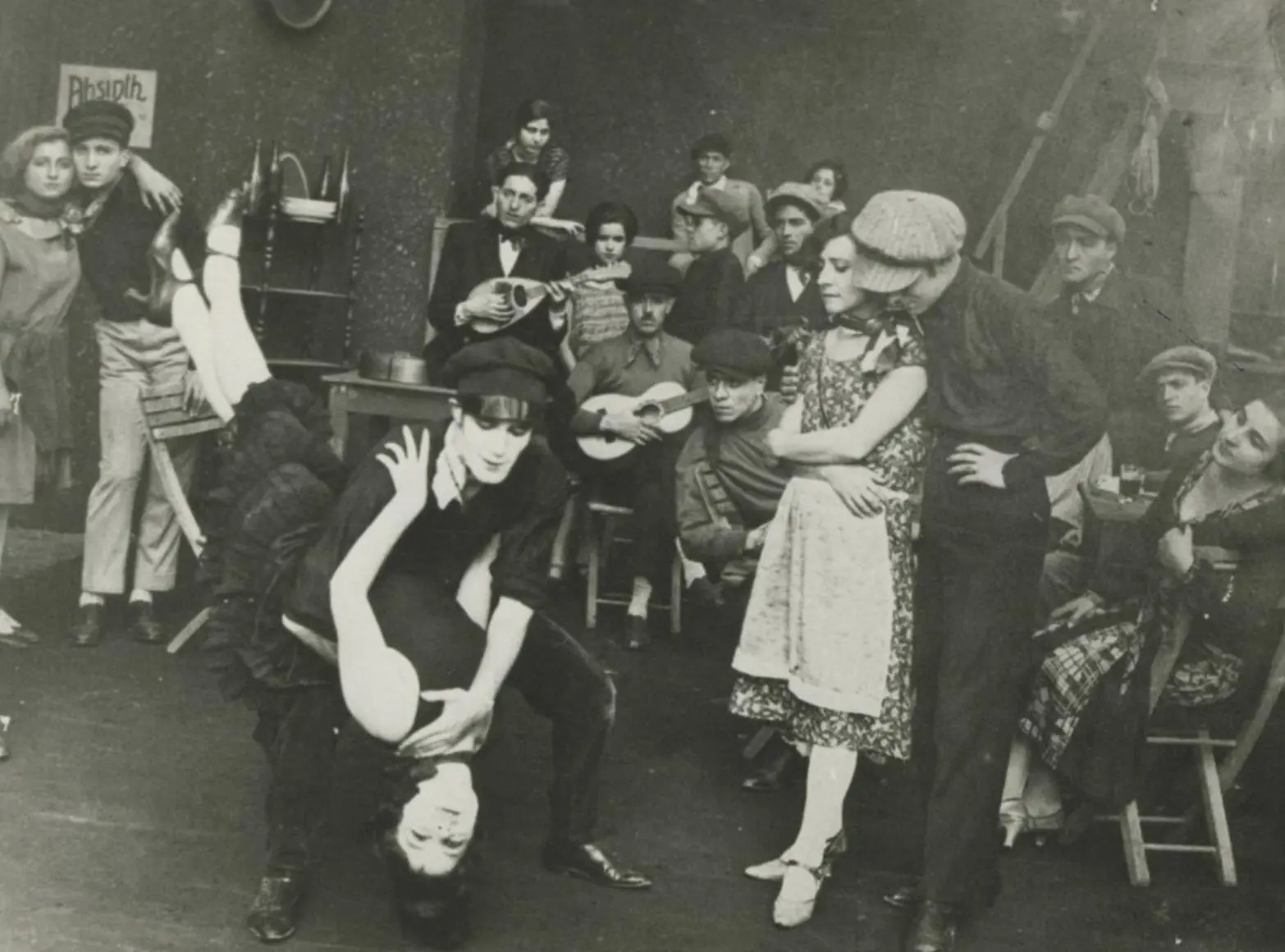
The narrative pivot arrives with electrifying force at the Rouge Tavern, a setting that Notari transforms into a microcosm of Neapolitan society. This is no mere backdrop; it is a living, breathing entity, pulsating with the raw energy of its patrons. The wild dancing, a visceral expression of communal joy and release, serves as a deceptive prelude to the impending chaos. Here, the carefully constructed façades of civility begin to crack. The air is thick with anticipation, the camaraderie tinged with underlying rivalries. It’s a scene reminiscent of the fervent, often volatile, social gatherings depicted in later Italian neorealist works, albeit filtered through the lens of silent-era melodrama. The camera, presumably, captures the frenetic movement, the swirling skirts, the expressive faces, all contributing to an atmosphere ripe for eruption.
Into this intoxicating mix steps Max, played by Max Lind. His presence, whether innocent or provocative, acts as the catalyst for Tore's simmering rage. The film masterfully exploits the visual language of silent cinema to convey Tore's escalating jealousy: a tightening jaw, a narrowed gaze, a sudden stillness amidst the surrounding revelry. The confrontation between Tore and Max is not just a physical altercation; it is a symbolic clash of honor, a public declaration of ownership and defiance. The fight itself, undoubtedly staged with Notari's characteristic flair for dramatic realism, would have been a visceral spectacle, embodying the destructive power of unchecked passion and the brutal consequences of a perceived slight within a culture that valued public image above all else. Actors like Geppino Jovine, Alberto Danza, and Eduardo Notari (likely a relative of Elvira, a common practice in her productions) would have contributed to the vibrant ensemble, lending credibility to the tavern's bustling atmosphere and the ensuing melee.
One cannot discuss 'Nfama! without acknowledging the broader context of Elvira Notari's career. As Italy's first and most prolific female filmmaker, she carved out a unique niche, producing films that resonated deeply with the working-class audiences of Naples. Her cinema, often referred to as 'sceneggiata' cinema, was deeply rooted in local traditions, drawing inspiration from popular songs, theatrical performances, and real-life incidents. This wasn't the high-art cinema of the Roman studios; this was cinema of the people, for the people. Notari understood the rhythms of Neapolitan life, its joys, its sorrows, its inherent theatricality. She didn't merely document; she interpreted, giving voice to the unspoken passions and struggles of her community.
The thematic resonance of 'Nfama! extends beyond its immediate dramatic impact. It's a poignant exploration of gender roles and societal expectations in early 20th-century Italy. Margaretella’s 'nfama is not necessarily a factual transgression but rather a perceived one, a rumor, a whisper that can destroy a woman's standing. Tore's ultimatum, while framed as a desperate plea, is also an assertion of patriarchal control, a demand for conformity to an unforgiving social code. The film subtly critiques the hypocrisy inherent in such systems, where a woman's reputation is fragile and easily shattered, while a man's honor is often asserted through aggressive displays of dominance. This nuanced portrayal of societal pressures makes Notari's work remarkably prescient, anticipating later feminist critiques within cinema.
Comparing 'Nfama! to other films of its era highlights Notari's distinctive approach. While films like The Fortune Teller or What Love Will Do might explore romantic entanglements, Notari's work possesses an earthy realism and a raw emotionality that sets it apart. Her characters are not idealized figures but flawed, passionate individuals whose struggles feel authentic. Even in the face of the stylized acting conventions of silent cinema, Notari managed to elicit performances that resonated with deep human truth. The melodrama in 'Nfama! is never gratuitous; it's a reflection of the heightened emotions that governed everyday life in the bustling, emotionally charged environment of Naples.
The aesthetic choices within the film, though perhaps constrained by the technological limitations of the time, would have been deliberate and impactful. Notari favored on-location shooting, which lent her films an unparalleled sense of place. The Rouge Tavern, rather than being a studio fabrication, would likely have been a real establishment, or meticulously recreated to capture the precise atmosphere. This commitment to visual authenticity is a hallmark of her work and contributes significantly to the film's enduring power. The interplay of light and shadow, the expressive use of intertitles to convey dialogue and internal monologues, all would have been carefully orchestrated to maximize the emotional punch of the narrative. One can imagine the vibrant, almost tactile quality of the scenes, even in their monochrome presentation, as Notari's camera captured the essence of a city that pulsed with life.
The legacy of Elvira Notari and films like 'Nfama! is crucial for understanding the full scope of early cinema. She wasn't just making films; she was building an industry, cultivating an audience, and forging a unique cinematic language rooted in her own cultural heritage. Her work provides a vital counter-narrative to the more dominant film histories, often centered on Hollywood or the major European capitals. It reminds us that cinema, from its very inception, was a global phenomenon, diverse in its forms and expressions. While we might not have the complete film available, the surviving fragments and historical accounts paint a vivid picture of a director whose vision was both singular and deeply resonant.
In an era when cinema was still finding its voice, Notari's approach was remarkably sophisticated. She understood the power of visual storytelling, the impact of a well-placed close-up (if employed), and the narrative drive created by escalating conflict. Her films were designed to provoke strong reactions, to engage the audience emotionally, and to reflect the realities of their lives back at them. 'Nfama!, with its explosive depiction of jealousy and honor, is a prime example of this philosophy in action. It’s a film that doesn't shy away from the darker aspects of human nature but explores them with a profound sense of empathy and understanding.
Ultimately, 'Nfama! is more than just a historical artifact; it's a vibrant piece of cinematic art that speaks to enduring human themes. It's a powerful reminder of the groundbreaking work done by pioneers like Elvira Notari, whose contributions deserve far greater recognition. Her ability to craft such compelling narratives, to draw such raw performances from her cast, and to capture the very essence of a place and its people, solidifies her status as one of cinema's truly essential voices. This film, even in its fragments, resonates with an intensity that transcends its silent origins, offering a window into a bygone era and a timeless exploration of passion, pride, and the destructive consequences of a perceived 'nfama.
IMDb —
1928
Community
Log in to comment.