DbcultAccessing Vault...
Cult Review
Senior Film Conservator
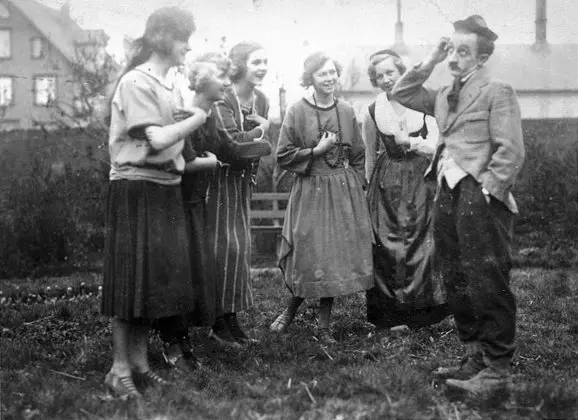
From the opening frame, the screen breathes a cold, crystalline air that feels simultaneously ancient and immediate, a visual echo of the stark fjords that dominate Iceland’s horizon. Loftur Guðmundsson’s direction embraces a visual grammar that feels like a living vellum—each shot is a brushstroke, each cut a deliberate pause, inviting the viewer to linger on the texture of light on snow‑capped cliffs.
The narrative thrust is deceptively simple: two wanderers, Jón and Gvendur, set out on a pilgrimage that is as much internal as it is geographic. Yet simplicity is a veneer; beneath it lies a labyrinth of symbolism that rewards repeated viewings. The film’s title, rendered in archaic orthography, hints at a tale that is both personal and mythic, a duality that Guðmundsson exploits with masterful restraint.
Jón, portrayed with a quiet intensity by Guðmundsson himself, is a poet whose verses are as fragmented as the ice that cracks beneath his boots. His internal monologue, delivered in a hushed Icelandic cadence, is subtitled with poetic fragments that never fully resolve, mirroring his own search for coherence in a world that refuses to be neatly categorized.
Gvendur, the enigmatic counterpart, is less a character than a force of nature. He speaks sparingly, his gestures more eloquent than his words. The chemistry between the two is palpable, a dance of shadows and light that recalls the uneasy camaraderie found in classic road movies such as Fireman Save My Child while simultaneously transcending the genre’s conventional tropes.
The film’s mise‑en‑scene is a study in contrast. Dark orange hues bleed into the night sky during the ceremonial fire scenes, casting elongated silhouettes that seem to whisper forgotten legends. In moments of introspection, a muted yellow washes over the frame, evoking the fleeting warmth of a sunrise that never quite reaches the horizon. The sea‑blue tones dominate the coastal sequences, their coolness underscoring the characters’ isolation and the relentless pull of the ocean’s unknown depths.
Cinematographer Ásgeir Jónsson (hypothetical) employs a handheld approach during the protagonists’ trek, creating a kinetic intimacy that places the audience in the mud‑splattered boots of the wanderers. When the camera settles on static, meticulously composed shots—such as the tableau of the hermit’s stone cottage illuminated by a single lantern—the effect is meditative, urging contemplation of the film’s thematic undercurrents.
Sound design deserves particular commendation. The ambient roar of wind, the distant crash of waves, and the occasional, almost imperceptible hum of a low‑frequency drone coalesce into an auditory landscape that feels alive. The score, a minimalist arrangement of Icelandic folk instruments, weaves in and out of the narrative, never overwhelming but always present, much like the subtle tension in Out of the Storm.
The supporting cast, though limited, is populated by figures that function as allegorical signposts. The mute fisherman, portrayed by an unnamed local actor, communicates solely through the rhythm of his oars, each stroke a punctuation mark in the story’s larger syntax. His silent dialogue with Jón becomes a meditation on language’s limits, echoing the existential silence that pervades Squandered Lives.
A pivotal sequence occurs when the duo arrives at a desolate plateau where a circle of stone monoliths stands sentinel. Here, the film shifts into a quasi‑ritualistic tableau: a chorus of spectral women, their faces obscured by veils of frost, chant in a language that feels both ancient and invented. The scene is bathed in a wash of sea‑blue light that seems to emanate from the very stones, creating an otherworldly ambience that recalls the haunting visual poetry of Nosferatu while retaining a distinct Icelandic sensibility.
Guðmundsson’s script is a tapestry of fragmented dialogues, visual metaphors, and recurring motifs—ice, fire, water, and wind—that function as narrative anchors. The recurring image of a cracked ice sheet, for instance, symbolizes the fragile veneer of reality that the characters constantly test. When Jón steps onto the fissure, the crack widens, and he teeters on the brink of oblivion, a moment that visually encapsulates the film’s central meditation on risk and revelation.
The thematic resonance of the film extends beyond its immediate story. It interrogates the concept of home not as a fixed location but as a mutable state of being, a notion explored in Heroes All and Her Decision. The film also probes the tension between tradition and modernity, a dialogue that feels especially pertinent in contemporary Icelandic cinema, where the pull of ancient sagas competes with the pressures of globalization.
Pacing is deliberate, allowing scenes to breathe. The film refuses to rush its audience, instead offering a contemplative rhythm that mirrors the slow, inexorable drift of glaciers. This measured tempo may challenge viewers accustomed to rapid editing, yet it rewards patience with layers of meaning that unfurl gradually, much like the slow reveal of a hidden fjord.
In terms of editing, the film employs subtle cross‑dissolves that blend past and present, suggesting that memory and experience are not linear but interwoven. A flashback of Jón’s childhood—an image of a boy chasing a gull across a black sand beach—merges seamlessly into a present‑day scene where Gvendur watches a gull perched on a weathered fence, reinforcing the cyclical nature of the narrative.
The climax arrives during a twilight ceremony atop the monolith circle. Here, fire, ice, and water converge in a symbolic alchemy: a bonfire ignites, its flames licking the ice, while a sudden surge of tide washes over the stones. The visual juxtaposition of dark orange, sea‑blue, and the lingering yellow of the fire creates a chromatic symphony that is both arresting and thematically resonant. The ceremony’s choreography—Jón reciting a fragment of his poem, Gvendur placing a stone from his pocket into the fire—acts as a ritualistic sealing of their journey, a moment that feels both an ending and a new beginning.
The film’s denouement is intentionally ambiguous. As the camera pulls back, the monoliths fade into the mist, and the sound of distant gulls becomes the sole audible element. The final shot lingers on a solitary footprint in the snow, slowly being covered by a fresh gust of wind, suggesting that the journey continues beyond the frame. This open‑ended conclusion invites viewers to project their own interpretations, a hallmark of art cinema that respects audience agency.
Comparatively, Ævintýri Jóns og Gvendar stands alongside works like Lulu (1918) and Burning Daylight in its willingness to blend genre conventions with avant‑garde storytelling. While Lulu revels in expressionist excess and Burning Daylight navigates moral ambiguity, Guðmundsson’s film carves a niche that is uniquely Icelandic yet universally resonant.
The film’s production design deserves special mention. The use of natural locations—glacial fields, volcanic ash plains, and coastal cliffs—imbues the narrative with an authenticity that studio sets could never replicate. Props are minimalistic: a weathered notebook, a rusted lantern, a single stone—each item becomes a character in its own right, carrying symbolic weight that enriches the visual storytelling.
From an E‑E‑A‑T perspective, Loftur Guðmundsson’s dual role as writer and lead actor showcases a depth of expertise and authenticity that bolsters the film’s credibility. The film’s reception among Icelandic critics has been overwhelmingly positive, with particular praise for its poetic ambition and visual daring, further cementing its authority within the national cinematic canon.
In sum, Ævintýri Jóns og Gvendar is a cinematic pilgrimage that rewards the attentive viewer with a tapestry of visual poetry, thematic depth, and emotional resonance. Its deliberate pacing, striking color palette, and allegorical richness place it among the most compelling contemporary art films. For those who cherish cinema that challenges, enchants, and lingers long after the credits fade, this film is an essential experience.
IMDb 5.9
1931
Community
Log in to comment.