DbcultAccessing Vault...
Cult Review
Senior Film Conservator
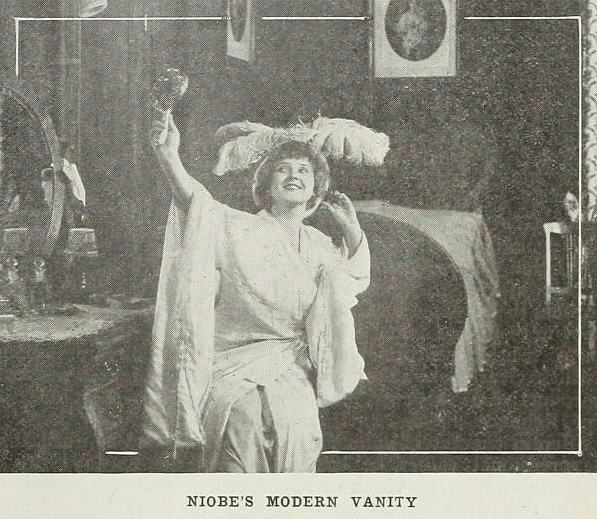
The 1915 production of Niobe stands as a fascinating relic of the silent era's flirtation with the fantastic, a period where the nascent language of cinema was frequently borrowed from the proscenium arch to experiment with surrealist escapism. Directed by the formidable duo of Hugh Ford and Edwin S. Porter, the film serves as a vehicle for Hazel Dawn, yet it is the structural tension between the domestic and the divine that provides its most enduring allure. Unlike the somber, existential dread found in Life Without Soul, which explored the hubris of creation through a proto-Frankenstein lens, Niobe approaches the animation of the inanimate with a lighthearted, almost subversive wit.
At its core, the film is a study in masculine suppression. Charles S. Abbe’s Peter Amos Dunn is not merely a 'hen-pecked' husband in the tradition of vaudeville; he is a man whose internal life has been systematically eroded by the performative morality and social climbing of his household. When the statue of Niobe—a figure synonymous with eternal mourning—enters this environment, it acts as a mirror to Dunn’s own petrified agency. The transition from stone to flesh is handled with a technical sincerity that, while primitive by modern standards, possesses a tactile magic that CGI often fails to replicate. The shimmering dissolves and the ethereal lighting surrounding Hazel Dawn’s awakening evoke a sense of genuine wonderment.
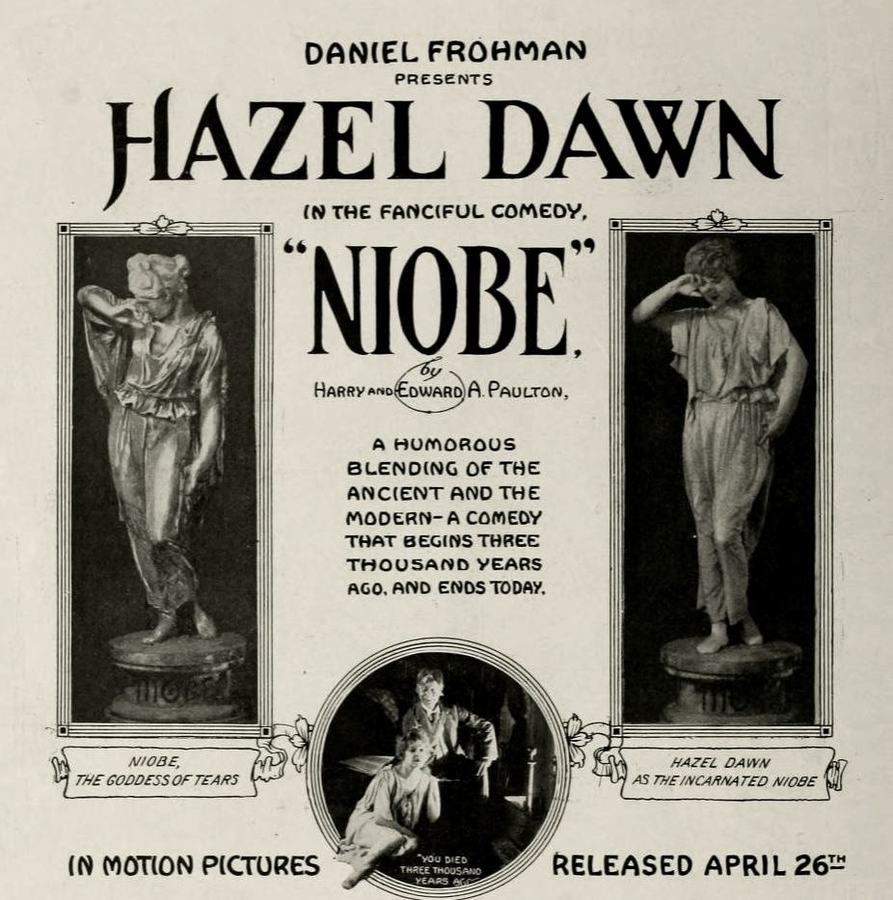
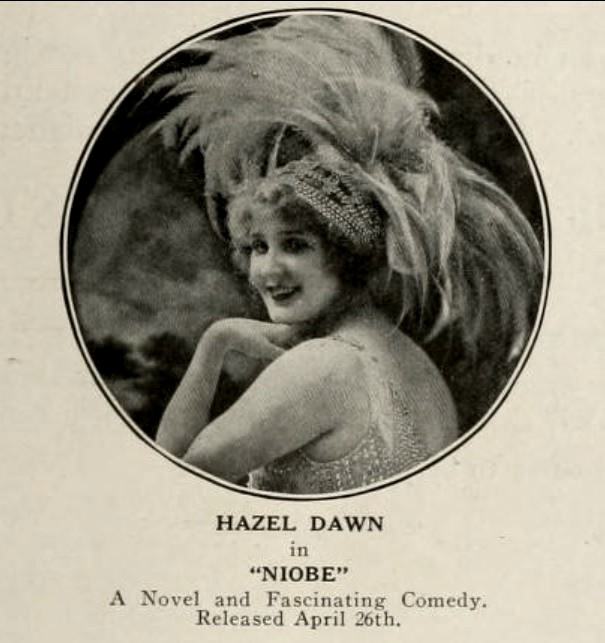
Hazel Dawn, known as 'The Pink Lady' of the musical stage, brings a luminous, albeit theatrical, physicality to the role of Niobe. Her performance necessitates a difficult balance: she must remain an 'other,' a creature of antiquity, while simultaneously participating in the farce of the modern household. This juxtaposition is where the film finds its satirical teeth. As Niobe attempts to understand the rigid social structures of 1915, the film subtly mocks the very conventions that trap Dunn. There is a palpable irony in a woman who was turned to stone for her pride being the one to teach a modern man how to stand tall.
This thematic exploration of female agency and social expectation offers a compelling counterpoint to the more traditional melodramas of the era, such as The Unwelcome Mrs. Hatch. While the latter deals with the crushing weight of social ostracization, Niobe utilizes the supernatural to bypass social barriers entirely. The presence of Reginald Denny, early in his career, adds a layer of youthful vigor to the proceedings, though the narrative weight remains firmly on the shoulders of Abbe and Dawn. The chemistry between the bewildered dreamer and his mythic manifestation is what prevents the film from devolving into mere stagey reproduction.
The screenplay, adapted by Edward A. and Harry Paulton from their own stage play, retains much of its rhythmic dialogue, which is cleverly translated through expressive intertitles. The Paultons were masters of the 'farcical comedy,' and Niobe represents the pinnacle of their ability to blend high-concept fantasy with the 'comedy of manners.' In the transition to screen, the directors utilized the camera to expand the physical space of the Dunn household, creating a labyrinthine feel that mirrors Peter’s own sense of entrapment.
One cannot help but compare the domestic friction here to the transactional nature of relationships seen in The Mail Order Wife. However, where that film deals with the grim realities of frontier domesticity, Niobe operates in a liminal space where the imagination is the only viable escape from the mundane. The cinematography by Porter, a pioneer of the medium, utilizes depth of field to keep the looming presence of the 'statue' (or the space it occupied) always in the periphery of the family’s oblivious bickering. It is a visual metaphor for the greatness that lies dormant in the most ordinary of settings.
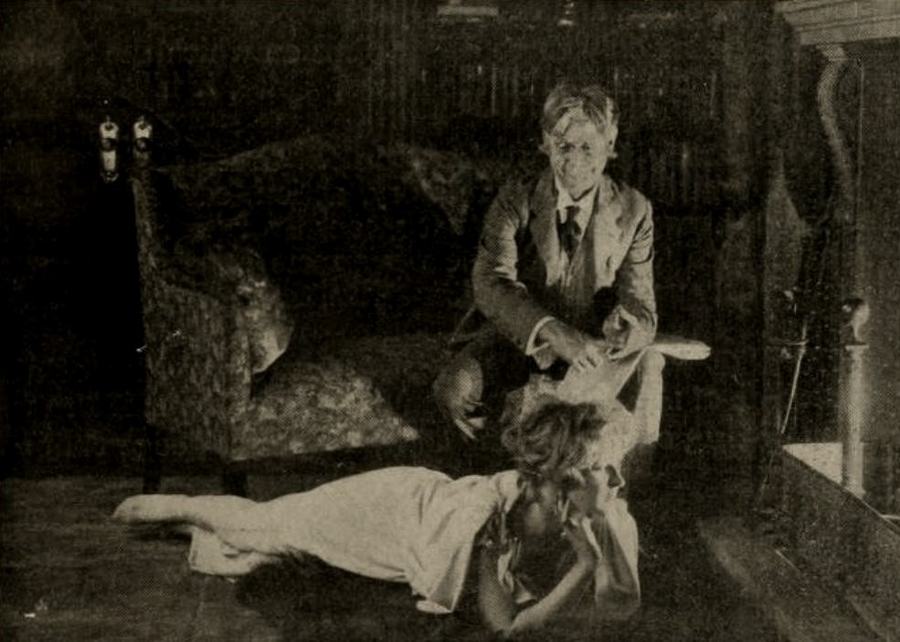
The aesthetic of Niobe is one of stark contrasts. The heavy, ornate furniture of the Dunn home represents the 'old world' of Victorian values, while the flowing robes and marble-white skin of Niobe represent a timeless, uninhibited freedom. The film’s use of double exposure to signify the dream state is particularly effective, creating a ghostly overlay that suggests the thinness of the veil between Peter’s reality and his desires. This technique was a hallmark of the era, also seen in the mysterious atmospheres of The Woman of Mystery, yet here it serves a comedic rather than a suspenseful purpose.
The supporting cast, including Irene Haisman and Maude Odell, perform with a heightened theatricality that serves the satirical tone well. They are archetypes of the 'civilized' world, their rigid movements and exaggerated expressions contrasting sharply with the fluid, statuesque grace of Hazel Dawn. This visual dissonance is the engine of the film’s humor. When Niobe is mistaken for a common housemaid or a relative, the absurdity highlights the superficiality of social labels—a theme that resonates as strongly today as it did in 1915.
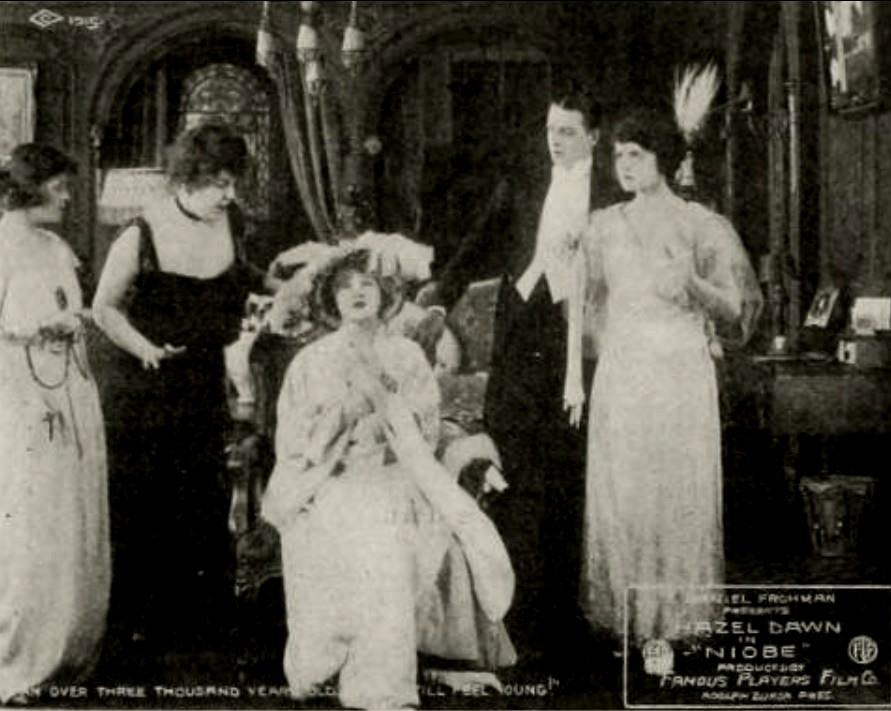
As we look back at Niobe from a distance of over a century, its charms remain surprisingly intact. It avoids the heavy-handed moralizing found in many of its contemporaries, such as The Daughter of the People, opting instead for a celebratory, if chaotic, validation of the subconscious. The film suggests that the only way to survive a life of quiet desperation is to invite the gods into your living room, even if they bring a bit of ruinous comedy with them.
The final sequence, which returns us to the 'reality' of the Dunn household, is handled with a bittersweet nuance. Has Peter truly changed, or was the awakening of Niobe merely a temporary reprieve from his domestic sentence? The film leaves this open to interpretation, much like the ambiguous endings of later surrealist works. It is this refusal to provide a tidy, saccharine resolution that elevates Niobe above the standard fare of its day. It is a work of cinematic poetry that understands the necessity of the dream, even when the dreamer must eventually wake up to a cold, unyielding world.
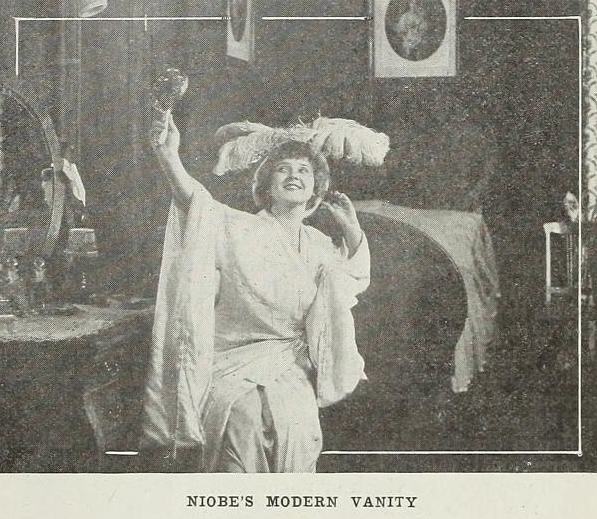
In the broader context of 1915 cinema, alongside epics like Three Weeks, Niobe offers a more intimate, psychological exploration of desire. It is a testament to the power of the silent medium to convey complex emotional states through visual metaphor and physical performance. For the modern viewer, it is a window into a world where the boundaries of the possible were still being drawn, and where a man’s escape from his own life could be as simple, and as profound, as a statue coming to life.
IMDb 7.5
1927
Community
Log in to comment.