DbcultAccessing Vault...
3.3/10
Senior Film Conservator
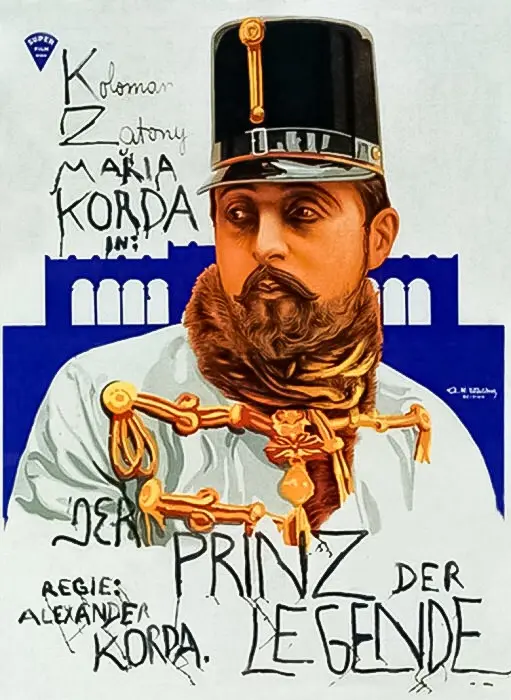
A definitive 3.3/10 rating for a film that redefined the boundaries of cult cinema. Tragödie im Hause Habsburg remains a cornerstone of transgressive art.
In the pantheon of cinematic endeavors that have sought to capture the essence of historical tragedy, 'Tragödie im Hause Habsburg' (1924) stands as a poignant testament to the human condition. This film, a masterful exploration of the Mayerling Incident, invites viewers into the tumultuous world of Crown Prince Rudolf, the heir to the Austro-Hungarian Empire, as he grapples with the suffocating weight of imperial duty.
The Mayerling Incident, a somber event etched into the annals of history, serves as the narrative backbone of this cinematic endeavor. On that fateful night in 1889, Crown Prince Rudolf, unable to reconcile his personal desires with the stringent expectations of his royal station, made the desperate decision to end his life. This tragic event, shrouded in mystery and heartbreak, has captivated the imagination of artists and historians alike, and 'Tragödie im Hause Habsburg' offers a compelling interpretation of the circumstances that led to this devastating conclusion.
Through the lens of cinema, the film's writers, Ernest Vajda and Lajos Biró, meticulously reconstruct the events that precipitated the Mayerling Incident. Their screenplay, a nuanced exploration of royal life in the late 19th century, deftly captures the intricate dynamics of imperial politics and the personal struggles of Crown Prince Rudolf. The result is a cinematic narrative that is as much a historical drama as it is a character study, delving into the complexities of a man torn asunder by duty and desire.
The cast, featuring María Corda, Erna Morena, and Arthur Bergen among others, brings to life the characters that populate this tragic world. Their performances, marked by a depth of emotion and a commitment to authenticity, serve to humanize the figures of history, making the events of the Mayerling Incident all the more poignant and relatable.
In the context of early 20th-century cinema, 'Tragödie im Hause Habsburg' aligns itself with a tradition of filmmaking that sought to explore the human condition through the lens of history. Films such as Mura no bokujô, Luffar-Petter, and Merely Mary Ann similarly endeavored to capture the essence of their subjects, be they historical events or fictional narratives. Yet, 'Tragödie im Hause Habsburg' distinguishes itself through its somber tone and its unflinching portrayal of the human cost of imperial ambition.
A critical examination of 'Tragödie im Hause Habsburg' reveals a film that is as much a product of its time as it is a timeless exploration of the human condition. The cinematography, while perhaps not as innovative as some of its contemporaries, effectively captures the somber mood of the narrative, bathing the characters in a world of shadows and light. The score, though not explicitly mentioned in historical accounts, likely played a crucial role in establishing the film's emotional resonance, complementing the on-screen drama with a depth of feeling.
In comparison to other films of the era, such as Daisy. Das Abenteuer einer Lady and The County Fair, 'Tragödie im Hause Habsburg' stands out for its thematic gravitas and its commitment to historical accuracy. While films like Snow White and El otro may share some superficial similarities in terms of their exploration of human relationships, 'Tragödie im Hause Habsburg' is distinguished by its focus on a pivotal moment in history and its impact on the individuals involved.
The film's exploration of the Mayerling Incident serves as a poignant reminder of the human cost of historical events. In an era where the boundaries between public and private spheres are increasingly blurred, 'Tragödie im Hause Habsburg' offers a powerful meditation on the consequences of unchecked ambition and the desperate search for meaning in a seemingly indifferent world.
Ultimately, 'Tragödie im Hause Habsburg' is a film that resists easy categorization. It is at once a historical drama, a character study, and a somber reflection on the human condition. As such, it invites viewers to engage with its narrative on multiple levels, reflecting on the historical context in which it was made, the artistic choices that underpin its narrative, and the timeless themes that it explores.
In conclusion, 'Tragödie im Hause Habsburg' stands as a testament to the power of cinema to illuminate the darkest recesses of human experience. Through its masterful storytelling, nuanced characterizations, and somber tone, the film offers a compelling exploration of the Mayerling Incident and its enduring impact on our understanding of the human condition.
IMDb —
1930
Community
Log in to comment.